
Dombo: NRM Manifesto Implementation Must Translate Commitments into Action
Dombo said the formation of the Cabinet, the swearing-in of Members of Parliament and the continued engagement of the NRM Parliamentary Caucus with President Yoweri Kaguta Museveni had established the institutional framework necessary to drive the party’s programmes during the current term.
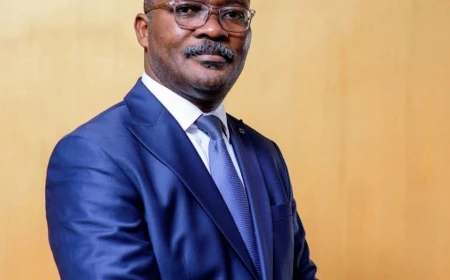
The National Resistance Movement (NRM) Director of Communication and Publicity, Hon. Emmanuel Lumala Dombo, has called for sustained implementation of the ruling party’s manifesto, emphasising the need to translate political commitments into tangible improvements in the lives of Ugandans.
Dombo said the formation of the Cabinet, the swearing-in of Members of Parliament and the continued engagement of the NRM Parliamentary Caucus with President Yoweri Kaguta Museveni had established the institutional framework necessary to drive the party’s programmes during the current term.
He explained that manifesto implementation was a continuous process that required coordination among government ministries, Parliament, party structures and other stakeholders to ensure that commitments made to Ugandans were translated into practical results.
According to Dombo, the NRM’s focus should remain on transforming the population from subsistence and economic backwardness into a modern, productive and prosperous society through deliberate investments in education, healthcare, agriculture, infrastructure and wealth creation.
NRM caucus central to manifesto monitoring
Dombo said the NRM Parliamentary Caucus remained one of the party’s most active structures, meeting regularly with President Museveni, who also serves as the NRM National Chairman, to discuss government business, review progress and assess the implementation of the party’s manifesto.
He noted that the meetings provide an opportunity to evaluate what the government has achieved, identify outstanding commitments and discuss priorities requiring attention.
“The NRM Manifesto is work in progress. It is not something that stops and then starts again,” Dombo said, explaining that many programmes introduced under previous manifestos continue to be implemented alongside new commitments.
He cited the Parish Development Model (PDM) as one of the programmes demonstrating the continuity of the government's economic transformation agenda.
Dombo said effective coordination between the executive, Parliament and party structures was essential to maintaining momentum and ensuring that government programmes deliver measurable benefits to citizens.
The NRM, he added, has a responsibility to assess its performance continually and ensure that its policies respond to the needs of the population.
Wealth creation remains at the centre of NRM's mission
Dombo said the central mission of the NRM was to transform Ugandans economically by enabling them to move away from subsistence production and participate in the money economy.
He argued that Uganda had considerable natural resources, minerals, fertile land and a sizeable population, but that these advantages could only translate into prosperity through deliberate leadership, sound policies and productive use of available resources.
“We only have our country here, Uganda, and we must transform the people who are in Uganda to become modern, given the available resources and people that God has put here,” he said.
He added that the responsibility of leaders was to work with citizens to overcome poverty and economic backwardness while creating opportunities for sustainable livelihoods.
Dombo cited government interventions such as Universal Primary Education (UPE), Universal Secondary Education (USE), mass immunisation, the Parish Development Model and other economic empowerment initiatives as examples of programmes intended to improve people's welfare.
He said the interventions were designed to expand access to essential services while giving Ugandans opportunities to participate in economic activities and improve their household incomes.
Under the PDM, government has sought to move households from subsistence production into the money economy by supporting production, enterprise development and access to financial services at parish level.
Dombo's remarks underscore the importance of ensuring that such programmes are implemented effectively, with resources reaching intended beneficiaries and producing tangible economic outcomes.
Infrastructure and economic growth signal transformation
The NRM communications director also pointed to improvements in urban infrastructure, particularly roads in Kampala, as evidence of the country's ongoing transformation.
He recalled that President Museveni had previously expressed concern about dust on Kampala's roads, arguing that the changes visible in the city reflected government efforts to improve infrastructure and the urban environment.
Dombo said that even some Ugandans who do not support the ruling party acknowledge that the country has experienced changes in infrastructure and other areas of development.
He further cited Uganda's economic performance as an indication of progress, noting that economic growth had moved beyond earlier projections of approximately five per cent to a rate of more than six per cent.
He expressed optimism that continued growth could eventually approach double-digit levels, which, if sustained, would create opportunities for increased government revenue, greater public investment and expanded private-sector activity.
Higher economic growth, he argued, could improve household welfare if accompanied by productive investment, employment creation and effective delivery of public services.
However, sustaining that growth will require a favourable business environment, improved productivity and policies that enable both domestic and foreign investors to operate with confidence.
Security key to investment and development
Dombo stressed that security remained a critical condition for the successful implementation of the NRM's economic agenda.
He said the government needed to protect Uganda's borders and strengthen internal security to safeguard citizens, businesses and property from criminal activity.
According to him, investors are more likely to commit resources when they are confident that their businesses, assets and personal safety are protected.
He warned that insecurity and criminality could undermine economic activity by discouraging investment, disrupting businesses and exposing citizens to losses.
Dombo maintained that the government must continue creating an environment in which farmers, entrepreneurs, manufacturers and other investors can operate productively and contribute to national development.
He linked security to the wider manifesto agenda, arguing that economic transformation depends not only on financial resources and infrastructure but also on stability and the protection of productive activity.
Drought exposes vulnerability of rain-fed agriculture
Despite expressing confidence in Uganda's development prospects, Dombo warned that dependence on rainfall remained a major threat to agricultural production and farmers' incomes.
He disclosed that he had personally lost more than 150 acres of maize to drought, describing the experience as a serious setback that demonstrated the risks faced by farmers who depend entirely on weather conditions.
Dombo said the losses illustrated the vulnerability of agricultural production to increasingly unpredictable weather patterns and raised questions about the capacity of farmers to recover from major seasonal shocks.
He also cited the difficulties experienced by coffee farmers in Masaka and other parts of the country, where adverse weather had affected production and threatened expected earnings.
He said such losses could have wider consequences for household incomes, food security, industrial raw-material supplies and agricultural export earnings.
While welcoming the return of rainfall, Dombo argued that Uganda could not depend on favourable weather alone to sustain agricultural production.
He called for deliberate government investment in irrigation infrastructure to enable farmers to produce throughout the year and reduce the risks associated with prolonged dry spells.
Irrigation investment to support farmers
Dombo said the government was moving towards reducing reliance on rain-fed agriculture through increased investment in irrigation.
He also indicated that responsibilities between the Ministry of Agriculture, Animal Industry and Fisheries and the Ministry of Water and Environment regarding irrigation had been clarified, with the Ministry of Agriculture responsible for the design, structuring and implementation of irrigation programmes.
He said the clarification should help accelerate the rollout of irrigation interventions and improve coordination in supporting farmers.
Dombo particularly emphasised the need to extend irrigation facilities to medium-scale and large-scale farmers, who play an important role in supplying food to domestic markets, providing raw materials to factories and producing commodities for export.
He argued that reliable irrigation would enable farmers to plan production more consistently, reduce losses during dry seasons and improve the stability of agricultural supply chains.
For Uganda, where agriculture remains an important source of employment, household income and export earnings, reducing dependence on rainfall could strengthen resilience against climate-related shocks.
Irrigation could also help farmers improve productivity by enabling them to manage planting schedules, increase cropping frequency and make better use of improved seeds and other agricultural inputs.
Dombo's comments point to the need for complementary measures, including access to affordable financing, agricultural extension services, appropriate technologies and reliable markets, to ensure that investments in irrigation translate into increased production and improved farmer incomes.
Uganda's coffee performance highlights the value of deliberate investment
Dombo cited Uganda's performance in coffee production and exports as an example of what deliberate government intervention and collaboration with private-sector actors can achieve.
He said Uganda had overtaken Ethiopia to become Africa's leading coffee producer and exporter during the preceding season, attributing the achievement to sustained efforts rather than chance.
According to Dombo, government programmes aimed at wealth creation, alongside partnerships with other stakeholders, had contributed to the expansion of coffee production.
He referred to cooperation with private seedling operators and other partners, including initiatives associated with the Buganda Kingdom, as part of the wider effort to support agricultural production.
The coffee sector remains strategically important to Uganda because of its contribution to foreign-exchange earnings, farmers' incomes and rural economic activity.
Maintaining the country's position in international markets will require sustained attention to the quality and availability of planting materials, farmer support, climate resilience, processing capacity and access to reliable export markets.
Dombo's example reinforced his argument that government programmes must be accompanied by practical implementation and collaboration with stakeholders who can help deliver results on the ground.
From manifesto promises to measurable results
Dombo's remarks place implementation at the centre of the NRM's development agenda, with particular emphasis on economic empowerment, infrastructure, security, agricultural modernisation and sustained economic growth.
The challenge, however, is to ensure that commitments are reflected in measurable improvements in the lives of ordinary Ugandans.
For programmes such as the Parish Development Model, this means ensuring that intended beneficiaries receive the necessary support and that the interventions help households increase production, develop viable enterprises and improve their incomes.
In agriculture, the proposed expansion of irrigation will need to be matched by accessible facilities, appropriate financing and technical support, particularly for farmers whose livelihoods are threatened by drought and unpredictable rainfall.
Similarly, economic growth will need to generate productive employment, expand business opportunities and improve access to essential services if the benefits are to be widely felt.
The NRM Parliamentary Caucus, which Dombo described as an important platform for reviewing government performance, is expected to remain central to discussions on legislation, public expenditure and the progress of manifesto commitments.
Regular assessments of implementation could help identify gaps, improve coordination and strengthen accountability for the delivery of government programmes.
Ultimately, Dombo's message is that the NRM manifesto should be treated as an ongoing development agenda rather than a document whose relevance ends after an election.
He maintained that Uganda's available resources, population and economic potential provide a foundation for transformation, but that realising that potential requires deliberate investment, effective leadership, security and sustained implementation.
As the government advances its programmes, the central test will be whether the commitments translate into greater household prosperity, more resilient agricultural production, improved infrastructure and better living standards for Ugandans.

John Kusolo is a Pastor, Sports Enthusiast and Ugandan journalist with Nile Chronicles News (NCN). With a strong commitment to journalistic excellence, he is recognized for his dedication, goal-oriented approach, and ability to thrive in challenging environments. Kusolo brings focused motivation and professionalism to his reporting and media assignments.








Comments (0)