
UGANDA MUST FEED ITS OWN FUTURE: THE SHILLING CRISIS IS A WAKE-UP CALL FOR IMPORT SUBSTITUTION
The time has come for Uganda to make a decisive choice: continue depending heavily on imported agricultural inputs or invest seriously in producing and processing what our own land can provide.

Government Must Now Unlock Agricultural Financing to Protect Farmers, Strengthen Local Industries and Secure Uganda’s Economic Future
By Aimable Mbarushimana Chairman, Uganda Animal Feeds Manufacturers Association (UGAFMA)
Kampala, 23 October 2026
For years, Uganda has been blessed with fertile land, hardworking farmers and enormous agricultural potential. Yet we continue to spend valuable foreign currency importing products that, with the right investment and government support, could increasingly be manufactured within our own borders.
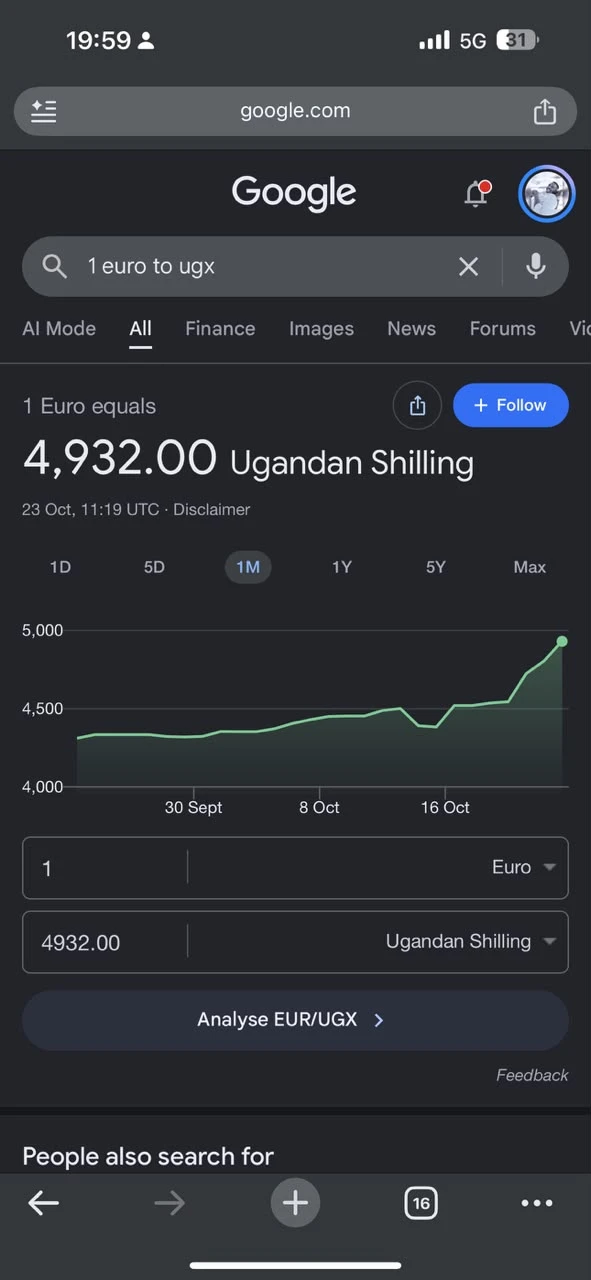
Today, as the Uganda shilling faces significant depreciation against the United States dollar and the euro, the consequences of our dependence on imported agricultural inputs are becoming increasingly difficult to ignore.
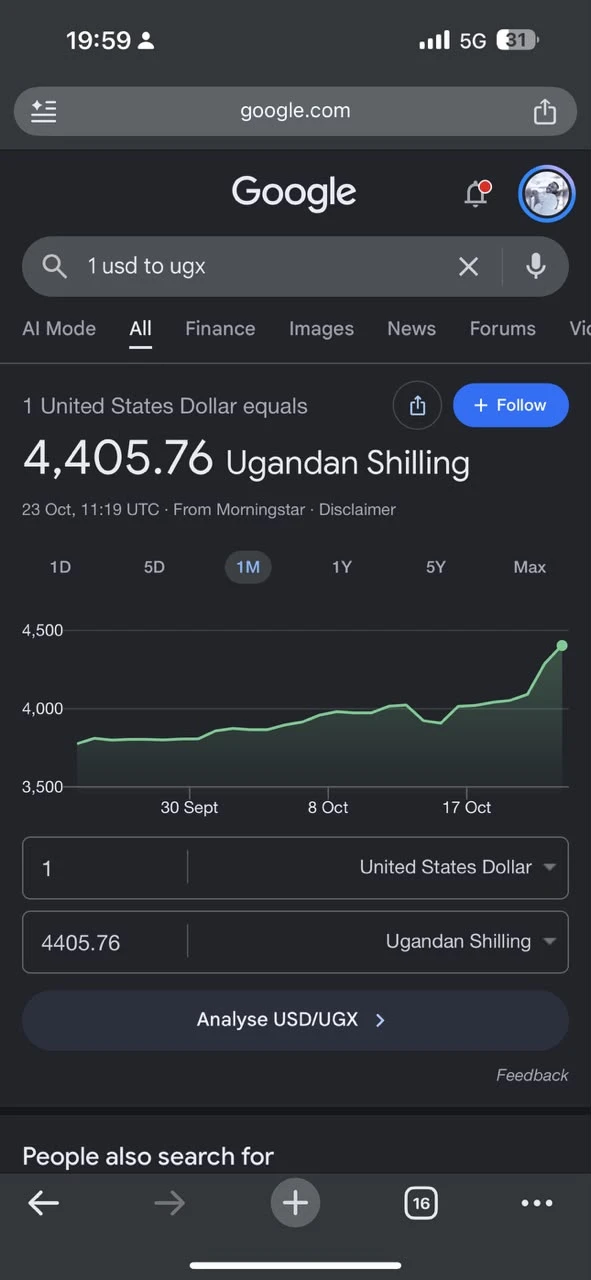
On 23 October 2026, the US dollar was trading at approximately UGX 4,406, while the euro was valued at approximately UGX 4,932.
These figures are more than exchange rates displayed on financial markets. They represent rising production costs for Ugandan businesses, increasing pressure on farmers and a serious threat to the affordability of animal feeds.
For livestock farmers, poultry producers, dairy farmers and fish farmers, this situation could become particularly damaging.
The time has come for Uganda to make a decisive choice: continue depending heavily on imported agricultural inputs or invest seriously in producing and processing what our own land can provide.
A Call We Have Made Since 2019
Since 2019, I have consistently advocated for import substitution, agricultural value addition and the development of a competitive domestic animal-feed industry.
As Chairman of the Uganda Animal Feeds Manufacturers Association, I have continued championing this position because I believe Uganda possesses much of the agricultural foundation required to build a stronger and more self-reliant animal nutrition industry.
We have farmers producing maize, soya beans, sunflower, cotton and other crops that can supply valuable raw materials for animal-feed manufacturing.
Cottonseed cake, sunflower cake, properly processed soya bean meal, maize bran and other locally available agricultural by-products can contribute significantly to the nutritional requirements of poultry, dairy cattle, pigs and fish.
However, producing crops is only the beginning.
The real economic transformation happens when we establish the industries, financing systems and market structures that turn these crops into competitive finished products.
A country that produces agricultural raw materials but fails to develop the industries that process them is surrendering valuable economic opportunities.
We must move beyond celebrating agricultural production figures and begin measuring how much value we retain within Uganda.
Uganda Has the Raw Materials. The Numbers Prove It.
According to the Ministry of Agriculture, Animal Industry and Fisheries’ 2024 Statistical Abstract, Uganda produced approximately:
445,000 metric tonnes of sunflower in 2024.
209,000 metric tonnes of soya beans in 2024.
4.269 million metric tonnes of maize in 2024.
54,883 bales of cotton, each weighing 185 kilograms, in FY 2024/25.
These figures demonstrate the significant agricultural resources already available in our economy.
Sunflower processing generates oil and sunflower cake, which can be used as an ingredient in animal feeds.
Soya beans can be processed into valuable protein-rich feed ingredients.
Cottonseed processing can produce cottonseed cake, while maize milling generates by-products that can support animal-feed production.
Not all agricultural output is available for animal feeds, and different ingredients require appropriate processing and quality controls. Nevertheless, these production figures show the considerable opportunity for developing stronger domestic agricultural value chains.
Imagine what Uganda could achieve if we deliberately connected farmers, oilseed processors, feed manufacturers and livestock producers through a properly financed national supply system.
Farmers would have more reliable markets.
Processors would have greater incentives to invest in machinery.
Feed manufacturers would have more dependable sources of raw materials.
Livestock farmers would benefit from stronger competition and potentially more affordable feeds.
Most importantly, more of the money circulating through these transactions would remain within Uganda’s economy.
This is what meaningful agricultural transformation should look like.
The Depreciating Shilling Has Exposed Our Vulnerability
The recent weakening of the Uganda shilling should concern everyone involved in agricultural production. When the dollar becomes more expensive, businesses importing animal-feed concentrates, premixes, additives and other inputs must spend more Uganda shillings to purchase the same quantities.
These additional costs eventually move through the agricultural value chain.
Importers face higher replacement costs.
Manufacturers face pressure on their production expenses.
Feed distributors must adjust their selling prices.
Ultimately, farmers bear much of the burden.
For a poultry farmer purchasing feed every week, even a relatively small increase in feed prices can significantly reduce profitability.
For dairy farmers, rising feed costs may undermine the financial benefits of improved milk production.
For fish farmers, expensive feeds can discourage investment and slow the growth of aquaculture.
We must also recognise that animal-feed costs are already among the largest expenses in commercial livestock production.
If we fail to address this challenge, some farmers may reduce production, postpone expansion or abandon their enterprises altogether.
That would affect food security, employment and household incomes.
However, I want to make one important distinction.
The problem is not that Uganda imports animal-feed products. The problem is that we have not invested sufficiently in producing locally what we are capable of producing competitively.
Some specialised feed ingredients, vitamins, minerals and additives will continue to require imports.
Import substitution must therefore be practical, selective and based on quality, cost and actual domestic production capacity.
Our objective should be to reduce unnecessary import dependence while building an efficient and internationally competitive Ugandan animal-feed industry.
Government Already Has the Right Policy: ATMS Must Now Deliver
I commend the Government of Uganda, under the leadership of His Excellency President Yoweri Kaguta Museveni, for prioritising economic transformation through the ATMS strategy.
The Ministry of Finance, Planning and Economic Development has identified four strategic growth areas:
Agro-Industrialisation, Tourism Development, Mineral-Based Industrial Development, and Science, Technology and Innovation.
For the animal-feed industry, agro-industrialisation provides a direct opportunity to strengthen domestic manufacturing, increase agricultural value addition and create sustainable employment.
The policy direction is encouraging.
But policy ambitions must translate into accessible financing, functioning factories and measurable benefits for farmers.
We cannot speak about agro-industrialisation while manufacturers struggle to obtain affordable working capital to purchase raw materials from Ugandan farmers.
We cannot promote import substitution while local processors lack financing for modern equipment, storage facilities and quality-control systems.
And we cannot expect farmers to expand production when they are uncertain whether the market will purchase their harvests at commercially sustainable prices.
The ATMS framework provides the policy foundation. What we now need is stronger, coordinated implementation.
Unlock Agricultural Financing Before More Farmers Suffer
I therefore call upon the Ministry of Finance, Planning and Economic Development, working with the Ministry of Agriculture, Animal Industry and Fisheries, Uganda Development Bank, commercial banks and relevant development partners, to consider a targeted financing intervention for the domestic animal-feed value chain.
This intervention should not simply provide money without accountability.
It should be designed to finance productive activities that strengthen domestic supply, generate employment and improve Uganda’s agricultural competitiveness.
First, government should establish or strengthen affordable working-capital facilities for local animal-feed manufacturers.
Many manufacturers need financing to purchase maize bran, cottonseed cake, sunflower cake, soya bean meal and other raw materials in commercial quantities.
Access to affordable financing would enable manufacturers to purchase more produce from farmers, build adequate inventories and maintain production during periods of market volatility.
Second, government should support investment in local processing and value addition.
Uganda needs greater capacity for oilseed crushing, feed milling, storage, drying, testing and modern feed formulation.
Where commercially viable, financing should prioritise equipment and infrastructure that allow locally produced crops to be transformed into high-quality animal-feed ingredients.
Third, government should strengthen agricultural aggregation and structured markets.
Farmers require reliable buyers, while manufacturers require consistent supplies of quality raw materials.
A coordinated network of aggregation centres and storage facilities could help connect the two.
Such infrastructure would also reduce post-harvest losses, improve quality control and make raw-material procurement more efficient.
Fourth, government should protect farmers and manufacturers from avoidable financial distress.
The recent exchange-rate pressures, combined with tighter borrowing conditions, are placing additional strain on productive businesses.
Viable agricultural enterprises facing temporary liquidity difficulties should have access to appropriately structured refinancing, working-capital support or loan restructuring, subject to proper financial assessment.
This is not a call for government to reward poor financial management.
It is a call to recognise that productive agricultural enterprises can be strategically important to national food security and industrial development.
Fifth, government should ensure fair competition between imported and locally manufactured animal feeds.
We need a careful review of tariffs, taxes, standards enforcement and other policies affecting the competitiveness of domestic feed manufacturers.
The objective should not be to close Uganda’s market or impose unnecessary costs on farmers.
It should be to eliminate avoidable disadvantages facing efficient local producers while maintaining access to essential imported inputs.
Any measures adopted must remain consistent with Uganda’s regional and international trade obligations.
Supporting Local Manufacturers Is Supporting Ugandan
Farmers When government supports a local animal-feed manufacturer, the benefits can extend far beyond the factory. Consider a manufacturer purchasing sunflower cake from a Ugandan processor.
That processor purchases sunflower seeds from farmers.
The farmers employ workers, purchase agricultural inputs and support businesses in their communities.
Transporters move the produce.
Warehouses provide storage.
Technicians maintain machinery.
Feed manufacturers employ workers to process, package and distribute finished products.
Finally, poultry, dairy, piggery and fish farmers purchase those feeds to sustain their production.
This is how an agricultural value chain generates economic activity.
It is also why supporting domestic manufacturing should not be viewed merely as assistance to private companies.
When properly structured, investment in local manufacturing is an investment in the entire agricultural economy.
The benefits must, of course, be measurable.
Government financing should be linked to clear performance indicators, including increased purchases from local farmers, additional manufacturing capacity, employment creation, product quality and financial sustainability.
We must support enterprises that can demonstrate genuine economic value.
The Shilling Crisis Should Become an Opportunity for Economic Transformation
There is another important lesson in the current currency situation.
A weaker shilling makes imported products more expensive in local currency terms.
However, it can also improve the price competitiveness of Ugandan products in foreign markets, provided producers can control their costs and meet required standards.
This creates an opportunity.
With the right investment, Uganda could strengthen its position as a regional supplier of quality animal feeds and agricultural ingredients.
Our geographical location provides access to markets across East Africa and the wider region.
But we cannot build a competitive export industry without first strengthening domestic production capacity.
We must invest in modern feed technology, quality assurance, reliable raw-material supply and efficient logistics.
The Uganda National Bureau of Standards and other relevant institutions also have an important role in strengthening testing, certification and enforcement against adulterated or substandard feeds.
Quality must remain central to import substitution. Made in Uganda must become a mark of quality, reliability and competitiveness.
Patriotism should inspire us to support local production, but quality and affordability must earn the confidence of farmers.
A Direct Appeal to the Ministry of Finance
I respectfully appeal to the Ministry of Finance, Planning and Economic Development to give greater attention to the animal-feed manufacturing industry as a strategic component of agro-industrialisation.
The Ministry has already established the policy direction through ATMS.
Now is the time to ensure that the financing mechanisms supporting this strategy reach productive agricultural value chains.
Uganda Development Bank already has a mandate to finance priority sectors, including agro-industry and manufacturing.
We should build on these existing institutions rather than create unnecessary administrative structures.
I propose that government convene a focused engagement involving the Ministry of Finance, Ministry of Agriculture, Uganda Development Bank, relevant financial institutions and representatives of the domestic animal-feed industry.
The purpose should be to develop an actionable financing and investment framework for animal-feed manufacturing, local raw-material processing and agricultural aggregation.
This framework should identify investment requirements, suitable financing instruments, implementation responsibilities and measurable outcomes.
The urgency is real.
Every month that passes without addressing structural weaknesses in domestic production leaves our farmers and manufacturers exposed to international price movements and foreign-exchange volatility.
We should not wait until more agricultural enterprises are forced to reduce operations before acting.
Patriotism Must Be Reflected in Economic Decisions
I firmly believe that Uganda’s greatest economic strength lies in the productivity of its people and the resources of its land.
Our farmers have demonstrated their willingness to produce.
Our entrepreneurs have demonstrated their willingness to invest.
Our manufacturers have demonstrated their determination to build local industries despite significant challenges.
What is needed now is stronger coordination between government policy, development financing and private-sector production.
As Chairman of the Uganda Animal Feeds Manufacturers Association, I believe the current economic situation presents an opportunity for government and industry to work together in the national interest.
This is not about favouring one company, one association or one group of manufacturers.
It is about protecting Uganda’s productive capacity and ensuring that our agricultural wealth creates lasting economic opportunities for Ugandans.
A strong domestic animal-feed industry can support more affordable livestock production, stronger rural markets, employment creation, agricultural exports and national food security.
These objectives are fully aligned with Uganda’s ambitions for industrialisation and long-term economic transformation.
The Time to Act Is Now
Since 2019, my message has remained consistent:
Uganda must produce more, process more, manufacture more and depend less on imports where competitive local alternatives are possible.
The current depreciation of the shilling has made this message more urgent.
We cannot control every movement of international currencies.
We cannot control every global economic shock.
But we can make deliberate decisions to strengthen our domestic industries, support our farmers and reduce unnecessary dependence on imported products.
I therefore call upon government to use the ATMS framework to unlock targeted financing for agricultural value addition, animal-feed manufacturing and local raw-material supply chains.
Let us transform sunflower into valuable feed ingredients.
Let us transform cottonseed into quality animal-feed products.
Let us process our soya beans and maize into products that support Uganda’s livestock industry.
Let us give our farmers dependable markets and our manufacturers the financial tools required to compete.
Above all, let us ensure that Uganda’s agricultural potential translates into real prosperity for Ugandan families.
The answer to our economic vulnerability is not simply to buy more dollars. It is also to build an economy that produces more of what it consumes and earns more from what it sells.
Our farmers should not become casualties of a crisis that we have the capacity to address through sound economic policy and productive investment.
Let us feed Uganda with Ugandan resources, strengthen Ugandan industries and build an economy that works for Ugandans.
One Sector, One Voice. One Uganda, One Economic Future.
⸻
Aimable Mbarushimana Chairman Uganda Animal Feeds Manufacturers Association (UGAFMA) Kampala, Uganda

John Kusolo is a Pastor, Sports Enthusiast and Ugandan journalist with Nile Chronicles News (NCN). With a strong commitment to journalistic excellence, he is recognized for his dedication, goal-oriented approach, and ability to thrive in challenging environments. Kusolo brings focused motivation and professionalism to his reporting and media assignments.
















Comments (0)