
Masiga Calls on Bugisu Business Owners to Prioritise Community Welfare Over Selfishness
Masiga said the business community had a responsibility to contribute to the social and economic well-being of the people, noting that collective support from individuals, businesses and civil society organisations was essential in addressing the challenges facing vulnerable communities.
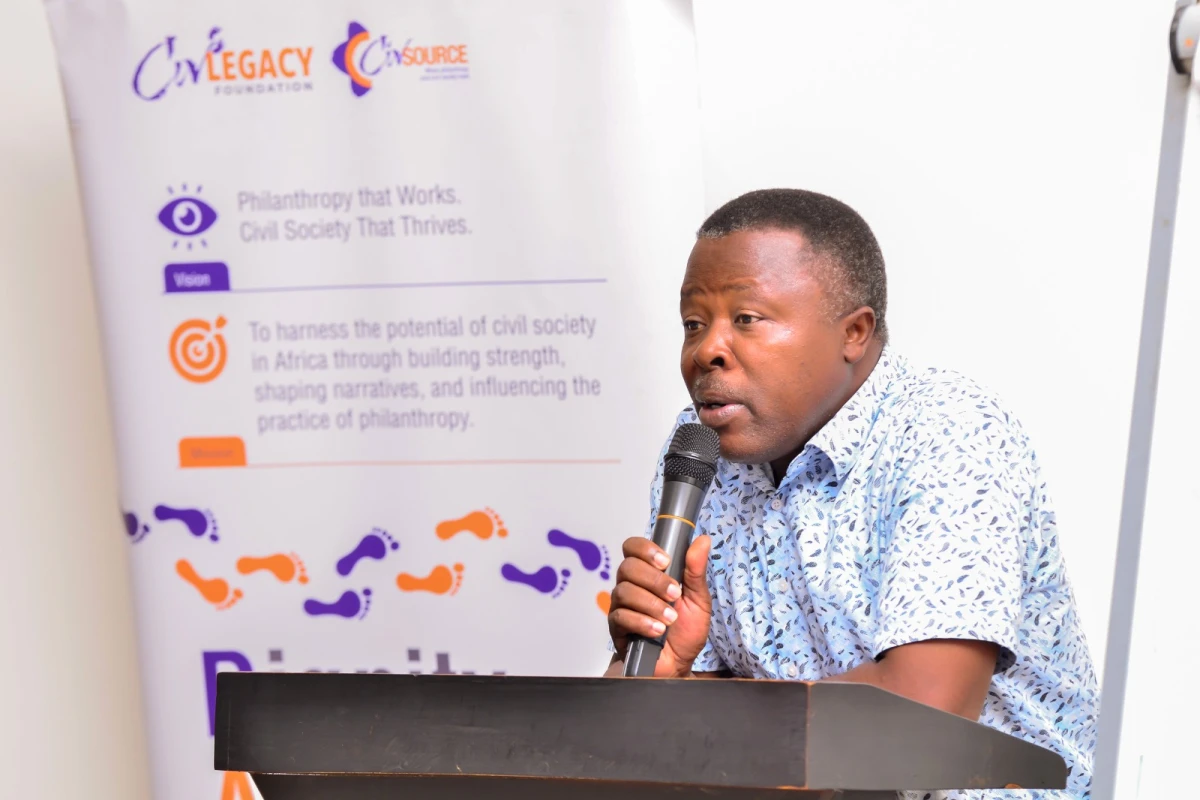
The spokesperson of the Bamasaaba Cultural Institution, Hon. Steven Masiga, has challenged business owners and affluent individuals in the Bugisu sub-region to abandon selfishness and embrace a culture of philanthropy by supporting vulnerable and disadvantaged members of society.
Masiga said the business community had a responsibility to contribute to the social and economic well-being of the people, noting that collective support from individuals, businesses and civil society organisations was essential in addressing the challenges facing vulnerable communities.
He made the remarks during a one-day symposium organised by the Bugisu NGO Forum in partnership with Legacy, an organisation working with communities in the region. The meeting brought together stakeholders to discuss community development, corporate social responsibility and the role of different actors in supporting vulnerable people.
Masiga expressed concern over what he described as a lack of willingness among some members of the Bamasaaba business community to contribute towards cultural and humanitarian initiatives, despite their financial capabilities.
He cited the resettlement of people from Bududa District to Bunambutye in Bulambuli District as an example of the limited support from local businesses.
According to Masiga, when the Government resettled communities affected by landslides in Bududa, the Chinese Industrial Park was among the few organisations that came forward to offer substantial assistance.
He said the Chinese Industrial Park contributed items worth approximately Shs100 million through the Inzu Ya Masaaba, which subsequently delivered the supplies to the resettled communities in Bulambuli.
Masiga regretted that, despite the humanitarian needs of the affected families, few local businesspeople came forward to contribute, with some failing to offer even small financial assistance.
He challenged business owners to reconsider their approach to community support, arguing that philanthropy should not be left to foreign investors and government institutions when local businesses can also play a significant role.
The cultural institution spokesperson also drew comparisons between the support extended to cultural leaders in other parts of the country and the response of the Bamasaaba community during the death of their former cultural leader, Umukuuka wa Bamasaaba.
Masiga recounted his recent visit to Tooro Kingdom, where he led a delegation of Bamasaaba cultural leaders to attend the send-off ceremonies of the late Omukama of Tooro.
He said he was impressed by the affection and support demonstrated by the people of Tooro towards their cultural institution and monarch.
He contrasted that experience with what happened in Bugisu following the death of the former Umukuuka, saying the community's failure to mobilise sufficient resources for the burial forced the Government to intervene.
Masiga said the experience highlighted the need for Bamasaaba to strengthen their commitment to their cultural institution and take greater responsibility for activities that benefit their community.
He urged the business community to abandon selfishness and embrace a spirit of collective responsibility, particularly when cultural institutions and vulnerable members of society require assistance.
"Let us renounce selfishness and learn to support our own people. We cannot continue expecting the Government or outsiders to do everything for us when we have people within our community who can make meaningful contributions," Masiga urged.
He further called on civil society organisations, including the Bugisu NGO Forum and Legacy, to work closely with business owners to document and publicise philanthropic contributions made towards community development.
Masiga observed that several individuals and businesses were already supporting vulnerable people but their contributions often went unrecognised because of inadequate documentation and coordination with civil society organisations.
He said establishing a reliable record of such contributions would not only promote transparency but also encourage more businesspeople to participate in charitable initiatives.
According to Masiga, the Bamasaaba Cultural Institution is committed to recognising and rewarding individuals and businesses that demonstrate outstanding commitment to community development and humanitarian activities.
He encouraged businesses to embrace corporate social responsibility by supporting education, healthcare, vulnerable households and other initiatives aimed at improving people's livelihoods.
Masiga also called on civil society organisations to strengthen their engagement with the private sector, arguing that partnerships between businesses, cultural institutions and development organisations could help mobilise resources for communities in need.
He said documenting philanthropic activities would enable stakeholders to identify existing interventions, recognise contributors and encourage a sustained culture of giving.
The symposium also provided an opportunity for participants to discuss the contribution of civil society organisations and the business community to development in the Bugisu sub-region.
Catherine, who represented the Chief Administrative Officer (CAO) of Mbale District, was among the speakers at the meeting. She was joined by Iddi Mafabi, the Programme Officer of the Bugisu NGO Forum.
The engagement underscored the importance of cooperation among civil society organisations, the private sector, cultural institutions and government agencies in addressing community challenges.
Masiga's appeal comes amid calls for greater private-sector participation in community development, with stakeholders being encouraged to complement government programmes through charitable giving, partnerships and targeted support for vulnerable households.

John Kusolo is a Pastor, Sports Enthusiast and Ugandan journalist with Nile Chronicles News (NCN). With a strong commitment to journalistic excellence, he is recognized for his dedication, goal-oriented approach, and ability to thrive in challenging environments. Kusolo brings focused motivation and professionalism to his reporting and media assignments.
















Comments (0)