
Mt Elgon Communities Mobilised for Indigenous Forest Restoration Under EU-Supported Project
According to Aldon Walukamba, the P4F Programme Outreach Officer, the awareness campaign has started at district level and is progressively reaching communities living around the targeted forest reserves.
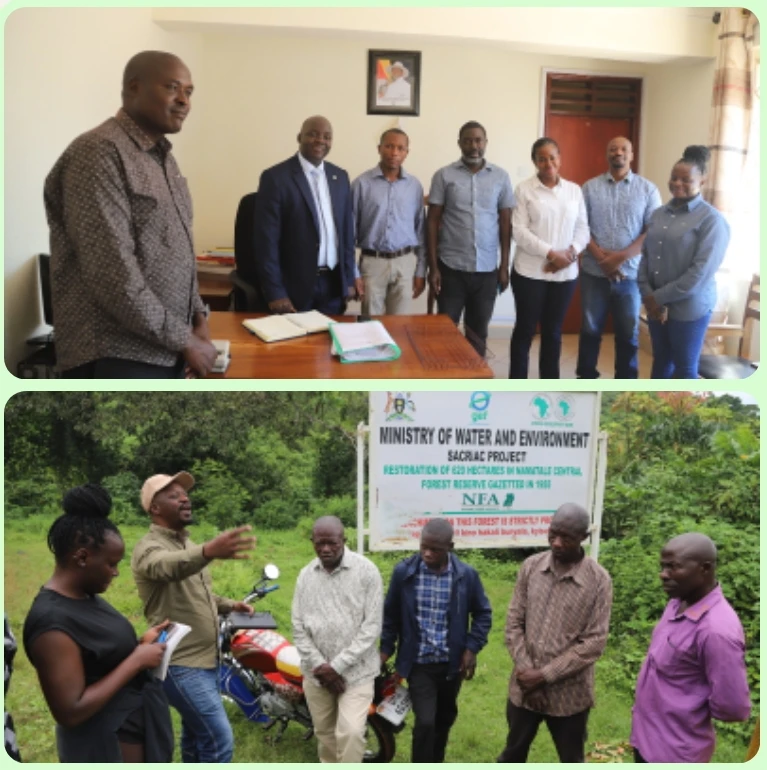
MBALE, November 5, 2026– Communities surrounding forest reserves in the Mt Elgon sub-region are being mobilised to participate in the restoration of indigenous tree species under a government-led initiative aimed at reversing forest degradation, protecting biodiversity and strengthening community livelihoods.
The Ministry of Water and Environment (MWE), through its Partnering for Forests Development (P4F) Project, has intensified community sensitisation ahead of planned restoration activities in selected Central and Local Government Forest Reserves across Mbale, Bududa, Manafwa and Sironko districts.
The sensitisation campaign is intended to prepare local communities for the restoration of natural tree species and forthcoming forest boundary-opening activities, while ensuring that residents understand their responsibilities and the benefits they stand to gain from participating in sustainable forest management.
According to Aldon Walukamba, the P4F Programme Outreach Officer, the awareness campaign has started at district level and is progressively reaching communities living around the targeted forest reserves.
“Pre-restoration sensitisation has kicked off and is now cascading down to local communities. We want people living around these forest reserves to understand the importance of restoring natural tree species, their roles and responsibilities, and the opportunities available to them under the project,” Walukamba said.
Mbale communities identify livelihood opportunities
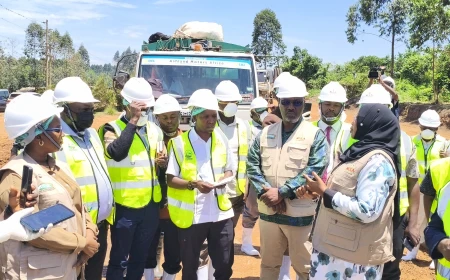
In Mbale District, the P4F team engaged district leaders and ten Community Forest Management (CFM) group leaders representing communities surrounding Namatale Central Forest Reserve.
The discussions focused on the importance of restoring indigenous tree species, strengthening community participation in forest protection and identifying alternative livelihood opportunities that could improve household incomes while reducing pressure on forest resources.
Among the opportunities identified were apiary development, coffee growing and other forestry-related enterprises that could enable communities to benefit economically from forest conservation.
The team also conducted field visits to Mutuufu and Kalonyi Local Forest Reserves as part of the wider assessment and sensitisation engagements.
Wanzala Sulayi, Chairperson of the Bufumbo Water and Environment Collaborative Forest Management Group, welcomed the initiative, saying it had come at a critical time when urgent interventions were needed to restore forest cover and strengthen community-led conservation.
He emphasised that effective forest restoration would require active participation by residents living around Namatale Central Forest Reserve, including their involvement in protecting the forests and enforcing conservation measures.
Women demand greater role in forest restoration
The project has also drawn attention to the importance of inclusive participation, particularly the involvement of women in forest restoration planning, decision-making and implementation.
Nawire Azena, a member of the Bubyangu Community Forest Management Group, called for women across the Bugisu sub-region to be given meaningful opportunities to participate in efforts to restore and protect forest resources.
She observed that women are among the communities directly affected by forest degradation and should therefore be involved in decisions concerning the protection and sustainable management of forests.
“It is time for women to take a meaningful role in planning, decision-making and restoring our forests. Women are equally affected by forest degradation and must be actively involved in protecting and restoring Namatale and other forests in the Bugisu sub-region,” Azena said.
Her appeal highlights the need to ensure that forest restoration programmes recognise the contribution of women, whose daily livelihoods are often closely connected to natural resources and the surrounding environment.
Sensitisation extended to Sironko and Manafwa
Beyond Mbale, the P4F team extended its engagements to Sironko District, where discussions with district officials centred on strengthening public awareness, improving coordination and building the capacity of communities to participate in forest conservation.
In Manafwa District, the team visited Bubulo and Busumbu Local Forest Reserves, engaging stakeholders on the importance of preparing surrounding communities before the commencement of forest boundary-opening operations.
The discussions underscored the need for effective communication and community involvement to ensure that restoration activities and boundary-related operations are understood and supported by local residents.
The approach is intended to promote cooperation between government institutions, district authorities and communities while strengthening local ownership of forest conservation initiatives.
Indigenous trees key to biodiversity and livelihoods
George Kaija, the P4F Technical Support Officer, said restoring indigenous tree species in the Mt Elgon sub-region was essential for protecting the area's rich biodiversity while sustaining the livelihoods of communities that depend on forest resources.
“The restoration of natural tree species will help safeguard the region’s biodiversity while supporting the livelihoods of communities that depend on forest resources,” Kaija said.
The restoration of indigenous vegetation is expected to contribute to the protection of natural habitats and strengthen the ecological functions of forests, while creating opportunities for communities to engage in environmentally sustainable economic activities.
Mt Elgon and its surrounding communities depend on healthy forest ecosystems for various environmental and livelihood benefits, making sustainable forest management an important component of the region's long-term development.
EU-supported forest partnership
The Partnering for Forests Development Project is supported by the European Union and implemented by partner organisations in Uganda under the Forest Partnership with the Government of Uganda.
Through the initiative, the Ministry of Water and Environment and its partners are seeking to strengthen forest restoration efforts by combining environmental conservation with community participation and livelihood improvement.
The ongoing sensitisation campaign marks an important preparatory stage before restoration activities begin in the targeted forest reserves.
By engaging district leaders, community forest management groups, women and other local stakeholders, the project seeks to ensure that forest restoration is not treated solely as a government responsibility but as a shared undertaking requiring sustained community commitment.
The success of the initiative will depend on the ability of communities and responsible institutions to work together in restoring indigenous tree species, protecting forest boundaries and promoting sustainable use of natural resources across the Mt Elgon sub-region.

John Kusolo is a Pastor, Sports Enthusiast and Ugandan journalist with Nile Chronicles News (NCN). With a strong commitment to journalistic excellence, he is recognized for his dedication, goal-oriented approach, and ability to thrive in challenging environments. Kusolo brings focused motivation and professionalism to his reporting and media assignments.











Comments (0)