
Prof. Balunywa Warns Parents Against Surrendering Their Daughters’ Upbringing to Peer Pressure and Digital Technology
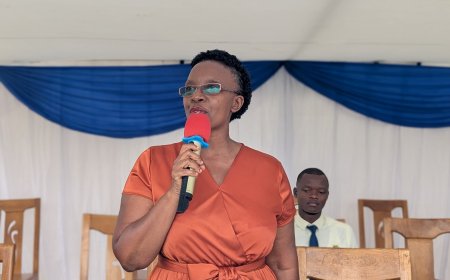
Addressing parents, teachers, stakeholders and students at the Annual General Meeting of Wanyange Girls School in Jinja, Prof. Balunywa emphasised the need for stronger parental involvement, character formation and collaboration between families and educational institutions in preparing girls for an increasingly complex world.

JINJA – Prof. Waswa Balunywa has challenged parents, teachers and communities to take greater responsibility for shaping the character and future of girls, warning that peer pressure, social media and other digital platforms are increasingly competing with parents for influence over children.
Addressing parents, teachers, stakeholders and students at the Annual General Meeting of Wanyange Girls School in Jinja, Prof. Balunywa emphasised the need for stronger parental involvement, character formation and collaboration between families and educational institutions in preparing girls for an increasingly complex world.
In his address titled “Raising Daughters in a Changing World: Who Is Shaping Our Girls?”, Balunywa raised concerns about changing family structures and the weakening of traditional African communal parenting systems, arguing that parents must become more deliberate in understanding the influences shaping their children's behaviour, attitudes and aspirations.
He began by questioning the changing meaning of parenthood, recalling the traditional African belief that a child belonged to the village, where every adult had a responsibility to guide, correct, protect and nurture children, regardless of biological relationships.
However, he observed that modern society has experienced significant changes, with children increasingly raised within different family arrangements involving biological parents, foster parents, step-parents and other guardians.
He noted that as traditional communal support systems weaken, parents must take greater responsibility for understanding their children's environment and ensuring that they receive proper guidance.
Upbringing, Religion, Culture and Education
Balunywa identified upbringing, religion, culture and education as four major foundations that influence an individual's character and determine how they relate with society.
He explained that upbringing plays a fundamental role in shaping children's values, discipline and attitudes, which eventually influence the adults they become.
Religion, he said, provides a moral compass that helps young people distinguish right from wrong and develop a sense of responsibility, while culture shapes identity, behaviour and an individual's understanding of society.
He also emphasised that education should not be restricted to classroom instruction, noting that children acquire important lessons from their everyday experiences and interactions with people around them.
The professor expressed concern that society is gradually moving away from some traditional African and Christian family values without adequately establishing alternative principles to guide the younger generation.
He argued that academic excellence alone should not be the ultimate measure of a child's success, stressing that honesty, trust, respect, discipline and responsibility are equally important attributes that determine an individual's character and contribution to society.
According to him, the way children conduct themselves after leaving school often speaks louder than the academic qualifications they possess.
He challenged parents to reflect on the values they are planting in their daughters, noting that the quality of upbringing they receive at home will significantly influence their decisions and relationships in the wider world.
The Three Parents Shaping Today's Girls
One of the key arguments in Balunywa's address was his description of the three different forms of parenting influencing children in contemporary society.
He identified these as the real parent, the peer parent and the digital parent, explaining that although biological parents and guardians remain primarily responsible for raising children, other influences increasingly shape their lives.
The first, which he described as the real parent, is the biological parent or responsible guardian who provides for the child, makes sacrifices and works to secure education, protection and opportunities.
He said this parent carries the primary responsibility of nurturing, guiding and preparing the child for adulthood.
The second is the peer parent, representing the influence of friends, classmates, neighbourhoods and the wider social environment.
Balunywa observed that children constantly learn from those around them, with their peers influencing their language, behaviour, attitudes, choices and aspirations.
He cautioned that the desire to fit in with friends can sometimes become stronger than the guidance children receive from their parents, potentially exposing them to decisions and behaviours that conflict with family values.
The third is the digital parent, which he used to describe the growing influence of smartphones, social media and other digital platforms in the lives of young people.
He noted that through their screens, girls encounter different lifestyles, ideas, role models and expectations that may differ considerably from the values taught at home.
While acknowledging that friendships and technology can positively contribute to learning, creativity, knowledge acquisition and personal development, he warned that inadequate guidance can expose young people to harmful behaviour, unrealistic expectations and conflicting values.
Balunywa cautioned that the greatest danger emerges when peer and digital influences become more powerful than the guidance provided by parents.
He argued that parents who fail to deliberately participate in shaping their children's lives risk allowing other forces to occupy that important space.
Parents Urged to Go Beyond Paying School Fees
On the responsibilities of parents, Balunywa challenged families to understand that effective parenting goes beyond providing school fees, food, clothing and other material necessities.
He called for parents to become more present in their daughters' lives by understanding their experiences, knowing their friends, listening to their concerns and remaining available whenever they need guidance.
He emphasised that children require consistent attention and meaningful relationships with their parents, particularly during their formative years when they are developing their identities and making important life decisions.
Balunywa also challenged parents to lead by example, arguing that children learn as much from the behaviour of adults as they do from verbal instructions.
He observed that parents cannot demand honesty while practising dishonesty, insist on respect while disrespecting others, or teach discipline when their own conduct contradicts the values they expect their children to embrace.
His message underscored the importance of consistency between the values parents communicate and the examples they demonstrate in their everyday lives.
Stronger Partnership Between Parents and Schools
Balunywa further called for stronger cooperation between parents and educational institutions, emphasising that the responsibility of raising responsible and disciplined children cannot be left entirely to teachers.
He noted that while schools play an important role in academic instruction, discipline and personal development, parents must remain actively involved in reinforcing the values taught at school.
He argued that teachers cannot shoulder the responsibility of raising girls alone, just as parents cannot ignore the influence of the school environment on their children's development.
He urged parents and school administrators to establish strong partnerships that promote discipline, responsibility, respect and the holistic development of learners.
Balunywa also encouraged families to remain grounded in their faith and positive cultural values while preparing girls to participate confidently in the modern world.
He clarified that protecting children does not mean isolating them from societal changes or technological developments, but rather equipping them with the knowledge, judgment and confidence to make informed decisions.
He said girls should be prepared to recognise harmful influences, embrace available opportunities and participate in modern society without losing their identity and positive cultural foundations.
Call to Rebuild the Traditional African Village
In his concluding remarks, Balunywa called for a renewed collective approach to parenting, urging society to recreate the positive aspects of traditional African communal upbringing in a modern setting.
He acknowledged that society may not be able to return to the traditional village system where every adult shared responsibility for raising every child, but argued that parents, teachers, religious leaders, schools and communities can work together to build a supportive environment for the younger generation.
He said such cooperation would help girls grow into responsible citizens and future leaders who are confident, disciplined and conscious of their responsibilities to society.
Balunywa challenged stakeholders to recognise that children will inevitably be influenced by the world around them, making it important for parents and educators to ensure that positive influences remain dominant.
He urged parents to ensure that, despite the growing influence of friends and digital technology, the home remains a strong source of guidance, stability and positive values in every girl's life.
He stressed that the future of girls would not be determined by the material opportunities provided to them alone, but also by the values instilled in them, the examples set by adults and the environment created around them.
“The responsibility to shape the next generation cannot be outsourced. It begins at home, is reinforced at school and must be embraced by society,” Balunywa emphasised.
His address at Wanyange Girls School placed parental responsibility, moral upbringing, digital awareness and cooperation between families and schools at the centre of the debate on preparing girls for the challenges and opportunities of the modern world.
The central message was that while the world will continue to evolve and introduce new influences into the lives of young people, parents must never surrender their fundamental responsibility of raising, guiding and preparing their daughters for the future.
By John Kusolo
Nile Chronicles

John Kusolo is a Pastor, Sports Enthusiast and Ugandan journalist with Nile Chronicles News (NCN). With a strong commitment to journalistic excellence, he is recognized for his dedication, goal-oriented approach, and ability to thrive in challenging environments. Kusolo brings focused motivation and professionalism to his reporting and media assignments.
















Comments (0)