
Stanbic Incubator trained farmers in joint venture to export to Europe
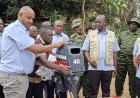
As beneficiaries of a training programme, the farmers under the Albertine Farmers Association (AFA), signed a Memorandum of Understanding (MoU) with KK Foods, exporters of fresh horticultural products.
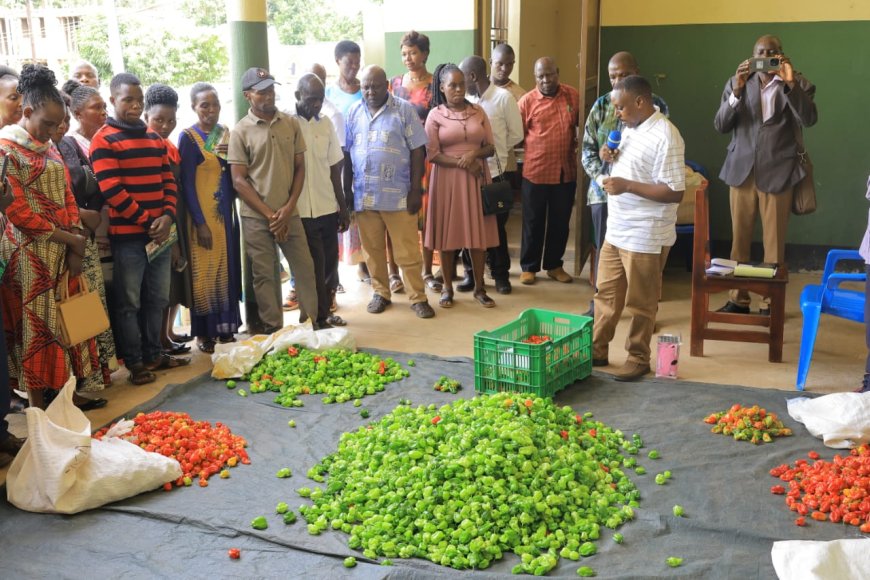
Hoima, Uganda: Horticultural farmers in the Bunyoro Region have gone into a joint venture with local exporter, KK Foods, to sell their products in Western Europe, including the United Kingdom, with the goal of raising incomes and gaining a presence in international markets.
As beneficiaries of a training programme, the farmers under the Albertine Farmers Association (AFA), signed a Memorandum of Understanding (MoU) with KK Foods, exporters of fresh horticultural products.
Speaking at the launch of the venture at Ageteraine Agro-Processing Facility in Hoima City over the weekend, the Chairperson of the Association Julius Kwamya said, "During the training, we agreed on the way forward. We agreed to start with hot pepper and chilli for now, but we will scale to other enterprises. We believe this is an opportunity for growth, in different aspects, because hot pepper and chilli have a high turnover, moreover with a short-term period in the garden."
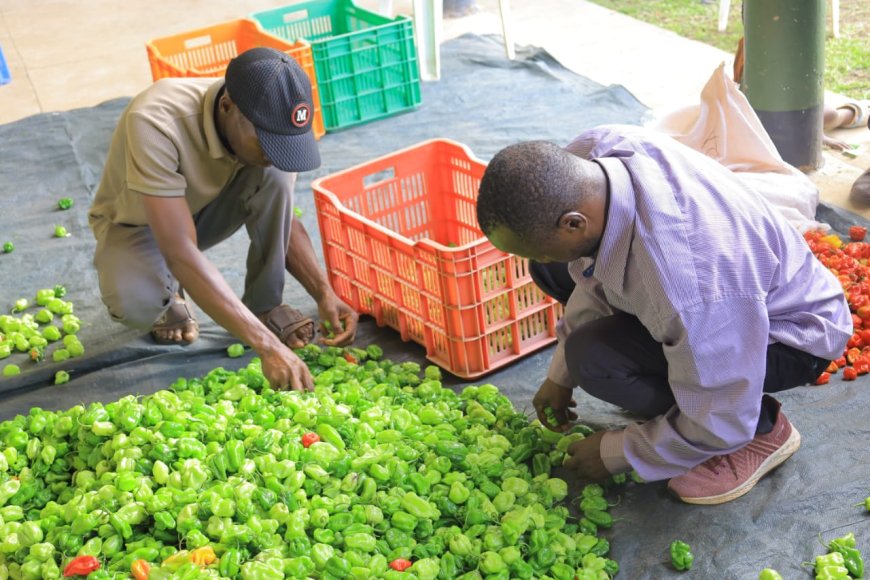
Demand in the European market is expanding due to immigration-led culinary diversification and rising interest in exotic, spicy flavours. Leading importers of fresh chilli are France, Spain, the UK, and Germany.
The joint venture is one of the major outcomes of an August 2025 capacity building workshop that saw over 30 horticultural farmers trained by the Stanbic Business Incubator Limited (SBIL) under the Albertine Agribusiness Development Programme (ADP) in partnership with the Uganda National Oil Company (UNOC).
Kwamya said the association currently has 1,930 members registered, with a target of hitting 10,000 before the end of 2026. He however highlighted the lack of extension workers as a key challenge affecting their production levels, calling upon government to explore means of improving services to the grass roots.
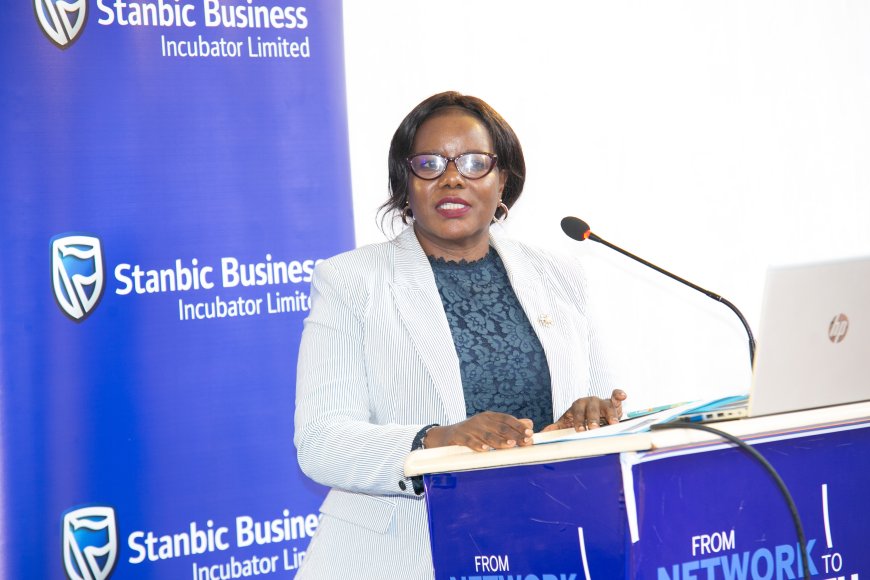
Catherine Poran, the SBIL Chief Executive said, "It is so good to see that farmers are putting theory to life. We are seeing farmers being linked to markets. It is one thing for farmers to grow food, but it is another to link them to markets, and see the fruits of their labour. At Stanbic Business Incubator, our mandate lies in supporting enterprises to scale and reach their potential, all in line with our purpose of driving Uganda's growth."
Nicholas Atukwase, a Production Manager with KK Foods said, "We need those products to be at least 50 tonnes per week. Farmers will benefit, because there is a lot of demand for products like chilli and hot pepper. As farmers, all they need to uphold are the pillars of quality, quantity, consistency, meet customer requirements, and regulatory guidelines."
Percy Mucunguzi, the National Content Officer in Charge of Measurements and Reporting at UNOC said, "These farmers have done a great job in teaming up and picking up other farmers along the way. You will agree with me that even if we had billions, it would not be easy to reach everywhere. We always encourage cascading of knowledge. Since we have the mandate to build the capacity of Ugandans, we must support these processes and see all the outcomes come to fruition."
Mucunguzi advised farmers to scale and venture into other enterprises, which he said would enhance their income levels.
"We cannot just look at oil and gas, because it is the hot cake in this region. We have to look at all the other services that support oil and gas, and one of them is the supply of food, medical services, insurance, transport, and others. So, it is important that we look at it in that way, because that is how benefits flow from oil and gas to the rest of the economy," Mucunguzi said.
Emmanuel Blair Niyitegeka, a Senior Agricultural Inspector at the Department of Crop Inspection and Certification at the Ministry of Agriculture, said, "Hot pepper products have high demand, especially in Europe, the Middle East, and some Asian countries. However, to access this market, there are standards that the products must meet."
"One of them is that the pepper must be free from pests, which we call harmful organisms. Therefore, to supply in those markets, a farmer must make sure that they control pests at the farm by installing insect traps, and then monitor the farm to make sure that all the pesticide is applied well. By the time of harvesting, the farmer must make sure that the product is free from pests. Even when applying the pesticide, the farmer must make sure that he applies it at the right time, with the correct dosage,” he said.
Niyitegeka said a system requires commitment because it has standards that everyone must comply with. However, different standards apply to different markets. He said the European Union and the UK have some of the most stringent.
Dr Charles Kajura, the District Production Officer of Hoima said, "KK Foods asked us to make sure that our farmers are certified to produce for the export market. In other words, they are supposed to get codes. Each farmer must be coded. Coding means that you will have your farm identified, specifically so that whatever we get from your farm is coded, and when it goes to the export market and we find any problem, we shall come back to your farm without any hesitation and be able to follow up in terms of quality control."
Referring to the limited extension services, Dr Kajura said, "We want to focus on the group approach. We are asking these farmers to organise themselves into groups so that the extension worker can meet them all at once. Instead of going to individual farmers, which will be impossible, we can go to the groups of farmers organised in a given locality and handle them together."
"We are also exploring the aspect of using Community-Based Facilitators (CBF). We want to train these community-based facilitators hands-on, so that when our extension workers are not there, they are able to provide the services. We have selected two CBFs per Parish, and now we want to give them skills, so that they can help us to extend some of the information to the farmers," Dr Kajura said.

John Kusolo is a Pastor, Sports Enthusiast and Ugandan journalist with Nile Chronicles News (NCN). With a strong commitment to journalistic excellence, he is recognized for his dedication, goal-oriented approach, and ability to thrive in challenging environments. Kusolo brings focused motivation and professionalism to his reporting and media assignments.















Comments (0)