
Experts Call for Urgent Review of Mobile Money Taxes Amid Declining Usage
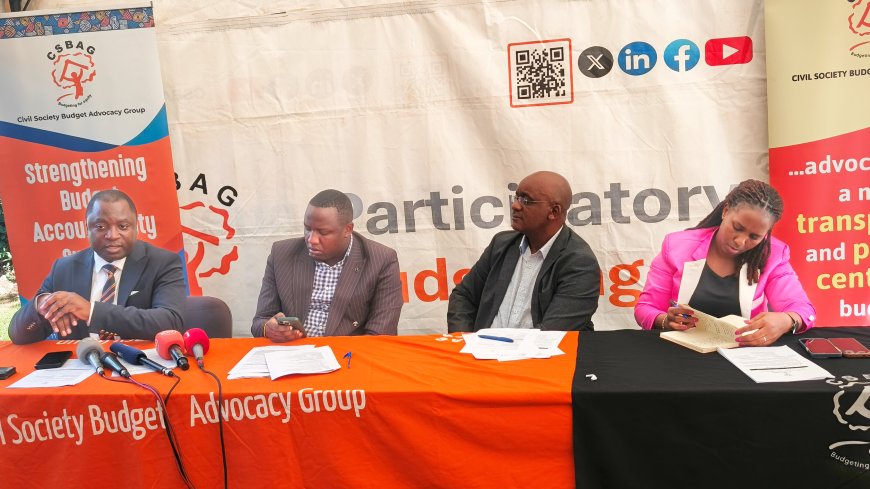
Stakeholders in Uganda’s financial and digital sectors have raised concern over the declining use of mobile money services, attributing the trend to high taxation that is undermining financial inclusion and economic growth.
Speaking during a press conference at the headquarters of the Civil Society Budget Advocacy Group in Kampala, Managing Director Julius Mukunda cited recent studies indicating a sharp drop in mobile money usage following the introduction and adjustment of taxes.
Mr Mukunda referenced findings by the International Growth Center showing that mobile money usage fell by 40 per cent in areas with banking access after 2018. In rural regions without banks, the effects were more severe, with reduced transactions and increased reliance on cash savings.
He further noted that a 2025 study by the International Monetary Fund found a similar 40 per cent decline in mobile money usage in Uganda, largely driven by increased transaction costs. According to the study, every 10 per cent rise in mobile money charges results in a 20 per cent drop in usage, contributing to an overall reduction of about 35 per cent.
“The current tax regime is pushing people away from digital financial services,” Mr Mukunda said, adding that mobile money had previously played a key role in integrating millions into the formal economy.
He also pointed to regional comparisons, noting that countries such as Rwanda and Ghana have eliminated withdrawal taxes, thereby enhancing accessibility to digital transactions.
Mr Mukunda highlighted the high cost of smartphones as another barrier to Uganda’s digital transformation agenda. He said import duties and Value Added Tax (VAT) have made smartphones unaffordable for many, limiting internet penetration.
“Uganda has over 32 million mobile phone users, but only about 20 million use smartphones. Removing VAT and import duties on affordable smartphones would significantly boost internet usage and e-commerce,” he said.
He argued that while the government seeks to build a digital economy, high device costs continue to slow adoption, particularly among low-income earners.
The Civil Society Budget Advocacy Group and the Federation of Small and Medium Enterprises are now urging government to reconsider its tax policies, including a proposal to reduce the mobile money withdrawal tax from 0.5 per cent to 0.25 per cent.
Mr Mukunda said the proposal is informed by the growing role of mobile money as an alternative banking system, especially as commercial banks consolidate and reduce their physical presence in rural areas.
“Mobile money agents are effectively the new banks for many Ugandans. Taxing them heavily while other financial channels are treated differently creates inequity,” he said.
Also speaking at the briefing, John Walugembe, head of the Federation of Small and Medium Enterprises, warned that high transaction costs are discouraging businesses from adopting digital payment systems.
He noted that Africa’s digital economy is projected to create over 60 million jobs, but restrictive policies could limit Uganda’s share of these opportunities.
“A 0.5 per cent withdrawal tax is a disincentive. SMEs are avoiding mobile money because it eats into their already thin profit margins,” Mr Walugembe said.
He added that reducing or eliminating the tax would encourage digital adoption, improve transaction visibility, and expand the country’s tax base by bringing more businesses into the formal economy.
Mobile money agent Janepher Tumwebaze told the press conference that the introduction of taxes had significantly reduced customer numbers and transaction volumes.
“Many customers now prefer cash or banking agents, especially for transactions above Shs500,000, because the charges are lower,” she said.
Ms Tumwebaze added that the sector, which largely employs women and youth, has experienced job losses as some agents exit the business due to declining profitability.
“People are now carrying cash despite the risks, and agent banking is attracting more customers because it is cheaper,” she said.
Stakeholders urged government to adopt a long-term approach, arguing that reducing mobile money taxes could ultimately increase revenue through higher internet usage and expanded digital transactions.
They maintained that easing the tax burden on both mobile money and smartphones would accelerate Uganda’s transition to a digital economy while safeguarding livelihoods and promoting inclusive growth.

Benjamin Mwibo is a talented, passionate and creative journalist with a commitment to high quality out put that is factual and researched. Above all Dedicated with a strong desire to identify the truth of the matter.















Comments (0)