
Bugisu Region Welcomes Judiciary-Led Mediation Efforts to Resolve Cultural Disputes
According to Steven Masiga, spokesperson of the Bugisu Cultural Institution, the current wrangles stem from a misunderstanding and, in some cases, disregard of the law governing cultural leadership. Before the government fully operationalized Article 246 in Bugisu, some elders—without legal mandate—created parallel mechanisms for identifying a cultural leader. This has resulted in competing claims and confusion within the community.
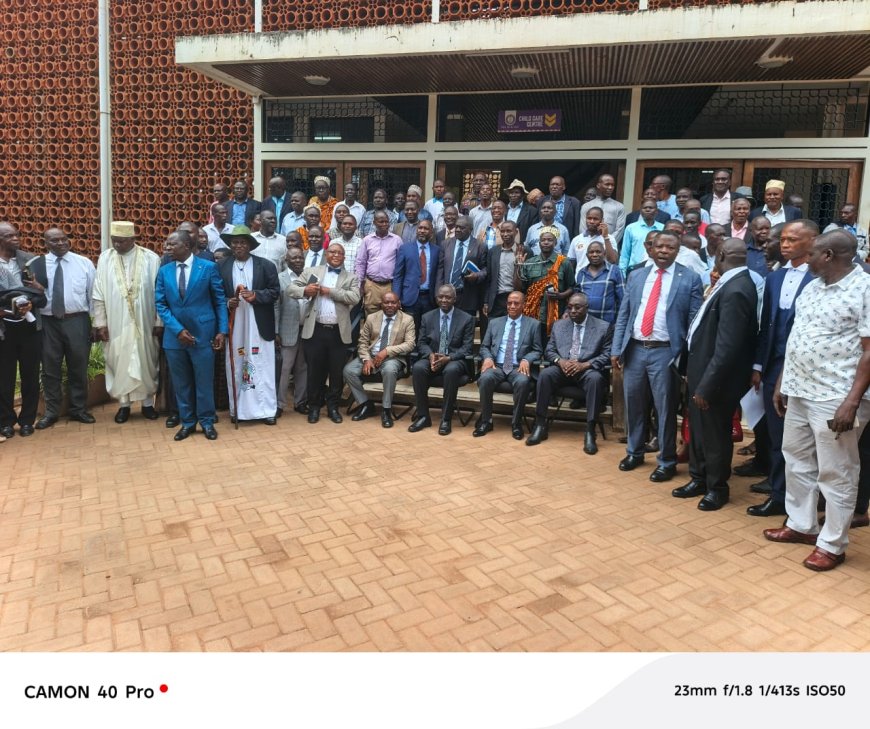
By Steven Masiga
The Bugisu Region has welcomed ongoing mediation efforts spearheaded by Uganda’s judiciary as a timely and lawful intervention aimed at resolving long-standing cultural leadership disputes within the community.
Bugisu is among several regions in Uganda recognized for having a gazetted cultural leader, alongside others such as Buganda, Busoga, Bunyoro, Acholi, Lango, Budama, and Kasese. Many of these traditional institutions existed prior to Uganda’s independence and continued until 1967, when the government abolished them, stripping them of legal recognition and forcing some cultural leaders into exile while others faced arrest.
It was not until the coming into force of the 1995 Constitution of Uganda that traditional and cultural institutions were restored. This followed earlier engagements during the National Resistance Army (NRA) liberation struggle, led by Yoweri Museveni, where commitments were made to various communities to reinstate their cultural leadership structures.
The Constitution, particularly Article 246, re-established these institutions but with clear limitations—cultural leaders were not to exercise legislative, executive, or administrative powers. To operationalize this provision, Parliament enacted the Institution of Traditional or Cultural Leaders Act 2011, providing a legal framework for the recognition and functioning of cultural leaders across the country.
Root of the Bugisu Conflict
According to Hon. Steven Masiga, spokesperson of the Bugisu Cultural Institution, the current wrangles stem from a misunderstanding and, in some cases, disregard of the law governing cultural leadership. Before the government fully operationalized Article 246 in Bugisu, some elders—without legal mandate—created parallel mechanisms for identifying a cultural leader. This has resulted in competing claims and confusion within the community.
“The fundamental issue is whether to follow the law as enacted by Parliament or to rely on informal structures created by elders,” Masiga explains.
Despite the existence of the 2011 Act, Masiga notes that there remains widespread ignorance about its provisions, even among educated elites. This has fueled disputes and allowed political actors to exploit divisions by supporting rival factions.
Legal and Philosophical Perspectives
Masiga further situates the conflict within broader jurisprudential debates. The positivist school of law asserts that only the state has authority to enact laws, while sociological theories emphasize that law evolves from the customs and values of the people. Legal realism, as advanced by jurists like Oliver Wendell Holmes Jr., underscores that the true meaning of law lies in how courts interpret and apply it.
“These schools of thought help us understand why tensions arise when statutory law appears to conflict with community perceptions of tradition,” Masiga observes.
Recognition of the Umukuka
The current cultural leader, His Highness Jude Mike Mudoma, was gazetted in accordance with the Constitution and the 2011 Act, as well as the customs of the Bamasaaba people. His recognition followed a mediation process initiated around 2020 to resolve earlier disputes.
Government later issued a corrigendum to align the institution with constitutional requirements, transitioning from “Inzu Ya Masaba” to the Bugisu Cultural Institution, consistent with Article 10 of the Constitution and the recognition of indigenous communities.
However, some founding members of Inzu Ya Masaba challenged this move in court, arguing that the process undermined their traditional role in selecting a cultural leader. This legal contest has further deepened the dispute, framing it as a broader struggle between state authority and community autonomy.
Judiciary Steps In
In a renewed effort to resolve the impasse, the judiciary has constituted a high-level mediation panel comprising distinguished legal minds, including Anthony Butera, Andrew Khaukha, Yorokamu Bamwine, Francis Atwooki, and Elly Karuhanga Gimara.
The mediation process is anchored in Article 126(2)(d) and (e) of the Constitution, which emphasize reconciliation and the promotion of substantive justice. It also aligns with the judiciary’s broader strategy to promote Alternative Dispute Resolution (ADR) mechanisms as a way of resolving conflicts more effectively.
Masiga commends the panel, describing its members as highly experienced professionals with both academic and practical expertise in mediation.
Why Mediation Matters
Mediation, unlike litigation, focuses on resolving disputes rather than merely deciding cases. Legal scholars such as Frank E. A. Sander have long advocated for its use, arguing that not all disputes require court adjudication.
Drawing on a recent example, Justice Khaukha illustrated the value of mediation using a simple analogy: three children fighting over an orange discovered that each needed a different part—the peel, the juice, and the seeds—demonstrating that conflicts can often be resolved through understanding underlying interests.
Masiga notes that mediation is deeply rooted in both cultural and religious traditions, citing its presence in biblical teachings and Islamic history during the time of Prophet Muhammad.
Call for Unity and Legal Awareness
As the mediation process unfolds, Masiga urges all parties to act in good faith, avoid imposing preconditions, and maintain confidentiality to foster genuine reconciliation.
“The law provides a remedy for every grievance—ubi jus ibi remedium,” he emphasizes.
He also calls for increased public sensitization on the legal framework governing cultural institutions, arguing that ignorance of the law remains the biggest obstacle to lasting peace in Bugisu.
With the judiciary now actively engaged, there is growing optimism that the mediation process will bring a definitive and harmonious resolution to the Bugisu cultural leadership question, setting a precedent for other communities facing similar challenges across Uganda.
Hon. Steven Masiga is the Spokesperson Bugisu Cultural Institution and Legal scholar.
Telephone number: 0782231577

John Kusolo is a Pastor, Sports Enthusiast and Ugandan journalist with Nile Chronicles News (NCN). With a strong commitment to journalistic excellence, he is recognized for his dedication, goal-oriented approach, and ability to thrive in challenging environments. Kusolo brings focused motivation and professionalism to his reporting and media assignments.









Comments (0)