
Uganda's Census Model Wins Regional Admiration as Eswatini Delegation Visits UBOS for Benchmarking
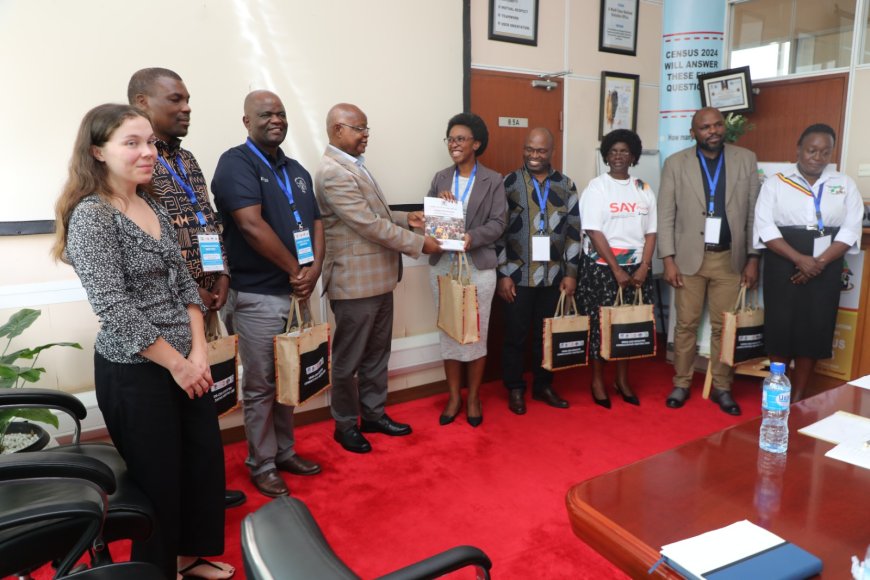
Uganda has emerged as a continental reference point for census management and statistical excellence, drawing a high-level delegation from the Kingdom of Eswatini that spent a week at the Uganda Bureau of Statistics learning from one of Africa's most impressive population counting exercises.
The five member delegation from the Central Statistics Office of Eswatini, led by Dlamini Marilyn Phumlile, visited UBOS for a benchmarking exercise ahead of Eswatini's own National Population and Housing Census planned for 2027. Their visit, spanning five days, was anchored in one clear objective: to study how Uganda did it, and to take those lessons home.
Receiving the delegation, UBOS Executive Director and Chief Statistician Dr. Chris N. Mukiza used the occasion to reflect on Uganda's statistical journey, paying tribute to President Yoweri Kaguta Museveni for creating the political and institutional environment that has allowed the Bureau to thrive.
"The President's visionary leadership and stewardship have not only strengthened statistical independence but also facilitated smooth statistical operations through the provision of adequate resources, thereby ensuring timely statistical production and supporting national development," Dr. Mukiza said.
At the heart of the discussion was Uganda's National Population and Housing Census 2024, a landmark exercise that stood out not only for its scale and precision but for an extraordinary financial achievement.
The Government of Uganda funded 98 per cent of the Census, with development partners contributing only the remaining two per cent, a demonstration of national ownership that drew particular admiration from the visiting delegation.
Dr. Mukiza outlined the governance structures that underpinned the Census, explaining that Uganda's apex Census body was the National Census Council, chaired by the Prime Minister.
He advised the Eswatini delegation to establish similarly clear and robust census structures ahead of their 2027 exercise, stressing the importance of comprehensive enumeration where every citizen is counted and no one is left behind.
For the Eswatini delegation, the visit was rich with practical insights. Ms. Phumlile acknowledged the depth of knowledge acquired during the five days, highlighting a range of innovations that UBOS deployed during the Census 2024 that Eswatini intends to study and adapt.
These included a 24-hour situation room for real-time monitoring of census data collection coverage, a census dashboard, an e-recruitment system, an e-payment system, an extensive publicity strategy, and an overall census management framework that kept a complex national exercise firmly on track.
"We thank the Executive Director and the Management of UBOS for the valuable knowledge and experience shared during this benchmarking exercise," Ms. Phumlile said, adding that her office would be seeking continued technical support from UBOS as Eswatini builds capacity ahead of its own census.
Beyond statistics, Dr. Mukiza extended Uganda's warmth to the visiting team, highlighting the country's rich tourism offerings including mountain gorillas, waterfalls, game parks, and volcanic mountains, and encouraging the delegates to experience the country's natural wonders during their stay.
UBOS expressed confidence that the Eswatini delegation was leaving Kampala equipped with the knowledge, tools, and institutional insights needed to deliver a successful census in 2027, further cementing Uganda's growing reputation as a hub of statistical excellence on the African continent.

Benjamin Mwibo is a talented, passionate and creative journalist with a commitment to high quality out put that is factual and researched. Above all Dedicated with a strong desire to identify the truth of the matter.











Comments (0)