
Willpower vs. Reality: The True Cost of Regional Ebola Preparedness
Managing an outbreak response in Africa requires an immense amount of operational agility, but we must be honest about what that agility costs. Often, global health narratives treat outbreaks as linear, isolated events. A country deals with one disease, resolves it, and moves on to the next.
By Rebecca Cherop
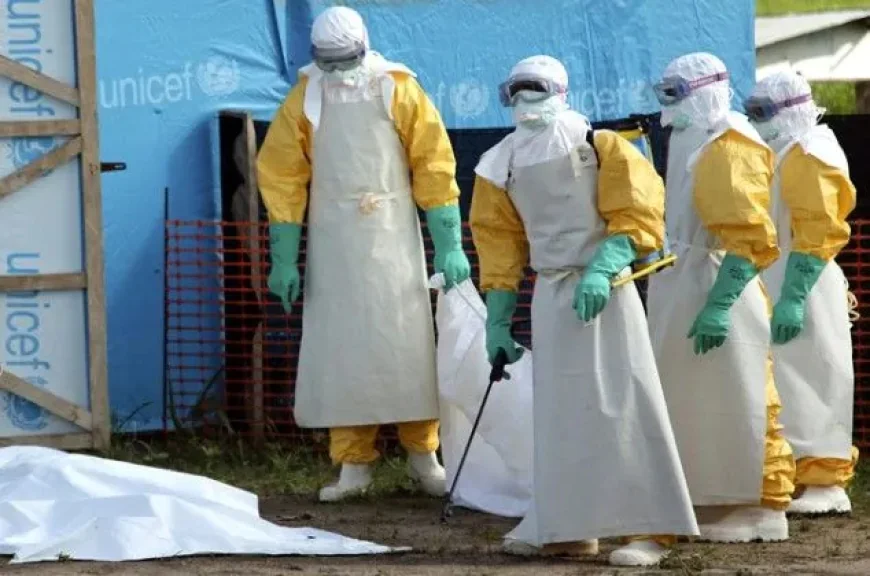
For the past few weeks, our focus on the ground here in South Sudan has been explicit: managing the immediate, demanding realities of the ongoing Cholera and Monkeypox outbreaks. But in public health, I’m learning that you rarely have the luxury of facing a single adversary. As news confirmed the escalation of the Ebola Bundibugyo outbreak in the Democratic Republic of Congo’s Ituri province and its rapid movement across the border into Uganda, the operational energy here in Juba shifted instantly. Given our fluid borders and tight geographical connectivity with both nations, South Sudan is at a critical, high-stakes crossroad.
But there is a profound difference in how this threat is being met. We aren’t waiting in fear for a case to cross our checkpoints before we build a defense. Under the framework of the Africa CDC and the activation of the continental Incident Management Support Team (IMST), a response is being mobilized. From my vantage point on the frontlines of this transition, I am witnessing what regional health security looks like in practice: a coordinated effort that understands that a threat to one African border is an immediate mandate for leadership across them all. Yet, as a young person learning to navigate this operational pivot in real-time, it is clear that the space between institutional strategy and frontline execution is filled with immense friction.
The Reality of a Multiplex Strain: Dedication is Not an Infinite Resource.
Managing an outbreak response in Africa requires an immense amount of operational agility, but we must be honest about what that agility costs. Often, global health narratives treat outbreaks as linear, isolated events. A country deals with one disease, resolves it, and moves on to the next.
The reality on the ground in Juba is far messier. We are operating in a high-friction, multiplex environment with no strong health systems in place. Asking health workforces who are already exhausted and actively battling Cholera and Mpox to instantly erect a fortified defense against Ebola is a staggering demand.
You cannot simply pivot a surveillance team or a border health officer without creating a vulnerability somewhere else. This challenge is steeply compounded by the nature of the virus itself; because this is the Bundibugyo strain, we are operating without the luxury of licensed vaccines or established therapeutics available for the Zaire strain. It is a raw test of health systems’ resilience.
Dedication is not an infinite resource, and without rapid, unbureaucratic financing hitting the ground immediately, “preparedness” risks becoming a word used on administrative checklists rather than a fully operationalized reality at our border checkpoints.
Aligned Under One Table: The Power and Limits of Partner Coalitions
What makes this response distinct from the past is not the absence of challenges, but the architecture of the leadership managing them.
Traditionally, a multi-border threat of this scale would trigger a passive waiting period where external international agencies dictated the playbook.
Today, a different precedent is being set. Following the high-level consultative meetings that brought together different partners, we are seeing a massive coalition of international partners, including the USA, UK, European Union, UN agencies, and major philanthropies, coming together.
The power of this coalition lies in its alignment. Rather than fragmented, duplicate interventions that historically overwhelmed local systems, these global partners are actively integrating their resources, technical expertise, and laboratory support under a single, unified continental strategy steered by the Africa CDC. This collective mobilization is vital; the human and economic corridors between the DRC, Uganda, and South Sudan are vibrant hubs of trade and high population mobility where heavy-handed border closures are both economically devastating and practically impossible to enforce.
However, a high-level partner table in an office is only as good as the speed at which it impacts the ground.
The true measure of this coalition’s success will not be found in the solidarity of press releases, but in how quickly diagnostic kits, personal protective equipment (PPE), and cross-border data-sharing protocols actually reach the frontlines. True health sovereignty is not a polished, finished product; it is a difficult transition being forged in real-time.
Standing on the ground in Juba, navigating the overlapping demands of multiple outbreaks, the weight of the work is undeniable. But so is the reality that we are finally building a system that anticipates crises rather than merely reacting to them.

John Kusolo is a Pastor, Sports Enthusiast and Ugandan journalist with Nile Chronicles News (NCN). With a strong commitment to journalistic excellence, he is recognized for his dedication, goal-oriented approach, and ability to thrive in challenging environments. Kusolo brings focused motivation and professionalism to his reporting and media assignments.














Comments (0)