
Sr. Mary Wasagali: Equal Opportunities Commission Role Extends Beyond Bugisu
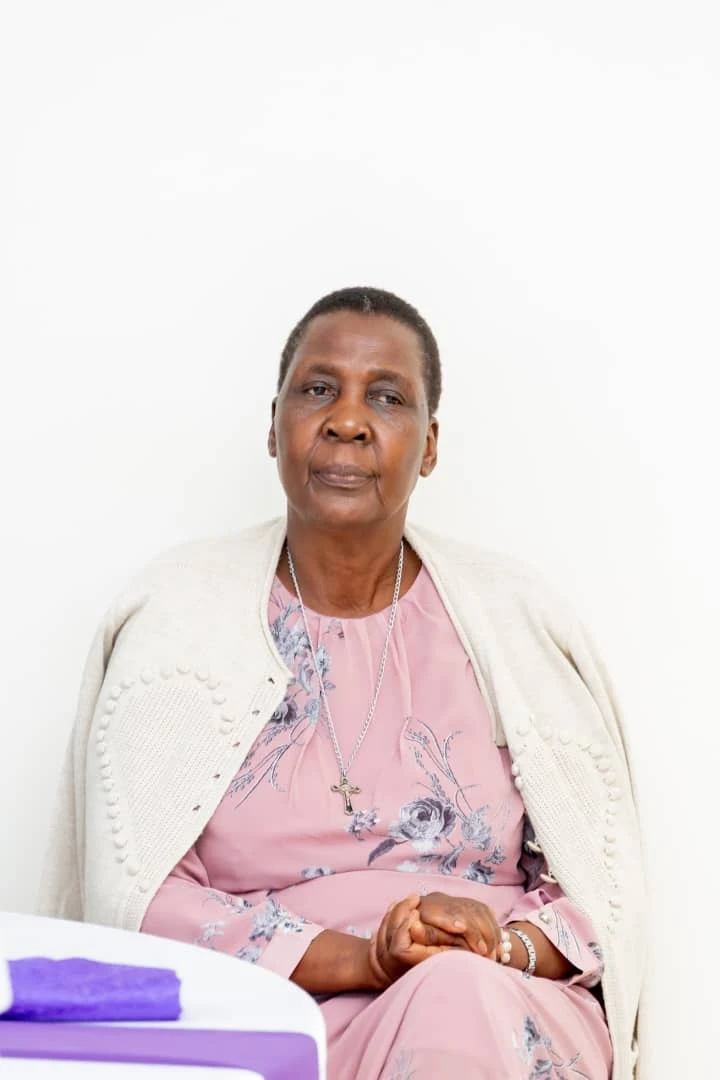
Hon. Sr. Mary Wasagali, a member at Uganda’s Equal Opportunities Commission (EOC), has been described by political, cultural, religious and academic leaders as a public servant whose contribution to promoting equality and resolving disputes extends far beyond the Bugisu region.
By Our Reporter Sironko, Uganda
Hon. Sr. Mary Wasagali, a member at Uganda’s Equal Opportunities Commission (EOC), has been described by political, cultural, religious and academic leaders as a public servant whose contribution to promoting equality and resolving disputes extends far beyond the Bugisu region.
Sr. Wasagali was appointed to the Equal Opportunities Commission by President Yoweri Kaguta Museveni following the 2021 General Elections. Before her appointment to the Commission, she was known in Sironko and the wider Bugisu region as an active mobiliser for the National Resistance Movement (NRM), a role that some of her associates say she has continued to perform through community mobilisation, education support and social interventions.
Veteran Uganda Patriotic Movement chairperson for Bugisu Region and former Resident District Commissioner of Kisoro, Mzee Victor Wanyoto, says Sr. Wasagali has remained committed to serving the community despite taking up a statutory government position.
“More than 60 percent of her earnings is spent on mindset change and sponsoring university symposiums. I am very proud of Rev. Sr. Mary Wasagali,” Wanyoto said.
Championing equal opportunities
The Equal Opportunities Commission is a statutory government institution mandated to eliminate discrimination and inequalities against individuals and groups on grounds including sex, race, colour, ethnic origin, tribe and other related grounds.
It is within this mandate that Sr. Wasagali has undertaken work involving employment disputes, family conflicts, land-related grievances and cases concerning vulnerable groups, according to accounts from colleagues, community leaders and other stakeholders.
Her supporters say her professional background has also contributed to her approach to dispute resolution.
Sr. Wasagali is a trained nurse and psychiatrist. She previously worked at Kenyatta University in Kenya before relocating to Uganda, where she later served on the Sironko District Service Commission and as Vice Chairperson of Sironko District.
During her earlier years in public and political service, she worked alongside several NRM leaders and mobilisers, including Dr. Tanga Odoi and Hajjat Namyalo, under the leadership of President Museveni.
Former Mbale District Local Council V chairperson Hon. Bernard Mujasi says Sr. Wasagali's involvement in NRM mobilisation dates back to her years in Kenya.
“Her role in the National Resistance Movement is on record right from our days in Kenya. She was part of our senior mobilisers and used to provide support to our teams while working at Kenyatta Hospital,” Mujasi said.
Mujasi's account, he said, is also reflected in the memoirs of the late Maumbe Mukhwana.
Mediation and dispute resolution
One of the areas where Sr. Wasagali's work at the Equal Opportunities Commission has attracted attention is mediation.
According to the 2025/2026 performance information cited by her supporters from the Legal Services and Investigations Department of the EOC, Sr. Wasagali was involved in the successful resolution of more than 80 cases through mediation.
The cases reportedly included employment disputes in which staff members had been dismissed or otherwise affected by decisions that were alleged to have violated proper procedures.
Her supporters argue that mediation helped prevent prolonged litigation and potentially saved government institutions substantial financial resources.
Hon. Steven Masiga, spokesperson of the Bamasaaba Cultural Institution, says Sr. Wasagali used her professional and community-based dispute-resolution skills to intervene in cases involving public servants.
According to Masiga, some of the disputes involved staff at institutions including Makerere University, Nkumba University and Makerere University Business School, as well as local governments in Mbale and Jinja.
He says some disputes were resolved amicably following intervention and guidance from the Equal Opportunities Commission, with affected employees in some cases being reinstated.
The intervention, according to her supporters, demonstrates the importance of alternative dispute resolution in employment-related grievances, particularly where disputes can be resolved without lengthy and expensive court processes.
A case involving a university lecturer
Among the cases cited in praise of Sr. Wasagali's mediation work is that of a refugee and scholar from the Democratic Republic of Congo who was reportedly working as a lecturer at Nkumba University.
The lecturer had allegedly been terminated and was seeking payment of salary arrears amounting to more than Shs2.3 million.
According to accounts provided by her supporters, Sr. Wasagali intervened through mediation, resulting in the lecturer's reinstatement and payment of the salary arrears by the university.
She is also credited with intervening in a dispute involving Pastor Sempa and Makerere University, where her mediation efforts reportedly helped restore relations between the parties.
Protecting widows and orphans
Sr. Wasagali's work has also reportedly extended into land and family disputes, particularly cases involving vulnerable members of society.
She has travelled to areas including Namisindwa, Sironko and the Teso sub-region to mediate cases in which widows and orphans were allegedly facing difficulties in accessing or retaining family property.
Supporters say such interventions reflect the broader mandate of the Equal Opportunities Commission, particularly where vulnerable people face discrimination or are unable to effectively defend their rights.
Professor Florence Wakoko, an associate professor at Columbus State University in the United States, describes Sr. Wasagali as a “rare breed” in public service, citing her commitment to community service.
From political mobilisation to community development
Beyond her work at the EOC, Sr. Wasagali remains a prominent figure in political mobilisation circles in Sironko.
Political actors in Bugisu credit her with contributing to the growth of the NRM's grassroots structures in Sironko, a district that was once considered a stronghold of opposition politics.
Political supporters claim that the district has since witnessed a significant increase in NRM representation, with the district council now having a large majority of NRM councillors.
NRM mobiliser Hajji Suleiman Lumolo says Sr. Wasagali has also supported the education of children belonging to families of fellow NRM mobilisers in Sironko.
Her supporters argue that such interventions have enabled her to maintain close relationships with grassroots communities even after moving into a national public service role.
Combining professional service with political mobilisation
Hajjat Namyalo, an NRM mobiliser, says Sr. Wasagali understands the dynamics of grassroots mobilisation and has contributed to political and social stability in Sironko and Bugisu.
Namyalo says Sr. Wasagali's contribution goes beyond political mobilisation to include community engagement and efforts aimed at addressing social grievances.
The Archbishop of Tororo, Most Rev. Dr. Obbo, has also praised Sr. Wasagali's approach to public service, saying she combines prayer with action.
According to the Archbishop, the Church appreciates the government's continued deployment of Sr. Wasagali in public service.
A wider regional footprint
While Sr. Wasagali's political roots are strongly associated with Sironko and Bugisu, her work at the Equal Opportunities Commission has taken her to different parts of Eastern Uganda and beyond.
Her involvement in cases concerning universities, local governments, families, widows, orphans and employees demonstrates the broad range of issues that fall within the Commission's mandate.
Her supporters argue that her work illustrates how public institutions can use mediation to address grievances before they escalate into costly and prolonged litigation.
Wanyoto says Sr. Wasagali has maintained her commitment to public service despite the demands of her current position.
For cultural and political leaders in Bugisu and Teso, her contribution represents a combination of professional expertise, community engagement, political mobilisation and public service.
As the Equal Opportunities Commission continues to handle complaints relating to discrimination and inequality, Sr. Wasagali's supporters believe her experience in health, community mobilisation and mediation provides her with a distinctive approach to resolving disputes and protecting vulnerable groups.
Her story, they say, is no longer confined to Sironko or Bugisu. It has become part of a wider national conversation about equality, alternative dispute resolution, responsible public service and the protection of citizens whose voices may otherwise go unheard.

John Kusolo is a Pastor, Sports Enthusiast and Ugandan journalist with Nile Chronicles News (NCN). With a strong commitment to journalistic excellence, he is recognized for his dedication, goal-oriented approach, and ability to thrive in challenging environments. Kusolo brings focused motivation and professionalism to his reporting and media assignments.




Comments (0)