
Kuloba Hails Turyagyenda’s Retention as Education PS, Says Her Leadership Offers Hope for Uganda’s Education Future
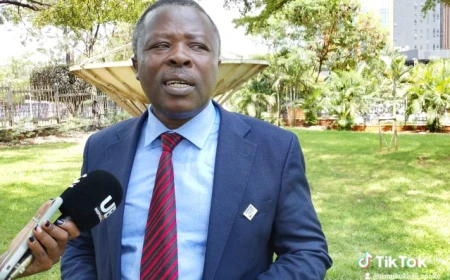
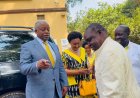
In an exclusive interview with this publication at his home in Mbale City, Kuloba expressed confidence that Dr Turyagyenda’s experience and professional background would help accelerate education reforms, improve institutional accountability and strengthen the quality of learning across the country.

Retired educationist and former Commissioner for Secondary Education at the Ministry of Education and Sports, Sam Kuloba, has welcomed President Yoweri Kaguta Museveni’s decision to retain Dr Kedrace Turyagyenda as Permanent Secretary of the Ministry, describing her continued leadership as a positive development for Uganda’s education sector.
In an exclusive interview with this publication at his home in Mbale City, Kuloba expressed confidence that Dr Turyagyenda’s experience and professional background would help accelerate education reforms, improve institutional accountability and strengthen the quality of learning across the country.
“With Dr Kedrace Turyagyenda at the helm, the sky is the limit,” Kuloba observed, arguing that her leadership offers hope for a stronger and more responsive education system.
Dr Turyagyenda was appointed Permanent Secretary on September 23, 2024, succeeding Ketty Lamaro. Her retention provides continuity at a time when the Ministry is implementing major reforms in curriculum delivery, teacher management and education quality assurance.
A Career Built on Experience
According to Kuloba, Dr Turyagyenda brings more than four decades of experience in Uganda's education sector, having served as a secondary school teacher, headteacher, education inspector and senior administrator.
Her professional journey saw her rise through the education service, joining the Education Inspectorate and eventually serving as Commissioner for Secondary Education Standards before becoming Director of Education Standards.
In these positions, she gained extensive experience in school inspection, quality assurance, compliance with national education standards and policy implementation.
She also participated in governance structures of educational institutions and national education policy discussions, including the Education Policy Review Commission chaired by former Minister of Education Hon. Amanya Mushega.
Kuloba believes this combination of classroom experience, education supervision and policy knowledge gives her a strong understanding of the challenges facing teachers, school administrators and learners.
Supporting Competence-Based Education Reforms
One of the major transformations in Uganda's education system is the transition towards Competence-Based Education and Training, which seeks to move learning beyond the traditional examination-centred approach.
The new curriculum emphasises practical skills, critical thinking, creativity, communication and problem-solving, enabling learners to apply classroom knowledge to real-life situations.
The reforms are intended to produce graduates better equipped for employment, entrepreneurship, innovation and national development.
Dr Turyagyenda's background in education standards and policy implementation places her in a strategic position to support the Ministry in ensuring that the reforms achieve their intended objectives.
However, successful implementation requires adequately trained teachers, appropriate instructional materials and learning facilities. Kuloba considers teacher preparation particularly important, arguing that educators must have the necessary skills to deliver the new curriculum effectively.
TELA System and the Drive for Teacher Accountability
Another significant initiative in the Ministry's education management agenda is the Teacher Effectiveness and Learner Achievement (TELA) system.
Implemented through the Directorate of Education Standards, the digital platform is designed to strengthen teacher accountability, improve classroom supervision and monitor teaching activities in public schools.
TELA uses technology, including biometric identification, smartphones and GPS-enabled monitoring, to support the verification of teacher attendance and presence at their respective schools.
It also facilitates monitoring of school timetables and instructional time, while centralised reporting enables education managers to access information that can guide supervision and administrative decisions.
The system is intended to address longstanding concerns about teacher absenteeism, inadequate classroom supervision and failure to utilise scheduled teaching time effectively.
Kuloba believes that continued implementation and effective monitoring of such initiatives will be important in translating technology-driven reforms into improved classroom performance and better learning outcomes.
Tackling Ghost Teachers and Payroll Irregularities
Strengthening accountability also requires addressing payroll irregularities and ensuring that public resources are directed towards genuine education service providers.
The Ministry, working with local governments and other stakeholders, has pursued measures aimed at identifying ghost teachers, eliminating fraudulent payroll practices and improving personnel verification.
Kuloba believes that these efforts should be accompanied by better management of teachers and improved working conditions to promote professionalism and efficiency in public education institutions.
Understaffing, Funding and Infrastructure Remain Major Challenges
Despite his optimism about Dr Turyagyenda's retention, Kuloba cautioned that significant challenges continue to undermine the delivery of quality education in Uganda.
He identified understaffing, inadequate capitation grants, infrastructure deficits and insufficient teacher capacity-building as some of the key issues requiring urgent attention.
Many public schools continue to experience teacher shortages, resulting in heavy workloads, large classes and limited opportunities for individual learner support.
Inadequate capitation grants also constrain schools' ability to meet operational requirements, purchase instructional materials and maintain effective learning environments.
Kuloba further observed that some provisions of the Education Act require review and amendment to address emerging challenges and strengthen the legal framework governing the sector.
Infrastructure gaps, including inadequate classrooms, laboratories, libraries and sanitation facilities, also remain a concern, particularly given the practical learning requirements of the competence-based curriculum.
He stressed the importance of continuous teacher training to ensure that educators are adequately prepared to implement curriculum reforms and respond to the changing demands of modern education.
A Renewed Mandate for Education Transformation
Kuloba believes Dr Turyagyenda's retention offers an opportunity to consolidate ongoing reforms while addressing longstanding weaknesses in the education system.
Her experience in teaching, school administration, inspection and policy implementation gives her an understanding of the institutional challenges that must be addressed to improve education standards.
However, he maintains that the ultimate measure of her leadership will be the extent to which the reforms translate into tangible improvements in learning outcomes, teacher performance and school management.
For Uganda's education sector to achieve its full potential, the Ministry will need to combine effective administration and accountability with increased investment in staffing, school infrastructure, operational funding and professional development.
Kuloba remains optimistic that with Dr Turyagyenda at the helm, the Ministry has an opportunity to make meaningful progress towards building an education system that responds to the country's development priorities and prepares learners for the future.

John Kusolo is a Pastor, Sports Enthusiast and Ugandan journalist with Nile Chronicles News (NCN). With a strong commitment to journalistic excellence, he is recognized for his dedication, goal-oriented approach, and ability to thrive in challenging environments. Kusolo brings focused motivation and professionalism to his reporting and media assignments.











Comments (0)