
IGG Arrests Seven Senior Parliament Officials Over Corruption Allegations, Set for Anti-Corruption Court Arraignment
The officials are expected to be arraigned before the Anti-Corruption Court today, where they will answer to charges arising from investigations conducted by the Inspectorate of Government.
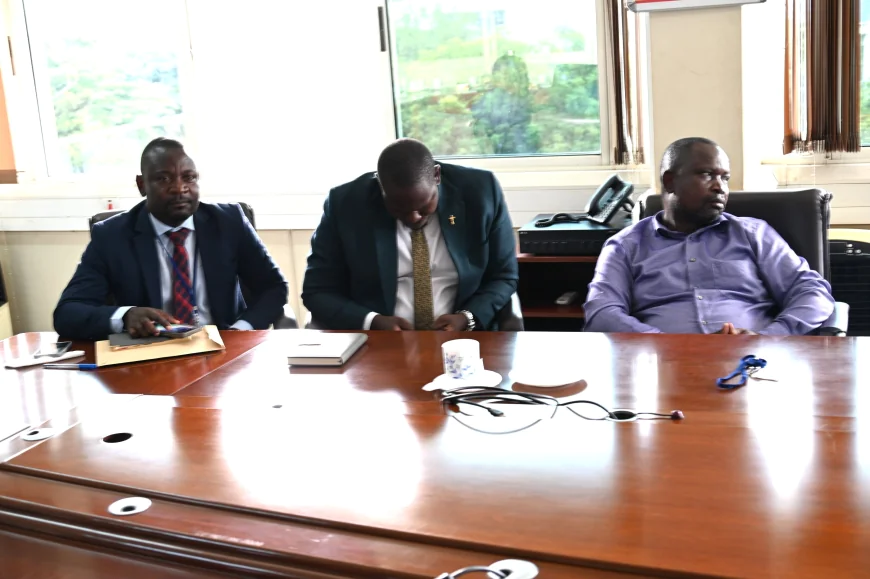
The Inspectorate of Government (IGG) has arrested seven senior officials attached to the Parliament of Uganda over alleged corruption-related offences in a development that has intensified the country's ongoing fight against abuse of public office.
The officials are expected to be arraigned before the Anti-Corruption Court today, where they will answer to charges arising from investigations conducted by the Inspectorate of Government.
Those arrested include Mr. Chris Obore, Director of Communications at Parliament; Mr. Adilo Daniel, Director of Human Resource; Mr. Okema Leonard, Executive Secretary in the Office of the Speaker; Mr. Rajab Kaaya Ssemalulu, Principal Research Officer; Mr. Okwi Emmanuel Emuron, Principal Protocol Officer; Mr. Otebata Vincent, Capacity Development Officer; and Mr. Murebe Methods, Chief Executive Officer of the Uganda Parliamentary Cooperative Savings and Credit Society Limited (SACCO).
The arrests mark one of the most significant anti-corruption operations involving senior parliamentary officials in recent years and underscore the Inspectorate of Government's continued efforts to investigate and prosecute public officers accused of engaging in corrupt practices.
Although the Inspectorate has confirmed the arrests, details regarding the specific charges and the circumstances surrounding the alleged offences are expected to be formally presented before the Anti-Corruption Court during the officials' appearance.
The Anti-Corruption Court, a specialized division mandated to handle corruption and economic crime cases, is expected to hear the prosecution's application as the legal process commences.
The development comes at a time when public institutions in Uganda continue to face increasing scrutiny over accountability, transparency, and prudent management of public resources. The government has repeatedly emphasized a zero-tolerance policy towards corruption, with institutions such as the Inspectorate of Government, the Office of the Director of Public Prosecutions, and other accountability agencies stepping up investigations into allegations involving public officials.
The arrests are likely to attract significant public and political attention given the senior positions held by the accused within Parliament, an institution charged with oversight of government expenditure and legislation.
The Inspectorate of Government has, in recent years, intensified investigations into alleged corruption, abuse of office, causing financial loss, and related offences across government ministries, departments, agencies, and local governments as part of broader efforts to strengthen integrity in public service.
Legal experts note that under Uganda's criminal justice system, all accused persons are presumed innocent until proven guilty by a competent court.
As the case proceeds before the Anti-Corruption Court, prosecutors are expected to outline the evidence supporting the charges, while the accused officials will have an opportunity to respond through the judicial process.
The court proceedings are expected to provide greater clarity on the nature of the allegations and the extent of the alleged wrongdoing.
The Inspectorate of Government is expected to issue a detailed statement after the officials have been formally presented before court, outlining the charges and the findings that informed the arrests. Parliament is also expected to comment on the matter as the judicial process unfolds.

John Kusolo is a Pastor, Sports Enthusiast and Ugandan journalist with Nile Chronicles News (NCN). With a strong commitment to journalistic excellence, he is recognized for his dedication, goal-oriented approach, and ability to thrive in challenging environments. Kusolo brings focused motivation and professionalism to his reporting and media assignments.








Comments (0)