
Dr. Watulatsu: Uganda Must Build Systems That Expose Corruption Without Waiting for Ministers
In an opinion piece reacting to the recent anti-corruption drive led by the Minister of Local Government, Hon. Balaam Barugahara Ateenyi, and Minister of State for Local Government, Hon. Justin Nameere, Dr. Watulatsu said corruption in local governments is "not invisible" but rather thrives because many people choose to ignore or conceal it.
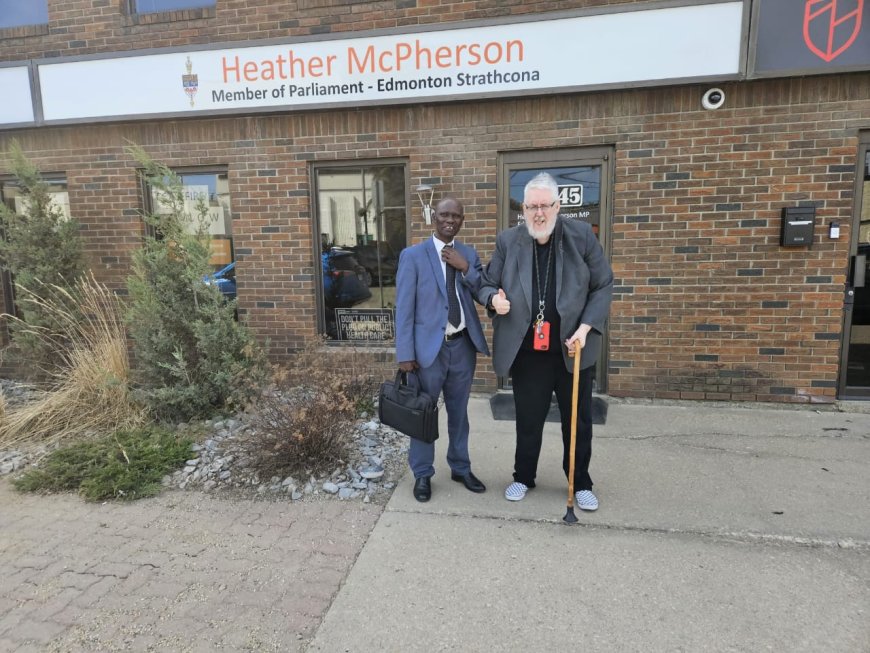
Mbale, Uganda – Political analyst Dr. Samuel W. Watulatsu has called for stronger local accountability systems in the Bugisu sub-region, arguing that corruption at district level is widely known but often goes unreported, poorly investigated, and rarely acted upon.
In an opinion piece reacting to the recent anti-corruption drive led by the Minister of Local Government, Hon. Balaam Barugahara Ateenyi, and Minister of State for Local Government, Hon. Justin Nameere, Dr. Watulatsu said corruption in local governments is "not invisible" but rather thrives because many people choose to ignore or conceal it.
The analyst observed that the ministers' recent visits to Bugisu have forced uncomfortable truths to the surface by exposing alleged cases of financial mismanagement, ghost workers, and poor service delivery in local government institutions.
According to Dr. Watulatsu, the intervention should not be viewed as targeting Bugisu alone but should instead be expanded to other regions facing similar governance challenges to avoid perceptions of political witch-hunting.
"Corruption is not invisible in all districts across our country. It is just convenient for some people to pretend it is," he noted.
Why Corruption Persists
Dr. Watulatsu identified four major factors that, in his view, have allowed corruption to flourish within district local governments.
Proximity and Local Protection Networks
He argued that close relationships among district leaders often make it difficult for wrongdoing to be exposed. According to him, chief administrative officers, district chairpersons, departmental heads, contractors and political leaders frequently operate within the same social and family circles, making whistleblowing risky.
"People fear being labelled traitors if they speak out," he said, adding that many issues are often "handled internally, buried in meetings, or traded for silence."
He believes the ministers' outsider status gives them greater freedom to question local leaders without the constraints of local loyalties.
Weak Oversight Mechanisms
The analyst further pointed to weaknesses in accountability institutions such as District Public Accounts Committees, internal audit departments and district councils.
He argued that some oversight bodies are compromised, underfunded or influenced by political networks, allowing questionable practices to go unchecked.
According to Dr. Watulatsu, the involvement of ministers with direct backing from the central government has helped break this cycle by enabling demands for original records and greater scrutiny.
Fear of Victimisation
The analyst also highlighted the fear among public servants and local leaders who may possess information about corruption but remain silent due to concerns over losing jobs, contracts or development opportunities.
He said many teachers, health workers and councillors hesitate to report wrongdoing because of potential retaliation.
"Corruption thrives in silence," he noted, adding that the presence of senior government officials can encourage people to speak because they feel protected.
Politics and Protection of Interests
Dr. Watulatsu further argued that some political actors benefit from keeping district operations opaque.
He warned that exposing corruption locally could bring down entire networks of beneficiaries, which is why some prefer issues to remain hidden.
However, when a minister publicly exposes irregularities, he said, the matter becomes a national concern that cannot easily be dismissed.
Recommendations for Bugisu
To address the problem sustainably, Dr. Watulatsu proposed several measures aimed at strengthening accountability and citizen participation.
He called for the establishment of stronger community watchdog mechanisms involving religious institutions, cultural leaders, retired public servants, opinion leaders and the media.
He also advocated for better protection of whistleblowers, saying teachers, parish chiefs and other public servants should have safe channels to report corruption without fear of victimisation.
Additionally, he urged Members of Parliament and district chairpersons to hold regular accountability meetings with communities rather than waiting for ministerial interventions.
Finally, he emphasized the importance of proper documentation and record-keeping, arguing that written records make it more difficult to conceal corruption.
Minister Balaam's Anti-Corruption Drive
The opinion comes amid an ongoing anti-corruption campaign spearheaded by Local Government Minister Hon. Balaam Barugahara, who has adopted a hands-on approach characterised by impromptu inspections of government facilities and public confrontations with officials accused of mismanaging public resources.
The minister's interventions have drawn national attention and reignited debate about accountability and service delivery in local governments.
For Dr. Watulatsu, however, the ultimate solution lies not in periodic crackdowns but in building systems that make corruption difficult to sustain.
"The real work is to build proper systems in Bugisu where we do not need to wait for ministers from Kampala to see what is happening on the ground," he concluded.
The analyst's remarks have added momentum to the growing national conversation on strengthening transparency, accountability and citizen participation in Uganda's local governance structures.

John Kusolo is a Pastor, Sports Enthusiast and Ugandan journalist with Nile Chronicles News (NCN). With a strong commitment to journalistic excellence, he is recognized for his dedication, goal-oriented approach, and ability to thrive in challenging environments. Kusolo brings focused motivation and professionalism to his reporting and media assignments.












Comments (0)