
Undermining Innovation Comparisons is Misguided: Why Context Matters in Evaluating 'Prof' Julius Nyanzi and Elon Musk
A more balanced and intellectually honest perspective demands that such comparisons be anchored in facts, context, and the realities within which innovators operate.
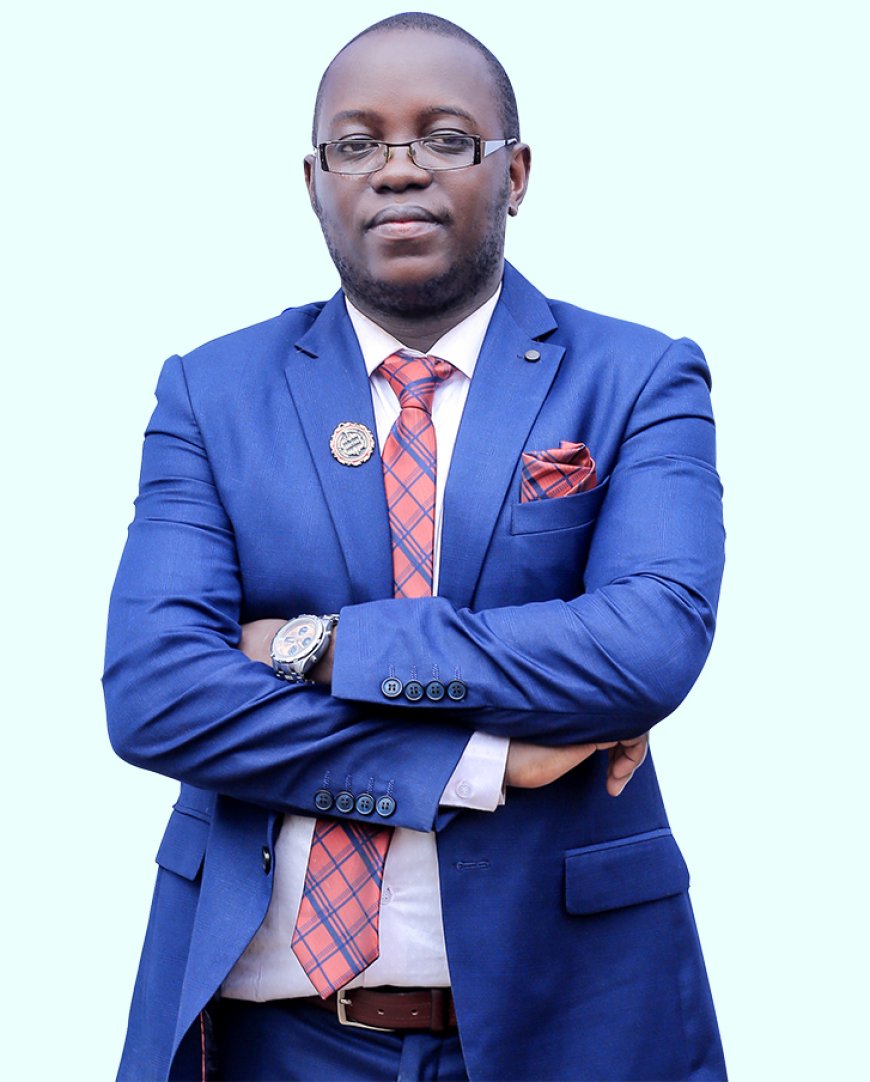
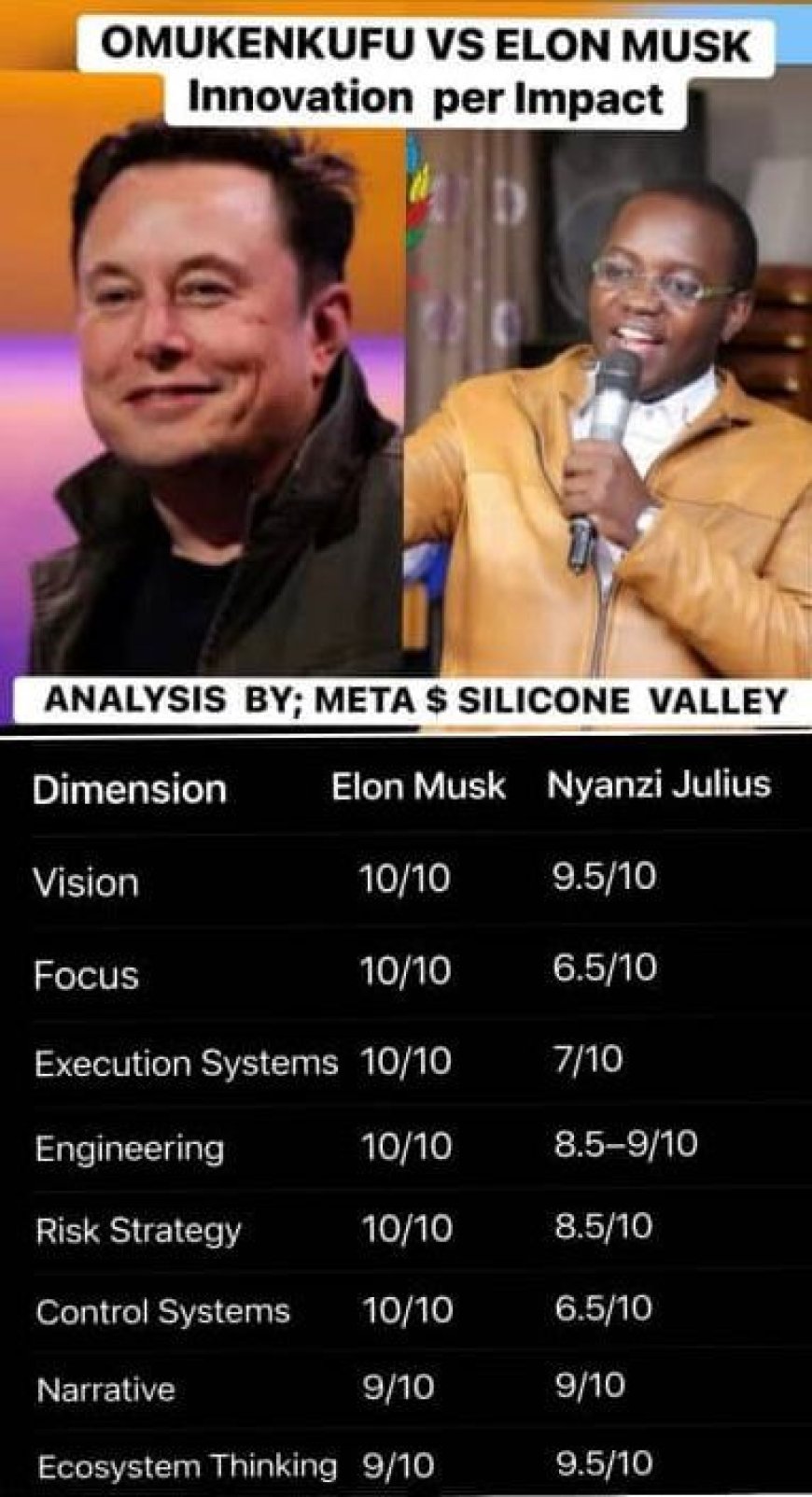
In recent days, a growing wave of commentary has sought to downplay or outright dismiss the innovation and impact comparison between Julius Nyanzi and Elon Musk. Much of the criticism, however, appears rooted more in emotion and surface-level judgment than in a grounded understanding of how innovation should be assessed across vastly different environments.
A more balanced and intellectually honest perspective demands that such comparisons be anchored in facts, context, and the realities within which innovators operate.
Early Global Recognition: Merit, Not Myth
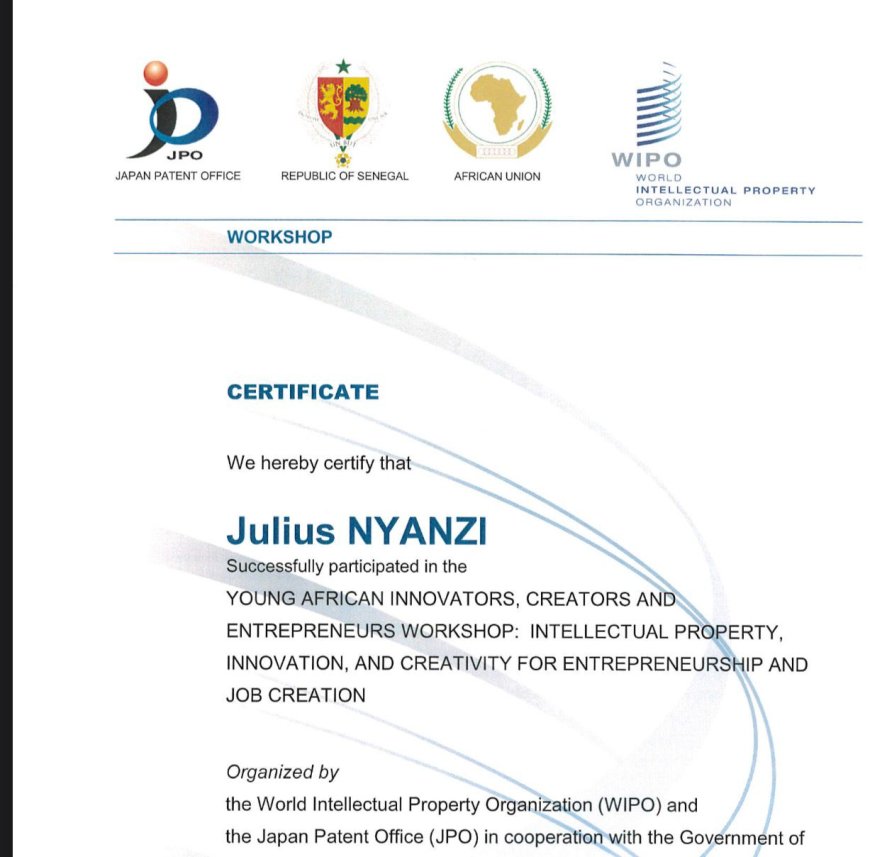
Contrary to claims that exaggerate or misrepresent his credentials, Julius Nyanzi’s innovation journey is neither recent nor self-proclaimed. His intellectual promise was identified at just 20 years of age by the World Intellectual Property Organization (WIPO), a respected United Nations body tasked with fostering global innovation and protecting intellectual property.
This recognition was not symbolic. It opened doors for Nyanzi to participate in high-level international engagements—ranging from innovation summits to technical workshops—organized in collaboration with institutions such as the Japan Patent Office and other global partners.
These platforms are not open to chance participation; they are merit-based, drawing individuals identified for their potential to influence innovation ecosystems. At that stage, Nyanzi was already being positioned among emerging global thinkers contributing to conversations on:
Intellectual property systems
Innovation-driven economies
Entrepreneurship as a tool for job creation
The Strategic Choice: Building at Home
Perhaps the most defining aspect of Nyanzi’s trajectory is not where he has been—but where he chose to work. While many innovators in similar positions opt to remain within advanced economies, Nyanzi made a deliberate decision to return to Uganda and operate within its constraints. This was not a fallback; it was a strategic commitment to localized impact. Operating in a resource-limited environment presents challenges that extend beyond funding. These include:
Limited industrial infrastructure Weak innovation financing systems
Policy and regulatory inefficiencies
Market access barriers
Yet, it is within this context that Nyanzi has sought to redefine economic participation through practical, locally resonant frameworks.
From Philosophy to Economic Activation
Nyanzi’s ideas are often mischaracterized as slogans, but their real value lies in their application. Concepts such as:
“Money Grows on Trees”
“Ekyuma Kiwagala Kyuma”
are not rhetorical devices—they are simplified economic doctrines aimed at shifting mindsets and behavior.
The first reframes agriculture from subsistence to high-value enterprise, encouraging value addition and commercialization. The second emphasizes industrial self-reliance through machinery ownership, promoting productivity and long-term wealth creation. These frameworks have contributed to expanding access to income-generating opportunities, particularly among youth and small-scale entrepreneurs. In an economy where formal employment remains limited, such approaches play a crucial role in grassroots economic activation.
The Musk Comparison: A Question of Context, Not Competition
Critics often misinterpret the comparison between Nyanzi and Elon Musk as an attempt to equate wealth, scale, or global influence. This is a fundamental misunderstanding.
The comparison is not about net worth or technological dominance. It is about:
Innovation mindset
Problem-solving approach
Impact relative to environment
Elon Musk operates within the highly capitalized and innovation-rich ecosystem of Silicon Valley—a region characterized by:
Deep venture capital networks
Advanced research institutions
Strong intellectual property enforcement
Global market integration
In contrast, Nyanzi operates within Uganda’s emerging ecosystem, where innovators must often build systems from the ground up. When viewed through this lens:
Musk’s high rating reflects optimization within abundance
Nyanzi’s score reflects resilience and creativity within constraint
The gap between them is not a measure of inadequacy—it is a reflection of structural differences.
Rethinking National Attitudes Toward Innovation
One of the most critical takeaways from this debate is the need for a shift in how innovation is perceived locally. Nations that advance technologically and economically do so by:
Recognizing local talent Investing in innovation ecosystems
Creating enabling policy environments Celebrating, rather than undermining, emerging leaders
Dismissing individuals who have received international validation from institutions like WIPO or participated in global innovation dialogues risks stifling the very progress needed for national transformation.
A Strategic National Asset
Having a globally recognized innovator actively working within Uganda is not something to trivialize. It is, in fact, a strategic advantage. The more constructive national conversation should focus on:
Strengthening support systems for innovators
Expanding access to capital and technology
Building industrial infrastructure
Encouraging collaboration between public and private sectors
Only then can innovators like Julius Nyanzi fully realize their potential—and, in turn, drive broader economic transformation.
The comparison between Julius Nyanzi and Elon Musk should not be reduced to a debate of superiority. It is a lens through which to understand how innovation manifests under different conditions. Ultimately, progress will not come from ridicule or skepticism, but from recognition, support, and intentional ecosystem building.
“Ekyuma Kiwagala Kyuma”

John Kusolo is a Pastor, Sports Enthusiast and Ugandan journalist with Nile Chronicles News (NCN). With a strong commitment to journalistic excellence, he is recognized for his dedication, goal-oriented approach, and ability to thrive in challenging environments. Kusolo brings focused motivation and professionalism to his reporting and media assignments.













Comments (0)