
Uganda Medical Association Calls for Calm, Professional Integrity Following Death of MP Helen Nakimuli
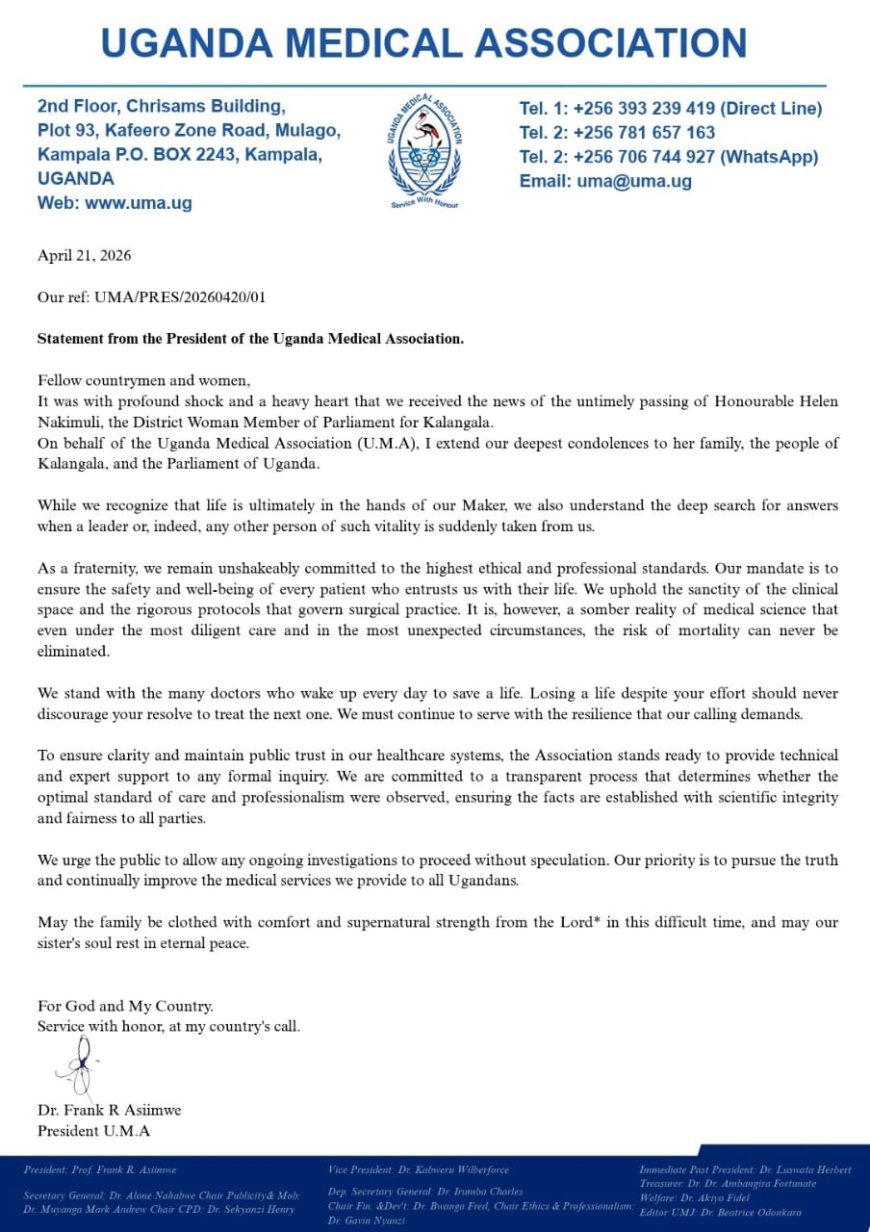
In a statement dated April 21, 2026, UMA President Dr. Frank R. Asiimwe expressed “profound shock and a heavy heart” over the legislator’s untimely passing, extending condolences to her family, the people of Kalangala, and the Parliament of Uganda.

The Uganda Medical Association (UMA) has issued a solemn and carefully worded statement in response to the sudden death of Kalangala District Woman Member of Parliament, Hon. Helen Nakimuli, urging the public to remain calm and allow due medical processes to take their course.
In a statement dated April 21, 2026, UMA President Dr. Frank R. Asiimwe expressed “profound shock and a heavy heart” over the legislator’s untimely passing, extending condolences to her family, the people of Kalangala, and the Parliament of Uganda.
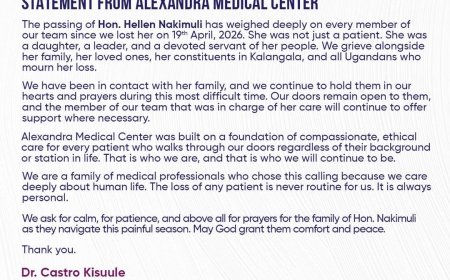
Nakimuli, aged 40, died on April 19, 2026, following an unsuccessful surgical procedure at a medical facility in Kampala, a development that has sparked widespread grief and renewed scrutiny of Uganda’s healthcare system.
Balancing Grief with Professional Reality
In its message, UMA acknowledged the emotional weight of losing a national leader under medical care, while also emphasizing a key reality of clinical practice — that medicine, despite its advancements, cannot eliminate all risks.
The Association noted that even under the highest standards of care and strict adherence to surgical protocols, mortality remains an inherent risk in medical science. This perspective appears aimed at grounding public expectations amid rising speculation surrounding the circumstances of Nakimuli’s death.
Defending Medical Ethics and Professional Standards
Dr. Asiimwe reaffirmed the Association’s commitment to ethical practice, patient safety, and professional accountability. He stressed that doctors across Uganda remain dedicated to preserving life and upholding the sanctity of clinical environments.
The statement also carried a message of encouragement to medical practitioners, particularly those who may feel discouraged when outcomes are unfavorable. UMA urged health workers to remain resilient, emphasizing that losing a patient, though painful, should not deter their duty to continue saving lives.
Call for Transparency and Scientific Inquiry
Amid growing public debate, UMA pledged its readiness to support any formal investigations into the matter. The Association underscored the importance of a transparent, evidence-based process to establish facts and determine whether proper medical standards were followed.
This position aligns with broader national calls for clarity following Nakimuli’s death, which has triggered discussions about healthcare quality, accountability, and patient safety in Uganda.
Appeal Against Speculation
Crucially, the UMA appealed to the public and stakeholders to refrain from speculation as investigations proceed. The Association warned that premature conclusions could undermine both public trust and the integrity of the inquiry process.
“Our priority is to pursue the truth,” the statement emphasized, while reiterating the need to continuously improve healthcare services across the country.
National Mourning and Reflection
Nakimuli’s death has drawn tributes from across the political divide, with leaders describing her as a committed and vocal legislator who remained active in her duties until shortly before the procedure.
Her passing comes at a critical time, just weeks before the swearing-in of Uganda’s 12th Parliament, adding further weight to the national sense of loss.
A Message of Compassion
The UMA concluded its statement with a message of faith and solidarity, praying for comfort and strength for the bereaved family and honoring the late MP’s memory.
The statement by the Uganda Medical Association positions the medical fraternity at a delicate intersection of public accountability, professional integrity, and national grief. While acknowledging the pain surrounding Nakimuli’s death, it firmly calls for patience, scientific inquiry, and respect for medical processes.
As investigations unfold, the incident is likely to remain a focal point in ongoing conversations about Uganda’s healthcare system, particularly the balance between public expectation and the realities of medical practice.

John Kusolo is a Pastor, Sports Enthusiast and Ugandan journalist with Nile Chronicles News (NCN). With a strong commitment to journalistic excellence, he is recognized for his dedication, goal-oriented approach, and ability to thrive in challenging environments. Kusolo brings focused motivation and professionalism to his reporting and media assignments.











Comments (0)