
Tanna Calls for More Investment in Value Addition to Drive Uganda’s Industrial Transformation
Tanna made the call on Monday, September 14, 2026, while delivering the keynote address at the Equity Bank Uganda Trade Mission held at Marriott Hotel Kampala.
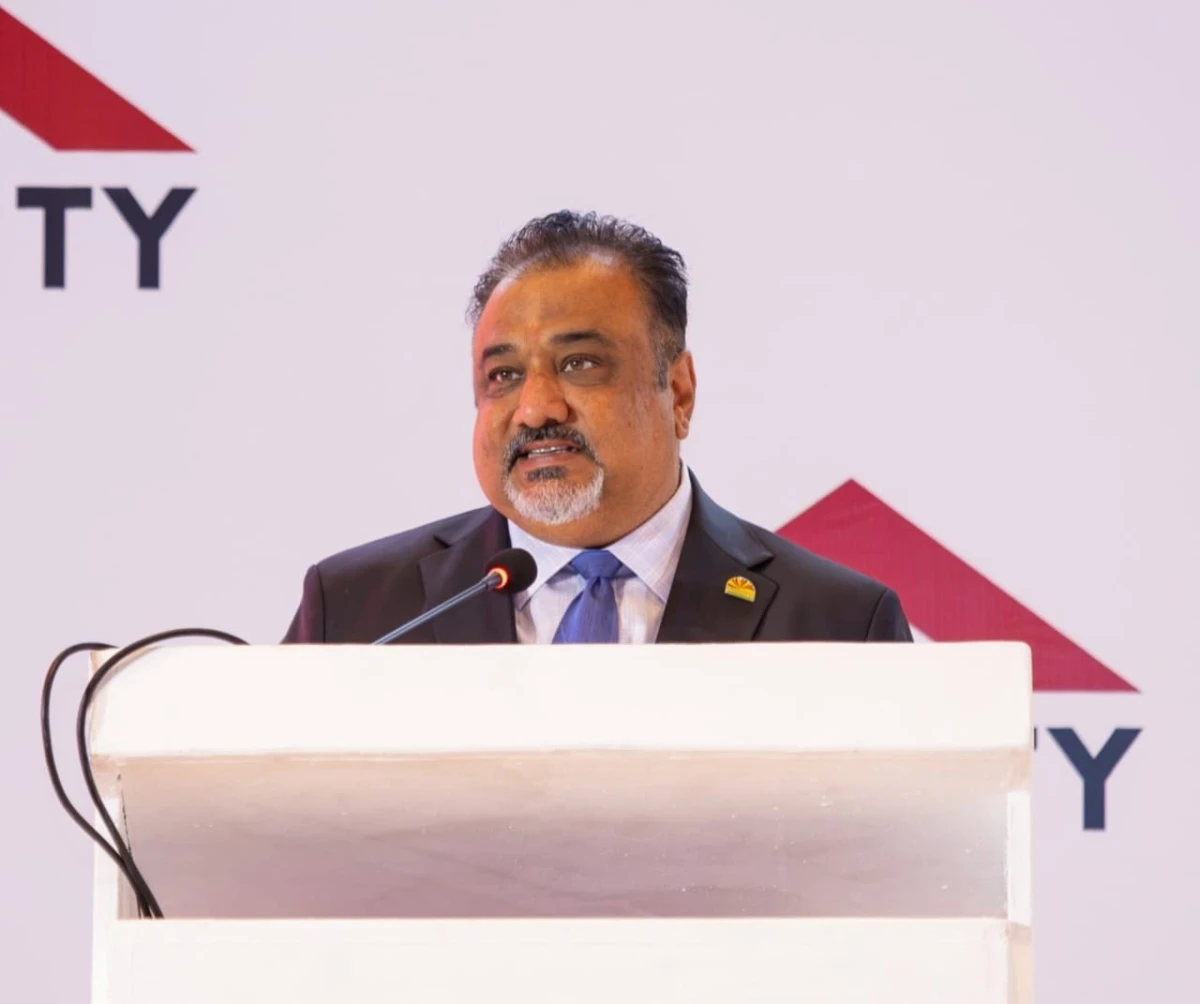
KAMPALA — Minister of Trade, Industry and Cooperatives Hon. Sanjay Tanna has called for increased investment in value addition, manufacturing, innovation and exports as Uganda seeks to accelerate economic transformation and position itself as a competitive production and trading hub.
Tanna made the call on Monday, September 14, 2026, while delivering the keynote address at the Equity Bank Uganda Trade Mission held at Marriott Hotel Kampala.
The trade mission brought together investors, entrepreneurs, financial institutions, policymakers, Government officials and private sector leaders to discuss opportunities for investment and economic transformation.
Tanna commended Equity Bank Uganda for convening the platform, saying closer collaboration between Government, the private sector and financial institutions was critical to unlocking Uganda’s economic potential.
According to the Minister, Uganda possesses significant economic advantages, including a young and enterprising population, abundant natural resources, a strategic geographical location, a growing domestic market and access to regional and continental markets.
However, he cautioned that natural resources and market opportunities alone cannot guarantee prosperity unless the country strengthens its productive capacity.
He said Uganda must increase investment in manufacturing, value addition, innovation and exports if it is to translate its economic potential into sustainable jobs, higher incomes and increased national wealth.
Value addition at the centre of industrialisation
Tanna said value addition must remain at the heart of Uganda’s industrialisation agenda, urging the country to move away from dependence on exports of raw materials and instead process and manufacture more products locally.
He identified agriculture and agro-processing, minerals, pharmaceuticals, textiles and garments, leather, construction materials and ICT among the sectors where greater value addition could generate significant economic benefits.
He noted that processing raw materials locally would create employment, increase household incomes, strengthen Ugandan enterprises, expand the tax base and enable the country to earn more from international trade.
“Value addition creates jobs, raises incomes, strengthens local enterprises, expands the tax base and enables Uganda to earn more from international trade,” he said.
The Minister also emphasised the need to attract investment that contributes directly to Uganda’s productive capacity rather than investment that has limited long-term economic impact.
Government urged to improve investment climate
Tanna said investors require a predictable and supportive business environment in order to establish and expand enterprises.
He listed efficient institutions, reliable infrastructure and energy, skilled labour, access to finance and clear regulations among the key conditions needed to support investment.
He said Government has a responsibility to continue improving the business and investment environment while maintaining constructive engagement with the private sector.
The Minister stressed that investment should not only bring capital into the country but should also contribute to technology transfer, skills development, employment creation and the growth of local supply chains.
He reaffirmed Government’s commitment to welcoming investments capable of generating lasting economic value.
“To investors, I reaffirm that Uganda welcomes investment that creates lasting economic value—investment that establishes production, transfers technology and skills, develops local suppliers, creates employment and opens new markets,” Tanna said.
Banks urged to increase financing for productive sectors
Tanna also challenged financial institutions to play a bigger role in Uganda’s industrialisation by developing financing products tailored to the needs of productive sectors.
He said factories, farmers, exporters and growing enterprises require appropriate and affordable capital to expand their operations.
The Minister encouraged banks, including Equity Bank Uganda, to consider patient capital for long-term investment, trade finance for exporters, equipment financing for manufacturers and suitable financial products for small and medium enterprises and cooperatives.
He argued that access to appropriate finance would be critical in enabling businesses to move from small-scale operations to larger and more competitive enterprises.
Technology and innovation
Tanna further identified innovation and technology as important drivers of Uganda’s economic transformation.
He said Uganda should move beyond being a consumer of technology and increasingly deploy technology to improve productivity, lower business costs, solve commercial challenges and access new markets.
The Minister said Uganda’s youthful population presents a major opportunity for technology-driven entrepreneurship.
He called for closer collaboration between Government, financial institutions, universities, technology companies and the private sector to help innovators transform ideas into viable businesses and eventually into regional and global enterprises.
Uganda must target regional and global markets
Tanna urged Ugandan businesses to look beyond the domestic market and take advantage of opportunities presented by the East African Community and the African Continental Free Trade Area.
However, he cautioned that access to these markets must be backed by competitiveness.
Ugandan products, he said, must meet international standards, maintain quality, offer value for money and have attractive packaging and strong branding.
Businesses must also improve production efficiency if Ugandan products are to compete successfully with goods from other countries.
The Minister encouraged producers to view the regional and continental markets as an extension of Uganda’s economic space rather than relying exclusively on domestic consumers.
SMEs key to economic transformation
Tanna said small and medium enterprises must remain central to Uganda’s economic development strategy because of their potential to create jobs, expand production and develop local value chains.
He said SMEs need improved access to finance, technology, markets and business development services.
At the same time, he urged small businesses to embrace formalisation, sound management, quality standards and financial discipline.
He also called upon large companies and financial institutions to integrate capable SMEs into their value chains, enabling them to grow into stronger regional and international businesses.
Five priorities for Uganda
As Uganda seeks to accelerate its economic transformation, Tanna outlined five priorities that he said should guide Government, investors, financial institutions and the private sector.
The first is increased investment in value addition, particularly in sectors where Uganda has a strong raw-material base.
The second is to direct more financing towards productive sectors, including manufacturing, agriculture, exports and SMEs.
Third is to embrace innovation and technology as tools for improving productivity and developing new businesses.
Fourth is to strengthen linkages among farmers, cooperatives, manufacturers, SMEs, financiers, logistics providers and exporters so that businesses can operate within stronger and more integrated value chains.
The fifth is for Uganda to think globally by producing locally for Uganda, Africa and international markets.
From potential to prosperity
Tanna said Uganda is at an important stage in its economic journey, with considerable potential that can only become prosperity through deliberate investment, innovation, partnerships and effective execution.
He said economic transformation takes place when ideas are converted into investments, investments become businesses, businesses create jobs and businesses eventually become competitive exporters.
The Minister therefore called for a shift from discussions to concrete action by all stakeholders.
“I therefore call upon Government, the private sector, financial institutions, investors and entrepreneurs to move from dialogue to action; from potential to investment; from raw materials to value-added products; and from local production to global competitiveness,” he said.
He said closer cooperation among Government, businesses, financiers, investors and entrepreneurs could position Uganda as a competitive investment destination, a centre for innovation and value addition, and a reliable production and trading hub for East Africa and the wider African continent.
The Equity Bank Uganda Trade Mission comes at a time when Uganda is seeking to deepen industrialisation, expand exports and increase private-sector participation in economic growth, with value addition and access to finance remaining critical components of that agenda.

John Kusolo is a Pastor, Sports Enthusiast and Ugandan journalist with Nile Chronicles News (NCN). With a strong commitment to journalistic excellence, he is recognized for his dedication, goal-oriented approach, and ability to thrive in challenging environments. Kusolo brings focused motivation and professionalism to his reporting and media assignments.
















Comments (0)