
Otunnu Maintains Five Votes as Grynspan Leads Third UN Secretary-General Straw Poll
Otunnu, who is seeking to become the first Ugandan to serve as UN Secretary-General, received five encourage votes, seven discourage votes and three no-opinion votes. The result was unchanged in terms of encourage votes from the second straw poll, but his position relative to other candidates shifted as Rafael Grossi, who had previously occupied a higher position, also received five encourage votes but eight discourages.
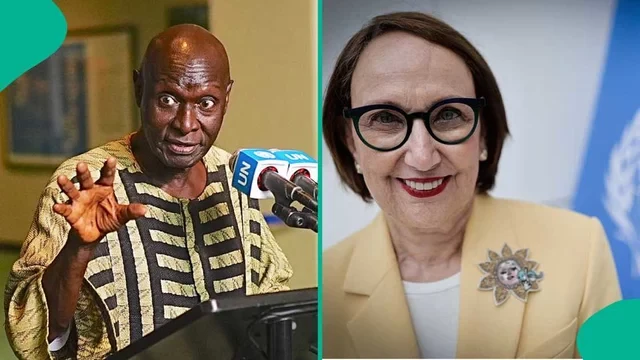
Uganda’s candidate for United Nations Secretary-General, Ambassador Dr. Olara Otunnu, has maintained five “encourage” votes in the latest Security Council straw poll, while moving ahead of some of the better-known contenders as the contest to succeed António Guterres enters a more competitive phase.
The third informal straw poll was conducted by the 15-member UN Security Council on September 18, 2026, with Costa Rica’s Rebeca Grynspan emerging with the highest number of “encourage” votes. Grynspan received nine encourage votes, five discourage votes and one no opinion. Guyana’s Carolyn Rodrigues-Birkett followed with eight encourage, six discourage and one no opinion.
Otunnu, who is seeking to become the first Ugandan to serve as UN Secretary-General, received five encourage votes, seven discourage votes and three no-opinion votes. The result was unchanged in terms of encourage votes from the second straw poll, but his position relative to other candidates shifted as Rafael Grossi, who had previously occupied a higher position, also received five encourage votes but eight discourages.
Otunnu's candidacy gains prominence
The latest result is significant for Otunnu because his campaign entered the race considerably later than the other candidates.
Uganda formally nominated Otunnu on July 24, 2026, shortly before the first Security Council straw poll. He was included in that first ballot despite not yet having participated in the General Assembly's interactive dialogue, a departure from the sequence followed by the other candidates. Civil-society group 1 for 8 Billion raised concerns at the time about ensuring that all candidates were subjected to the same level of scrutiny.
Otunnu nevertheless subsequently participated in the required engagement with member states. He addressed the General Assembly on August 19 and held his informal dialogue with the Security Council on August 20.
His support then increased from two encourage votes in the first straw poll to five in the second round on August 21. The second poll gave him five encourage, five discourage and five no-opinion votes, representing the largest numerical improvement in encourage votes among the candidates between the first and second rounds.
The third poll shows that the five encourage votes he gained in August have been retained, although seven members now register discourage and three express no opinion.
A veteran of the United Nations system
Otunnu brings extensive diplomatic and United Nations experience to the contest.
He served as Uganda's Permanent Representative to the UN from 1980 to 1985 and held several senior positions during that period, including President of the Security Council in 1981 and Vice-President of the General Assembly. He later served as Uganda's Foreign Minister from 1985 to 1986.
His connection to the current selection mechanism is particularly notable. According to the UN's historical records, Otunnu was serving as Security Council president in 1981 when the Council was dealing with a deadlock over the election of the Secretary-General. His role in developing the straw-ballot system became associated with what is commonly known as the “Otunnu Formula.”
More than four decades later, he is himself being assessed through the same type of informal ballot.
His UN legacy on children and armed conflict
Otunnu's most prominent international role came after he was appointed by then-Secretary-General Kofi Annan in 1997 as the first UN Special Representative for Children and Armed Conflict.
He served from 1997 to 2005 as an Under-Secretary-General and Special Representative, campaigning internationally for stronger protection of children affected by war. According to the UN Office of the Special Representative, his work contributed to placing child protection on the Security Council agenda, developing protection standards, establishing child-protection advisers and creating an international monitoring and reporting mechanism.
One of the major institutional developments associated with his tenure was the compliance regime established through Security Council Resolution 1612 in 2005, which created a formal system for monitoring and reporting grave violations against children in armed conflict.
Uganda's government has pointed to this record, along with Otunnu's diplomatic and governmental experience, in presenting him as its candidate for the top UN position.
Reform and restoring the UN's authority
In his campaign, Otunnu has placed institutional reform and the restoration of what he describes as the UN's moral authority at the centre of his platform.
During his August 19 interactive dialogue, he called for reforms aimed at making the organisation more effective and responsive at a time of deep international divisions. Reuters reported that he emphasised institutional reform and the restoration of the UN's moral authority, while presenting a message centred on unity and hope.
His campaign platform also identifies four broad priorities: strengthening the moral authority of the Secretary-General's office, reforming the UN to improve legitimacy and effectiveness, addressing major ongoing conflicts, and strengthening protection for children and women affected by war.
The campaign argues that the Secretary-General's influence is primarily political and moral rather than military, requiring the office-holder to build trust among member states and use the authority of the UN Charter to mediate conflicts and advance collective action.
A difficult but open contest
The third straw poll nevertheless shows that the race remains unsettled.
Grynspan's nine encourage votes put her at the threshold normally associated with the Security Council's nine-vote requirement, but she also received five discourages. Rodrigues-Birkett recorded eight encourages, while Otunnu, Grossi and former Senegalese President Macky Sall each received five.
Grossi, the Director-General of the International Atomic Energy Agency, recorded eight discourage votes, while Sall received nine discourages. María Fernanda Espinosa Garcés received three encourage votes, six discourage and six no opinion. Michelle Bachelet received one encourage and 11 discourage votes, while Ivonne A-Baki received no encourage votes, 10 discourage and five no opinion.
The straw polls are informal and non-binding. The actual selection requires the Security Council to recommend a candidate to the General Assembly, with the five permanent members — China, France, Russia, the United Kingdom and the United States — holding veto power. A candidate therefore needs not only sufficient overall support but also to avoid a veto from a permanent member.
What Otunnu's five votes mean
For Otunnu, the September 18 result represents a mixed but consequential stage in his campaign.
He has moved from two encourage votes in July to five in August and has retained those five in September. At the same time, seven members now discourage his candidacy, meaning that his support remains well short of the nine-encourage threshold and that opposition within the Council is significant.
The leaked results should also be treated as informal indicators rather than final voting results. The Security Council does not formally publish the detailed tallies of these straw polls; the figures reported by organisations including PassBlue and 1 for 8 Billion have emerged through diplomatic sources.
For Uganda, however, Otunnu's continued presence in the contest gives the country a candidate with a long record at the centre of the UN system — from presiding over the Security Council in 1981 to serving as Under-Secretary-General and leading the UN's children-and-armed-conflict agenda.
As the selection process moves toward further consultations and eventual formal decision-making, the central question for Otunnu's campaign will be whether it can convert the five members currently encouraging his candidacy into broader support while addressing the seven members who have expressed discouragement.
The third straw poll therefore keeps Otunnu firmly in the field, while also underscoring the scale of the diplomatic task facing Uganda's candidate in the race to succeed Guterres at the UN's highest executive post.

John Kusolo is a Pastor, Sports Enthusiast and Ugandan journalist with Nile Chronicles News (NCN). With a strong commitment to journalistic excellence, he is recognized for his dedication, goal-oriented approach, and ability to thrive in challenging environments. Kusolo brings focused motivation and professionalism to his reporting and media assignments.


Comments (0)