
Why Integrity, Proper Opening, Consent and Confidentiality Are Critical to Successful Court-Accredited Mediation
Through ADR training and mediation, court-accredited mediators are gaining the skills required to help disputing parties resolve their differences without necessarily resorting to adversarial litigation.
By Steven Masiga
Alternative Dispute Resolution (ADR) is increasingly becoming an important tool for transforming conflicts into dialogue and promoting peace, justice and reconciliation in communities.
Through ADR training and mediation, court-accredited mediators are gaining the skills required to help disputing parties resolve their differences without necessarily resorting to adversarial litigation.
In Bugisu, for instance, a recent cultural dispute was extinguished through mediation conducted under the court system. In neighbouring Bugwere, mediation has also registered commendable progress in resolving a cultural dispute, with about 80 percent of the matter reportedly resolved.
These developments demonstrate the growing importance of mediation in resolving disputes while preserving relationships and restoring communication between parties.
Indeed, during one of the mediation processes, I witnessed people from the Bugisu Cultural Institution shaking hands in court, an indication of how mediation can help parties move from confrontation towards dialogue and reconciliation.
What is Alternative Dispute Resolution?
Alternative Dispute Resolution refers to processes of resolving disputes through non-adversarial means. Under mediation, disputing parties are guided by a court-trained and accredited mediator who facilitates the process and helps the parties address their differences through dialogue rather than litigation.
ADR operates within the provisions of the law, including Article 126(2)(d) and (e) of the Constitution. Uganda also has a number of laws supporting alternative dispute resolution, including the Conciliation and Arbitration Act, Cap. 6.
A number of Ugandan statutes contain provisions relating to mediation and other forms of dispute resolution, ranging from labour-related legislation to laws governing cultural leaders and institutions. This demonstrates the growing recognition of ADR as an important component of Uganda's justice system.
ADR does not advocate the abandonment of litigation. Rather, it provides alternatives to litigation where the nature of a dispute makes mediation, negotiation, conciliation or arbitration appropriate.
The importance of ADR in communities
Alternative dispute resolution offers several advantages.
First, mediation can be quicker in helping communities address conflicts and disputes. It can also be cost-effective and, importantly, can help restore broken relationships by reopening lines of communication between parties.
Mediation further allows parties to maintain a higher level of confidentiality because mediation sessions are generally conducted privately, unlike ordinary court proceedings that may take place in open court.
Under the Judiciary's current protocols on ADR, mediation is provided without a fee being charged to the parties. The Government of Uganda and its development partners have supported the provision of the service, and communities in Bugisu and Eastern Uganda should appreciate this investment in strengthening access to justice.
Development partners such as the International Development Law Organization (IDLO) have played an important role in supporting ADR capacity-building initiatives.
Globally, interest in ADR gained significant momentum in the United States in the 1960s as part of broader legal reform efforts aimed at improving access to and the effectiveness of justice systems.
In Uganda, the Judiciary, under the leadership of the Chief Justice and other judicial officers, continues to encourage lawyers, judicial officers and court-accredited mediators to embrace ADR as an important mechanism for resolving disputes.
Legislation is also progressively incorporating provisions that facilitate mediation and other forms of alternative dispute resolution.
Integrity and professionalism in mediation
For mediation to succeed, integrity and professionalism are critical.
A mediator must remain neutral and must not appear to favour one party over another. Mediators are expected to avoid bending the process in favour of one side or leaning towards a particular party.
During the recent training in Mbale, participants were encouraged to maintain the highest standards of integrity and professionalism throughout the mediation process.
Mediators were also cautioned against being judgmental. Their role is not to determine who is right or wrong but to facilitate communication, clarify issues and assist parties to find solutions that they voluntarily accept.
This requires mediators to create an environment in which every party feels heard, respected and treated equally.
The importance of properly opening a mediation
The proper opening of a mediation session is another critical step in determining the success of the process.
During the training, participants were taken through the appropriate procedure for opening a mediation.
The mediator begins by welcoming the parties to the session, including their lawyers where they are represented. The mediator then introduces himself or herself as a court-accredited mediator and explains any relevant competencies or qualifications.
Each party should subsequently be given equivalent time to introduce themselves before the issues in dispute are placed on the table for discussion.
This initial stage is important because it establishes the tone of the entire mediation.
A properly conducted opening helps parties understand the nature of the process, the role of the mediator and the expectations placed upon everyone participating in the session.
Consent of the parties
Consent is another fundamental principle of mediation.
Mediation is a voluntary process. A mediator should not impose himself or herself upon parties who have not consented to participate in the process.
As mediators, we were trained to seek the consent of the parties before commencing mediation. This ensures that participants understand that they are voluntarily engaging in a process intended to help them resolve their differences.
The mediator's role is to facilitate, rather than impose a decision.
This distinguishes mediation from conventional litigation, where a court ultimately determines the dispute through a judgment.
The parties themselves remain central to the mediation process and are responsible for reaching any settlement.
Confidentiality and protection of the mediation process
Confidentiality is another fundamental pillar of mediation. Parties are able to speak more freely when they understand that information disclosed during mediation is protected within the applicable rules governing the process.
Participants were further guided that court mediation settlements and communications made during mediation cannot simply be treated as evidence in subsequent litigation in the manner ordinary courtroom evidence might be.
The mediator should also not be subpoenaed to testify at a later stage about matters disclosed during the mediation process, subject to the applicable law and rules.
Once mediation is concluded, the mediator's role in that matter comes to an end—the mediator becomes functus officio and has no further role in determining the dispute.
These safeguards are important because parties must have confidence that their participation in mediation will not expose them to unnecessary prejudice later.
Clarifying issues before settlement
Mediators were also encouraged to listen carefully to each party and summarise the issues raised before proceeding to the next stage.
This helps ensure that the parties and mediator have a common understanding of the dispute.
The mediator must clarify each party's position and understanding of the issues before the parties reach a mediation agreement, which represents the terminal stage of the mediation process.
The mediator must not rush parties towards an agreement.
Instead, the mediator facilitates communication and allows the parties to explore the issues and possible solutions.
Mediation processes may result in fully successful settlements or partially mediated settlements. Even where parties do not resolve every aspect of a dispute, restoration of communication between them should also be recognised as a form of progress.
Mediation as an opportunity to preserve relationships
Through ADR training, mediators are being equipped to view disputes not merely as problems to be solved, but also as opportunities to promote peace, justice and the preservation of relationships.
Conflicts within communities, cultural institutions or workplaces, if not properly handled, can create organisational entropy and deepen divisions.
A competent mediator can instead help parties move from confrontation to dialogue.
In this sense, mediators can become important agents of peace within their communities.
The ability to resolve conflicts effectively is particularly important in the current competitive global economy, where prolonged disputes can affect institutions, workplaces, families, businesses and communities.
While litigation remains an important component of the justice system, its processes can sometimes take considerable time before disputes are finally resolved. ADR therefore provides an additional avenue through which appropriate disputes can be addressed.
Eastern Uganda mediation training
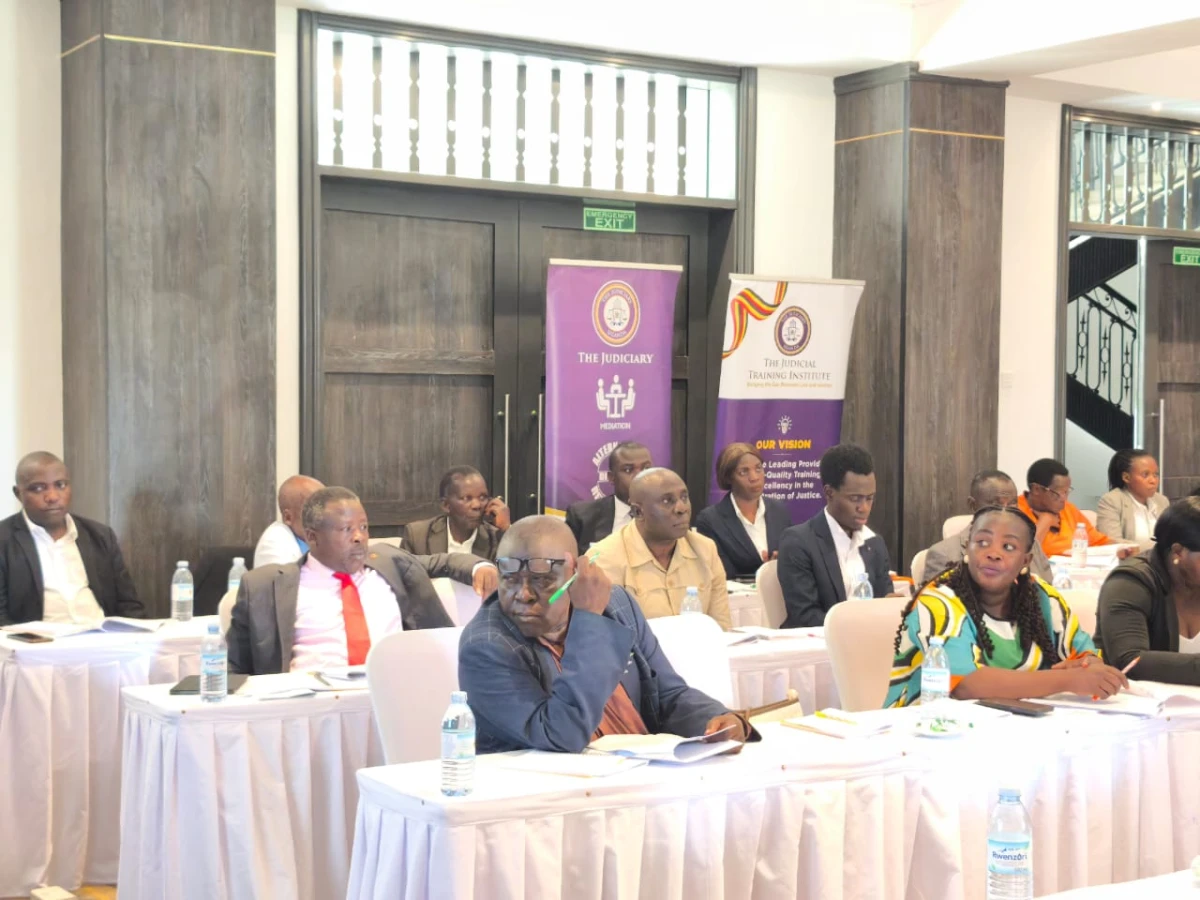
Recently, the Judiciary assembled participants from Eastern Uganda in Mbale for intensive training and retooling in mediation.
The participants are expected to serve as court-accredited mediators supporting the courts in Bugisu, Bukedi and Sebei.
The training provided participants with practical skills in conducting mediation sessions, opening proceedings, listening to parties, identifying issues, maintaining neutrality, protecting confidentiality and facilitating voluntary settlements.
The training was rigorous and involved examinations and practical learning throughout the week.
I was privileged to be among those selected for the training by the Judiciary and its partners and to receive a mediation certificate following the programme.
The training represented a significant investment in professional development, with the estimated value of the training exceeding Shs6 million per participant.
The knowledge and skills acquired through the programme provide mediators with a professional mindset capable of transforming conflict into dialogue.
Appreciation to the Judiciary and development partners
On behalf of the mediators of Mbale High Court, I salute the facilitators who contributed to the success of the training.
These include Deputy Chief Justice Emeritus, His Lordship Hon. Richard Buteera; Chairman of the Judicial Training Institute, His Lordship Justice Mike Chibita; Professor Andrew Khaukha, Executive Director of the Judicial Training Institute; and Solicitor General Emeritus Atwooki, who took participants through aspects of the mediation process virtually.
I also appreciate the team that travelled to Eastern Uganda to further equip the participants, including Madam Babra of IDLO, Dr Onoria, Uganda Law Council President Emeritus Counsel Gimara, and the entire registry team on the ground.
Special appreciation goes to their worships Dr Daniel and Daniel Wambale, as well as Madam Babra and Moses of IDLO, for their contribution to the training.
I further salute the Judiciary leadership, particularly the Chief Justice, Hon. Dr Flavian Zeija, Professor Andrew Khaukha and the entire ADR Registry led by Madam Justina.
I also recognise the contribution of Khusiima Busimi and all those who participated in making the training a success.
As Bugisu and Eastern Uganda continue to strengthen their capacity to resolve disputes, such initiatives are important not only in promoting peace and justice in communities but also in supporting efforts to address the issue of court backlog.
ADR should therefore continue to be embraced as an important component of Uganda's justice system, while preserving the principles of voluntary participation, integrity, neutrality, confidentiality and respect for the parties.
When properly conducted, mediation can transform conflict into dialogue, restore broken relationships and create opportunities for parties to find peaceful solutions to their differences.
The writer, Steven Masiga, is a court-accredited mediator and legal scholar.

John Kusolo is a Pastor, Sports Enthusiast and Ugandan journalist with Nile Chronicles News (NCN). With a strong commitment to journalistic excellence, he is recognized for his dedication, goal-oriented approach, and ability to thrive in challenging environments. Kusolo brings focused motivation and professionalism to his reporting and media assignments.
















Comments (0)