
Self-Confessions by Headteachers and Culprits in the Honourable Balaam Corruption Crusade is Against the Law
The campaign against corruption is undoubtedly a legitimate public interest. Public officials who abuse public resources should be investigated and, where the evidence warrants, prosecuted in accordance with the law. However, the methods used in identifying and dealing with suspected offenders must themselves remain within the boundaries of Uganda's Constitution and criminal justice system.
By Steven Masiga
The ongoing campaign by the Minister of State for Local Government, Hon. Balaam Barugahara Ateenyi, against alleged corruption, mismanagement and abuse of public resources has generated a wider legal debate over the manner in which suspected offenders are being confronted, questioned and, in some instances, encouraged to publicly confess to alleged wrongdoing.
The campaign against corruption is undoubtedly a legitimate public interest. Public officials who abuse public resources should be investigated and, where the evidence warrants, prosecuted in accordance with the law. However, the methods used in identifying and dealing with suspected offenders must themselves remain within the boundaries of Uganda's Constitution and criminal justice system.
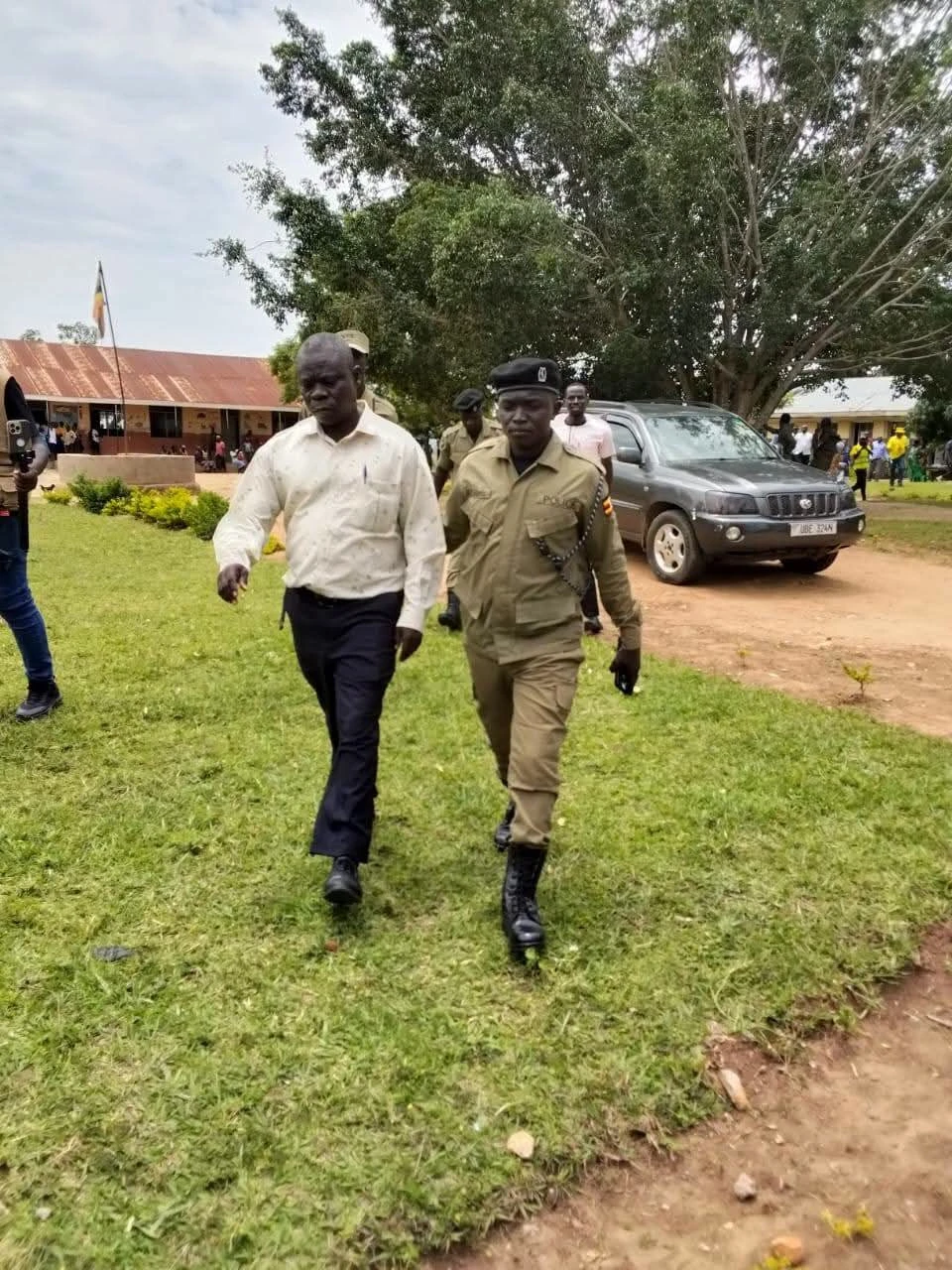
Recent video clips circulating from Namisindwa District and Budaka District have raised questions about public confessions by headteachers who allegedly admitted inflating student numbers in their schools. In the reported encounters, the headteachers appeared to confess after being prompted to explain themselves, with the prospect of forgiveness apparently forming part of the conversation.
The central legal question is therefore not whether corruption should be fought. It is whether a public confession obtained through pressure, inducement, threat or a promise of forgiveness can automatically become sufficient evidence to establish criminal liability.
The answer under Ugandan law requires considerable caution.
Presumption of innocence remains fundamental
Article 28(3)(a) of the Constitution provides that every person charged with a criminal offence is presumed innocent until proved guilty or until that person has pleaded guilty.
This means that an allegation, admission made outside court, public accusation or video-recorded statement does not by itself amount to a judicial conviction.
The Constitution deliberately places the responsibility of proving a criminal case within the criminal justice process. The accused is entitled to a fair hearing and other procedural protections.
Article 28(11) goes further by providing that where a person is being tried for a criminal offence, neither that person nor the person's spouse may be compelled to give evidence against that person.
Consequently, a public official accused of inflating school enrolment figures should not be treated as guilty merely because he or she has made an incriminating statement during a public confrontation.
The appropriate question for investigators is whether there is independent evidence capable of establishing the alleged offence.
A confession is not automatically admissible simply because it was recorded
Uganda's Evidence Act contains specific safeguards concerning confessions.
Section 24 provides that a confession is irrelevant where the court finds that, having regard to the accused person's state of mind and the circumstances, it was caused by violence, force, threat, inducement or a promise calculated to cause an untrue confession.
This provision is particularly important in circumstances where an individual is told, expressly or implicitly, that confessing will result in forgiveness or leniency.
It would therefore be premature to conclude that every statement made by a headteacher or other public official in such circumstances is either automatically admissible or automatically inadmissible. The court would have to examine the circumstances in which the statement was made.
The Supreme Court has previously emphasised that voluntariness is central to the admissibility of confessions. In Kedi Martin v Uganda, the Court explained that the law governing confessions requires attention to whether the statement was voluntarily made.
Similarly, the Supreme Court has held that where an accused challenges the voluntariness of a confession, the court must determine that question through a trial-within-a-trial, with the prosecution carrying the burden of establishing voluntariness.
This demonstrates why a dramatic public confession should not be confused with the formal evidential process of a criminal trial.
A confession does not remove the State's responsibility to prove the case
Another important principle is the burden of proof.
Sections 101, 102 and 103 of the Evidence Act establish the general rules concerning the burden of proving facts. The person who asserts the existence of a fact bears the responsibility of proving it, subject to the exceptions provided by law.
In a criminal prosecution, therefore, the State cannot simply place a suspect before the public, obtain a statement from that person and declare the matter conclusively settled.
Investigators should establish the underlying facts.
If, for example, a headteacher is accused of inflating enrolment figures, investigators should examine the school's admission registers, attendance records, examination records, payroll information, capitation records, inspection reports and other relevant documentation.
The evidence should establish what the actual enrolment was, what figures were submitted, who submitted them, whether the figures were knowingly falsified, what benefit was obtained or intended, and what offence, if any, was committed.
A confession may form part of an evidential case where the law permits it, but it should not become a substitute for investigation.
Public confession is different from pleading guilty in court
There is also an important distinction between saying "I did it" during a public confrontation and formally pleading guilty before a competent court.
Article 28(3)(a) expressly recognises a guilty plea in the judicial process.
A plea is therefore not simply an admission made anywhere, at any time and before anybody. Criminal procedure provides a structured process through which an accused person is brought before a court, informed of the charge and given an opportunity to respond.
The Magistrates Courts Act, for example, sets out procedures for instituting criminal proceedings and provides for the hearing of the prosecution's evidence before the accused is called upon to present a defence where appropriate.
This distinction matters because criminal justice is not designed around public humiliation or spontaneous admissions. It is designed around investigation, charge, hearing, evidence and judicial determination.
The Balaam approach therefore deserves legal scrutiny, not political condemnation
It would be unfair to suggest, without evidence, that every confession obtained during the Minister's corruption campaign has been coerced or unlawfully procured.
The Minister may genuinely be attempting to expose corruption and recover public resources. That objective deserves support where it is pursued lawfully.
However, the manner in which suspects are questioned deserves scrutiny precisely because the fight against corruption should strengthen, rather than weaken, the rule of law.
If a public official is told that admitting wrongdoing before a senior government official will result in forgiveness, that statement could become relevant when a court later examines whether the admission was voluntary.
The legal system must therefore distinguish between persuading a person to cooperate with an investigation and inducing a suspect to incriminate himself or herself through a promise of forgiveness.
The circumstances will ultimately determine the legal consequences.
The role of investigators should not be confused with that of a minister
The fight against corruption requires properly trained investigators, auditors, prosecutors and courts.
Where there is credible evidence that a public officer has committed an offence, the appropriate authorities should document the evidence, conduct investigations, obtain statements in accordance with the law, preserve relevant records and, where appropriate, place the matter before the competent prosecutorial and judicial authorities.
The Magistrates Courts Act recognises formal avenues through which criminal proceedings may be instituted, including proceedings initiated by police officers or public prosecutors.
That framework exists for a reason.
A minister is an important political and administrative authority, but a minister's public declaration cannot replace the functions of a court.
The danger of turning public confession into public conviction
There is a broader constitutional concern when an individual is publicly labelled a criminal before investigation and trial have been completed.
Such conduct risks undermining the presumption of innocence and may create the impression that guilt can be established by political authority rather than judicial process.
It may also discourage public officers from cooperating with legitimate investigations if they fear that statements made during an administrative encounter will immediately be transformed into public evidence against them.
The Supreme Court has repeatedly stressed caution concerning confession evidence because of the constitutional presumption of innocence. In Obote v Uganda, the Court specifically linked the treatment of confession statements to Article 28(3)(a) of the Constitution.
The Nebanda case illustrates why confession evidence requires caution
The experience surrounding the prosecution of Adam Kalungi in connection with the death of former Butaleja Woman MP Cerinah Nebanda also demonstrates why statements and confessions should be examined within the proper judicial framework.
Kalungi was reported to have initially pleaded guilty before later denying the charge and challenging the circumstances surrounding his confession.
The broader lesson is that a person's statement can become contested evidence. It is therefore the responsibility of the court to determine its evidential value rather than allowing a public admission to become a substitute for judicial examination.
This is precisely why Uganda's criminal justice system provides mechanisms for challenging the voluntariness and admissibility of confession evidence.
The claim about church confessions requires qualification
The proposition that a person who confesses a crime in church must automatically "go home scot-free" is, however, too broad.
Ugandan law does not establish a blanket rule that every confession made in a religious setting can never have legal consequences. The legal position depends on the nature of the communication, the applicable evidentiary rules and the circumstances in which information is obtained.
Therefore, religious confession should not be presented as an absolute immunity from criminal investigation or prosecution.
The stronger legal point is that a private religious confession should not simply be equated with a formal criminal confession obtained for purposes of prosecution without examining the applicable law.
Corruption must be fought through evidence
Uganda does not need a weaker corruption fight. It needs a stronger one.
The most convincing corruption investigation is one that survives judicial scrutiny.
If a headteacher has genuinely falsified enrolment figures, investigators should establish the actual numbers through documentary evidence. If a town clerk has allegedly inflated land transactions, the relevant transaction documents, valuation reports, approvals, payment records and audit findings should be examined.
If the evidence establishes a criminal offence, the suspect should be processed according to law.
Such an approach protects both sides: it protects the public from corruption and protects innocent officials from arbitrary accusations.
The principle should be simple: investigate first, prosecute where evidence exists
The fight against corruption should never be reduced to a contest over who can produce the most dramatic confession on camera.
The real test is whether the evidence can withstand examination before an independent court.
A confession can be important evidence, but the law requires courts to consider the circumstances in which it was obtained. Where voluntariness is challenged, the court has a duty to determine that issue.
The Government's anti-corruption campaign should therefore be accompanied by strong legal safeguards.
Suspects should be investigated, not publicly convicted.
Evidence should be collected, not manufactured.
Audits should be followed by proper investigations.
And prosecutions should be based on admissible evidence presented before competent courts.
The maxim that it is better for guilty persons to escape conviction than for an innocent person to be wrongly convicted captures an essential concern of criminal justice: the legitimacy of punishment depends on a fair process.
Hon. Balaam Barugahara's corruption crusade may have an important objective, but the methods used to achieve that objective must remain within the Constitution and the law. Otherwise, a campaign intended to defend public resources could itself generate costly litigation and constitutional challenges.
The proper message to government should therefore be clear: fight corruption firmly, but fight it lawfully.
A successful anti-corruption campaign should not merely produce confessions. It should produce evidence strong enough to withstand the scrutiny of investigators, prosecutors, defence lawyers and, ultimately, the courts.
The writer is a legal scholar and academician from Bugisu
Tel:0782231577.

John Kusolo is a Pastor, Sports Enthusiast and Ugandan journalist with Nile Chronicles News (NCN). With a strong commitment to journalistic excellence, he is recognized for his dedication, goal-oriented approach, and ability to thrive in challenging environments. Kusolo brings focused motivation and professionalism to his reporting and media assignments.














Comments (0)