
Deployment in Gaza Is in Uganda’s Interest, Says Counsel Paul Wanyoto Mugoya
In an opinion published under the headline “Deployment in Gaza is in country’s interest,” Wanyoto contends that Uganda’s participation in the proposed international security arrangement in Gaza is consistent with the country’s historical role in peacekeeping and its wider obligation to contribute to international peace wherever it is needed. His argument comes after Parliament approved the deployment of Ugandan troops to Gaza on August 6, 2026, following a request for Uganda to participate in a proposed multinational force. Defence Minister Kiryowa Kiwanuka told Parliament that President Yoweri Museveni had been approached in July regarding Uganda’s possible contribution.
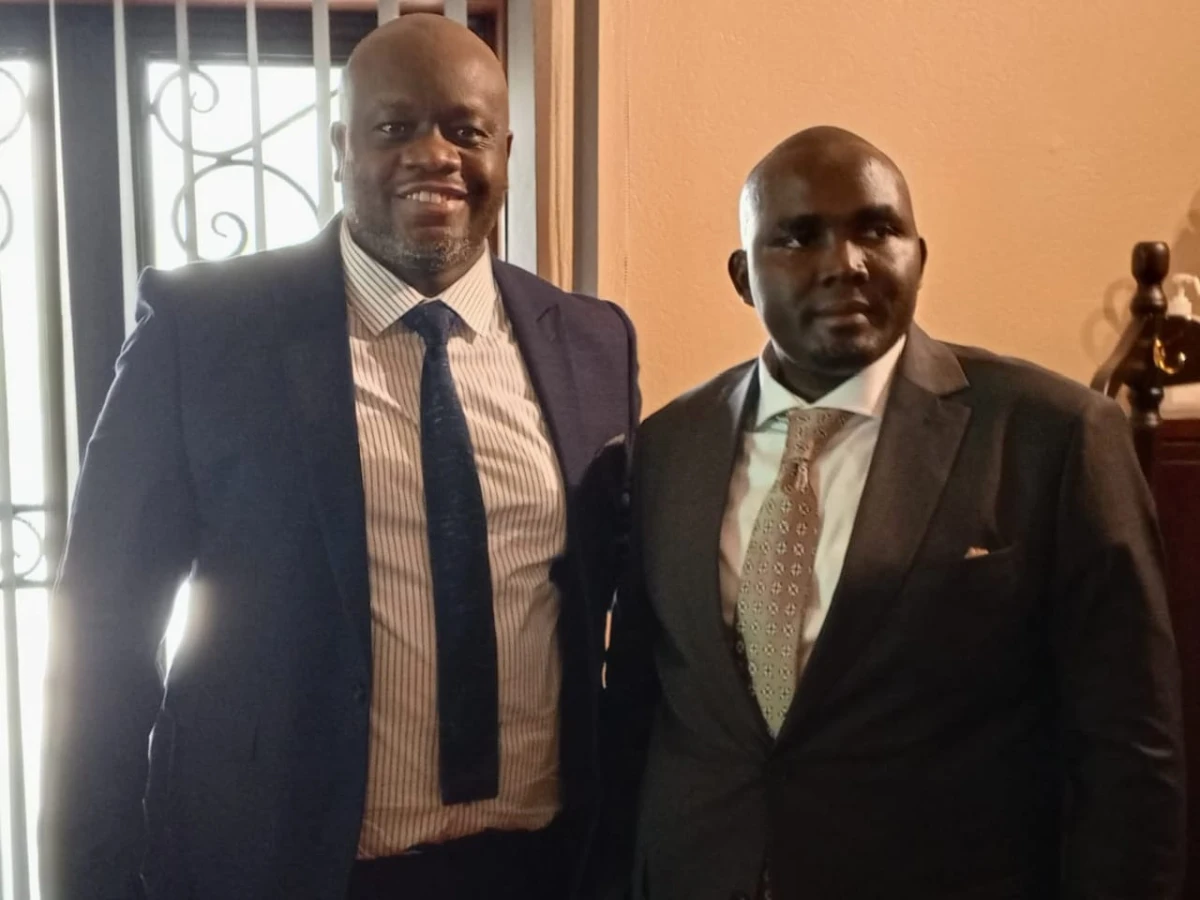
Ugandan lawyer and political commentator Counsel Paul Wanyoto Mugoya has defended Uganda’s decision to authorize the deployment of the Uganda People’s Defence Forces (UPDF) to Gaza, arguing that the mission should be understood within Uganda’s broader foreign-policy, security and Pan-African responsibilities rather than as an unnecessary military adventure.
In an opinion published under the headline “Deployment in Gaza is in country’s interest,” Wanyoto contends that Uganda’s participation in the proposed international security arrangement in Gaza is consistent with the country’s historical role in peacekeeping and its wider obligation to contribute to international peace wherever it is needed.
His argument comes after Parliament approved the deployment of Ugandan troops to Gaza on August 6, 2026, following a request for Uganda to participate in a proposed multinational force. Defence Minister Kiryowa Kiwanuka told Parliament that President Yoweri Museveni had been approached in July regarding Uganda’s possible contribution.
Wanyoto: Uganda Has a History of Peacekeeping
At the centre of Wanyoto’s argument is Uganda’s long experience in international peace-support operations.
He points to the UPDF’s history of deployments beyond Uganda’s borders, particularly in Somalia, South Sudan and other areas where Ugandan forces have participated in peacekeeping, peace enforcement and regional security operations.
According to his reasoning, Uganda’s contribution to international security should not be viewed as something entirely new or outside the traditional role of the UPDF.
Uganda continues to participate in international peace-support operations, including in Somalia, where UPDF personnel have been deployed under multinational arrangements. The UPDF has described its involvement in Somalia as part of Uganda’s contribution to regional peace and stability and has continued to send personnel for peace-support missions.
Wanyoto therefore sees the Gaza deployment as another opportunity for Uganda to contribute personnel where their services could potentially help restore stability and protect civilians.
The Pan-African Argument
Wanyoto also places the proposed deployment within Uganda’s Pan-African outlook.
He argues that Uganda’s foreign policy cannot be based exclusively on whether a particular international crisis directly affects Ugandan territory. In his view, membership in the international community carries responsibilities, and Uganda should be prepared to contribute to peace efforts when its capabilities are required.
The argument is particularly significant because Uganda has historically portrayed its regional and international military engagements as part of its commitment to African security and stability.
For Wanyoto, Uganda’s role in Gaza should consequently be assessed against this wider tradition rather than simply through the geographical distance between East Africa and the Middle East.
Economic and Security Interests
Another major component of Wanyoto’s argument is the connection between international instability and Uganda’s own national interests.
He warns against viewing foreign policy and national security as completely separate from economic interests. According to the opinion, instability in one part of the world can have wider consequences for trade, investment, security and diplomatic relations.
His position is that Uganda, like other sovereign states, has a legitimate interest in protecting its economic and national-security interests beyond its immediate borders.
This argument does not necessarily mean that Uganda should intervene militarily in every international conflict. Rather, Wanyoto's position is that the country should make strategic decisions based on circumstances, its diplomatic relationships and the potential contribution it can make to peace.
Parliament’s Role and Civilian Oversight
While defending the deployment, Wanyoto also raises an important question about the role of Parliament in approving and overseeing the mission.
Uganda’s Constitution provides that Parliament shall make laws regulating the UPDF, including legislation governing the deployment of troops outside Uganda. Article 210 specifically assigns Parliament responsibility for legislating on such deployments.
The Uganda Peoples’ Defence Forces Act further provides that the President may deploy troops outside Uganda for peacekeeping or peace-enforcement purposes, while deployment for peacekeeping requires parliamentary approval. The law also provides for a Status of Forces Agreement where troops are deployed under a bilateral or multilateral arrangement.
Wanyoto therefore argues that parliamentary involvement is not merely procedural. He stresses that Parliament should be adequately informed about the mission before soldiers are sent into the theatre of operation.
In his view, MPs should have sufficient information concerning the deployment plan, the mission's objectives, the command structure, the duration of the operation and the circumstances under which Ugandan personnel would operate.
This is an important element of his argument because supporting the deployment does not mean abandoning accountability.
Questions Over the Mission
Wanyoto acknowledges that the Gaza deployment raises legitimate questions.
One of the central questions is what exactly Ugandan troops would be expected to do once deployed.
The proposed international force is intended to contribute to security and stabilization in Gaza. Reuters reported that the wider plan envisages an international stabilization force operating in areas not under Israeli control, although the timing and practical implementation of such a force remained uncertain.
That uncertainty makes the details of the mission particularly important.
Wanyoto argues that Ugandans deserve clarity regarding the mandate, command arrangements, operational responsibilities and the precise circumstances under which the UPDF would operate.
Such clarity would help distinguish a peace-support mission from participation in active hostilities.
The Question of Command
Another concern raised in the opinion is the command structure.
Wanyoto argues that before Ugandan troops are deployed, there should be clarity about who commands them, under what mandate they operate and what authority governs their conduct.
This is particularly important for a multinational operation because participating countries may contribute troops to a common force while retaining national responsibilities over their personnel.
Uganda's law already recognizes the importance of formal arrangements governing overseas deployments. Section 39 of the UPDF Act provides for a Status of Forces Agreement when troops are deployed under a bilateral or multilateral arrangement.
The legal framework therefore makes the terms governing the deployment a central issue rather than a secondary administrative matter.
Lessons from Somalia
Wanyoto uses Uganda's experience in Somalia as an example of why Ugandans should not automatically view overseas deployments as an abandonment of national interests.
Ugandan forces have participated in international security operations in Somalia for years, including missions aimed at countering insecurity and supporting stability.
The UPDF has continued to emphasize the importance of discipline, professionalism and Uganda's role as a contributor to international peace-support efforts.
Wanyoto's broader point is that a military mission outside Uganda can still serve Uganda's interests if it is properly mandated, professionally conducted and aligned with the country's foreign-policy objectives.
Gaza Deployment and Uganda’s International Image
The opinion also places emphasis on Uganda's international standing.
Participation in a major international stabilization initiative could increase Uganda's diplomatic visibility and reinforce its image as a country willing to contribute personnel to international peace and security efforts.
However, that opportunity also comes with responsibility.
Uganda would need to ensure that its soldiers operate under a clearly defined mandate and that their conduct remains consistent with international humanitarian principles and Uganda's legal obligations.
This is particularly important in Gaza because the region has experienced a devastating conflict and remains politically and diplomatically sensitive. The proposed international stabilization arrangement has therefore attracted both support and questions over how it would operate in practice.
“National Interest” Must Be Clearly Defined
A particularly important aspect of Wanyoto's argument is his insistence that the deployment should ultimately be judged against Uganda's national interest.
The phrase “national interest” can, however, mean different things.
It can include national security, economic interests, diplomatic relationships, regional stability, international obligations and Uganda's contribution to peace.
For the deployment to retain public confidence, government will therefore need to demonstrate how the Gaza mission advances these interests and what safeguards have been put in place to protect Ugandan personnel.
This is where parliamentary oversight becomes particularly important.
Balancing Military Duty and Public Accountability
Wanyoto's position is not simply that soldiers should be sent abroad whenever government considers it necessary. His argument is that Uganda has both the capability and the experience to make meaningful contributions to international peace efforts.
At the same time, the UPDF remains a national institution accountable to civilian authority.
The Constitution describes the UPDF as subordinate to civilian authority and sets out its national character and responsibilities.
Consequently, the Gaza mission will require a balance between military effectiveness and democratic oversight.
Government must provide Parliament and the public with sufficient information about the mission while protecting genuinely sensitive operational details.
A Wider Debate About Uganda’s Foreign Policy
The Gaza decision is likely to generate continued debate about the direction of Uganda's foreign policy.
Supporters can argue that Uganda's peacekeeping record gives it the experience necessary to participate in international stabilization efforts.
Critics, meanwhile, can legitimately ask whether the country should commit military resources to a conflict thousands of kilometres away and whether the mission could expose Ugandan personnel to unnecessary risks.
These questions do not invalidate Wanyoto's position. Instead, they underline the importance of establishing exactly what Uganda has agreed to do, the legal basis for doing it, the resources required and the expected outcome.
Counsel Paul Wanyoto Mugoya's opinion presents the Gaza deployment as part of Uganda's longstanding tradition of international peacekeeping, Pan-African engagement and protection of national interests.
His central argument is that Uganda should not retreat from international responsibilities simply because a conflict is geographically distant. Instead, he believes the country should use its military and diplomatic capabilities to contribute to peace where it can make a meaningful difference.
At the same time, his argument highlights the need for transparency over the mission's mandate, command structure and operational arrangements.
Uganda's legal framework gives Parliament an important role in regulating overseas deployment, while the UPDF Act provides for parliamentary approval for peacekeeping deployments and formal agreements governing multinational missions.
The real test, therefore, will be whether the Gaza mission can translate Uganda's stated commitment to peacekeeping into a clearly defined, legally grounded and accountable operation that protects both the interests of Ugandan soldiers and the broader national interest.
Wanyoto's opinion ultimately invites Ugandans to look beyond the immediate controversy and ask a broader question: what role should Uganda play in international peace and security, and how can that role be exercised while safeguarding the country's sovereignty, interests and accountability?

John Kusolo is a Pastor, Sports Enthusiast and Ugandan journalist with Nile Chronicles News (NCN). With a strong commitment to journalistic excellence, he is recognized for his dedication, goal-oriented approach, and ability to thrive in challenging environments. Kusolo brings focused motivation and professionalism to his reporting and media assignments.















Comments (0)