
Masiga: One Week of Intensive ADR Training Can Outweigh Honorary Doctorates in Practical Professional Skills
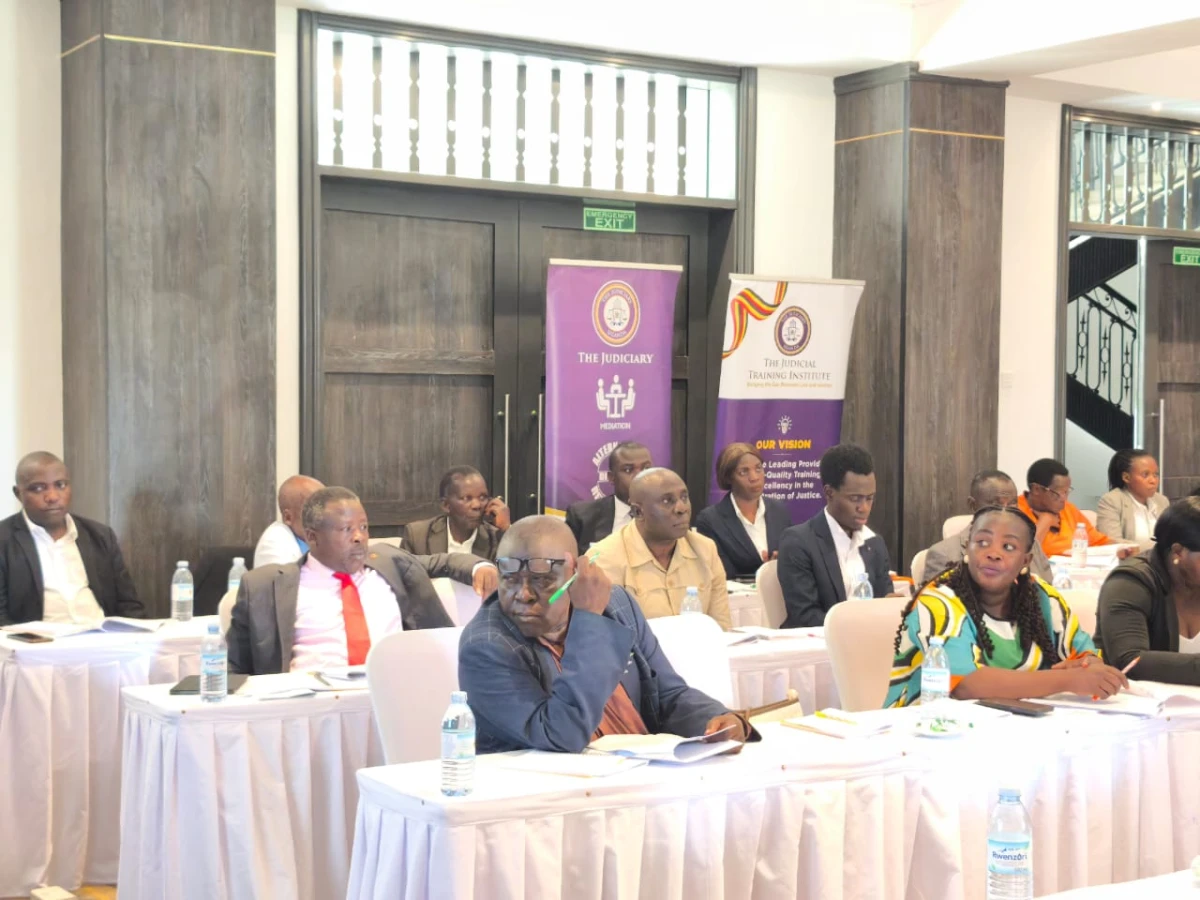
Masiga made the observation after completing a week-long Judiciary-led training in Alternative Dispute Resolution and mediation that brought together judicial mediators, magistrates, lawyers and other participants from Eastern Uganda.
By Steven Masiga
MBALE — Court-accredited mediator and legal scholar Steven Masiga has highlighted the practical value of intensive Alternative Dispute Resolution (ADR) training, arguing that a rigorous professional course can provide specialised skills that honorary academic awards do not necessarily confer.
Masiga made the observation after completing a week-long Judiciary-led training in Alternative Dispute Resolution and mediation that brought together judicial mediators, magistrates, lawyers and other participants from Eastern Uganda.
He said the training subjected participants to intensive lectures, practical simulations, examinations and active participation before they qualified for certification as mediators.
According to Masiga, the experience demonstrated the distinction between academic qualifications and honorary awards on one hand, and professional skills acquired through structured training and assessment on the other.
He explained that honorary doctorates, commonly derived from the Latin expression doctor honoris causa, are generally conferred in recognition of achievements or contributions rather than through the conventional academic process of coursework, examinations and thesis submission.
“Each participant had to undergo rigorous tests and actively participate in the lectures before qualifying for the certificate,” Masiga said.
He added that the ADR training gave participants practical competencies that can be applied directly to disputes affecting families, communities, cultural institutions, workplaces and other organisations.
Training focused on practical mediation skills
The training brought together participants who are expected to support the Judiciary's efforts to resolve disputes through mediation in the Bugisu, Bukedi and Sebei regions.
Masiga said participants were trained in the different stages of mediation, beginning with how to properly open a mediation session.
This includes welcoming the parties and their lawyers, introducing the mediator as a court-accredited mediator, explaining the mediator's role and allowing each party adequate time to introduce themselves before the issues in dispute are placed on the table.
Participants were also trained to listen carefully to each party, summarise the issues raised and facilitate dialogue without appearing judgmental or taking sides.
Masiga said mediators were repeatedly reminded of the importance of integrity, neutrality, professionalism and confidentiality throughout the process.
“The mediator must never sound judgmental during the mediation process,” he said.
He noted that the mediator's role is to facilitate dialogue rather than impose a solution on the parties.
ADR seeks alternatives to litigation
Masiga described ADR as a non-adversarial approach to resolving disputes in which parties are assisted by a trained and accredited mediator to find mutually acceptable solutions.
He stressed that ADR does not seek to abolish litigation but provides alternative mechanisms through which disputes can be addressed without necessarily going through a full court trial.
According to Masiga, mediation can be particularly useful where preserving relationships is important.
“Through Alternative Dispute Resolution training, we are now able to view disputes not merely as problems to be solved, but as opportunities to promote peace, justice and, above all, preserve public relationships,” he said.
He identified several advantages associated with mediation, including speed, reduced costs, confidentiality and the restoration of communication between parties.
Unlike conventional litigation, where proceedings are generally conducted openly, mediation allows parties to discuss their differences in a more confidential environment.
Masiga also said court-annexed mediation has the potential to help address Uganda's persistent problem of case backlog by resolving disputes before they require prolonged litigation.
Mediation and cultural disputes
Masiga cited recent cultural disputes in Eastern Uganda as examples of situations where mediation can help restore relationships.
He said a cultural dispute in Bugisu was recently addressed through court-assisted mediation, resulting in the parties moving towards reconciliation.
He also pointed to an ongoing dispute involving the Bugwere cultural institution, saying mediation had contributed significantly towards resolving the differences.
He recalled witnessing members of the Bugisu cultural institution shaking hands in court after mediation, describing such moments as evidence of the potential of dialogue in conflict resolution.
“Even restoration of communication lines should be celebrated as partial success by the parties,” he said.
Masiga argued that mediation should not only be measured by whether every issue is immediately resolved, because rebuilding communication and creating an environment in which parties can continue negotiating can itself represent meaningful progress.
Consent and neutrality are central to mediation
The training also emphasised that mediation is voluntary and that parties must consent to the process before it begins.
Masiga said a mediator cannot impose himself or herself on disputing parties or force them to participate in mediation.
The mediator is expected to remain neutral and avoid conduct that could create an impression that he or she is favouring one party.
Participants were further guided on the importance of clarifying the positions and understanding of each party before a mediation agreement is reached.
The agreement represents the terminal stage of a successful mediation process.
Masiga said mediators were also reminded of the confidentiality attached to mediation proceedings and the importance of observing established court mediation protocols.
ADR and Uganda's legal framework
Masiga noted that Uganda's Constitution and various pieces of legislation provide a legal foundation for alternative dispute resolution.
He cited Article 126(2) of the Constitution, alongside the Arbitration and Conciliation Act and other laws that provide mechanisms for resolving disputes through reconciliation, mediation, arbitration and related processes.
He said the increasing recognition of ADR in legislation reflects a broader effort to strengthen access to justice and provide disputants with mechanisms that can complement formal litigation.
Masiga also noted that interest in ADR expanded internationally, particularly in the United States during the 1960s, as part of wider legal reform efforts aimed at improving the justice system.
He said Uganda's Judiciary has continued encouraging judicial officers, lawyers and accredited mediators to embrace ADR as part of efforts to make justice more accessible and efficient.
Tackling conflict before it becomes destructive
Masiga said unresolved conflicts can have wider consequences for families, communities and workplaces.
He described prolonged disputes as capable of creating what he termed “organisational entropy”, particularly where disagreements are allowed to undermine communication, trust and productivity.
He said the training had therefore equipped participants with skills that go beyond settling individual disputes.
“Mediators were trained to become justices of peace in their communities,” he said.
According to Masiga, mediators can play a preventive role by helping parties communicate before disagreements escalate into prolonged and costly conflicts.
He said this is particularly important in an increasingly competitive economy where organisations and communities require effective mechanisms for resolving disagreements while maintaining productive relationships.
Appreciation to Judiciary and development partners
On behalf of the mediators associated with Mbale High Court, Masiga commended the Judiciary and its development partners for investing in ADR training.
He acknowledged the contribution of Deputy Chief Justice Emeritus Richard Buteera, Judicial Training Institute leadership, Prof. Andrew Khaukha, Solicitor General Emeritus Atwooki, and other facilitators who participated in the training.
He also recognised the contribution of IDLO and its representatives, including Ms Babra, Dr Henry Onoria and Uganda Law Council President Emeritus Francis Gimara.
Masiga further commended the Judiciary leadership under Chief Justice Dr Flavian Zeija, the Judicial Training Institute and the ADR Registry for supporting the expansion of mediation services.
He said the training was an important investment in strengthening access to justice and helping the Judiciary address case backlog.
A professional mindset for conflict resolution
For Masiga, the most important outcome of the training was not simply the certificate awarded to participants, but the practical skills and professional mindset acquired during the intensive programme.
He said the experience demonstrated that effective mediation requires discipline, preparation, neutrality, patience and respect for the parties involved.
“Skills in Alternative Dispute Resolution are an important way of nurturing a professional mindset capable of transforming conflict into dialogue,” he said.
Masiga believes that as more trained mediators become available in communities, disputes that might otherwise develop into prolonged court battles can increasingly be addressed through constructive dialogue.
He said the growing use of ADR in Uganda should therefore be viewed as complementary to the formal justice system, rather than as a replacement for courts.
For communities in Eastern Uganda and beyond, he argued, the development of a pool of professionally trained mediators offers an additional avenue for promoting peace, preserving relationships and improving access to justice.
The writer, Steven Masiga, is a court-accredited mediator and legal scholar.

John Kusolo is a Pastor, Sports Enthusiast and Ugandan journalist with Nile Chronicles News (NCN). With a strong commitment to journalistic excellence, he is recognized for his dedication, goal-oriented approach, and ability to thrive in challenging environments. Kusolo brings focused motivation and professionalism to his reporting and media assignments.














Comments (0)