
Government Funds: Byaruhanga Questions Where 263 Kampala Metro SACCOs Went
Byaruhanga said only 303 of the 566 SACCOs registered in the Kampala Metropolitan Area, covering Kampala and Mukono, were found to be active and traceable on the ground, according to information obtained from the Ministry of Finance, Planning and Economic Development.
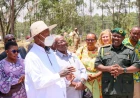
KAMPALA – Senior Presidential Advisor on Mobilisation (SPA/M) in the Office of the President, Moses Byaruhanga, has raised concern over 263 Savings and Credit Cooperative Organisations (SACCOs) in the Kampala Metropolitan Area that he says can no longer be traced despite reportedly benefiting from government funding.
Byaruhanga said only 303 of the 566 SACCOs registered in the Kampala Metropolitan Area, covering Kampala and Mukono, were found to be active and traceable on the ground, according to information obtained from the Ministry of Finance, Planning and Economic Development.
The revelation has raised questions about the accountability of public funds channelled through government poverty eradication and economic empowerment programmes.
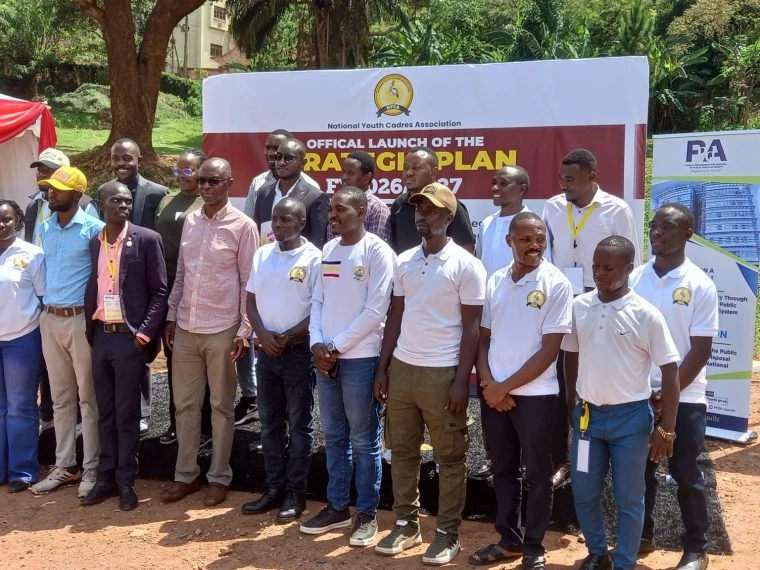
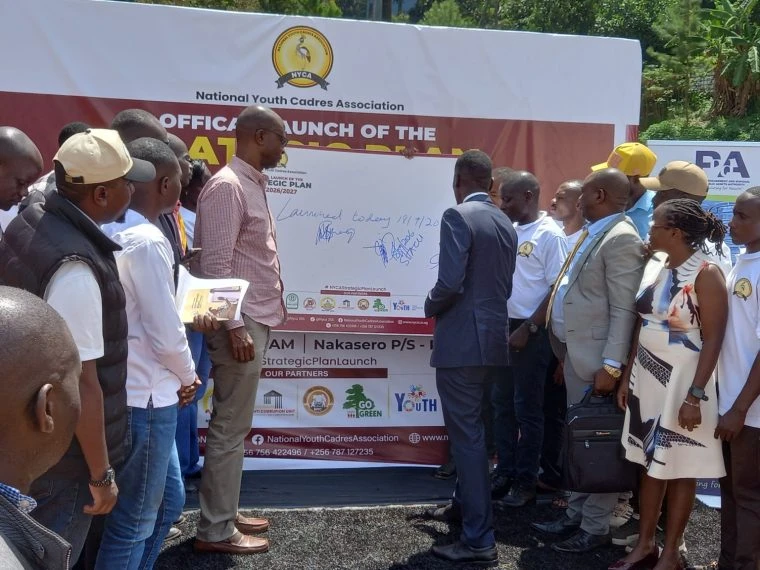
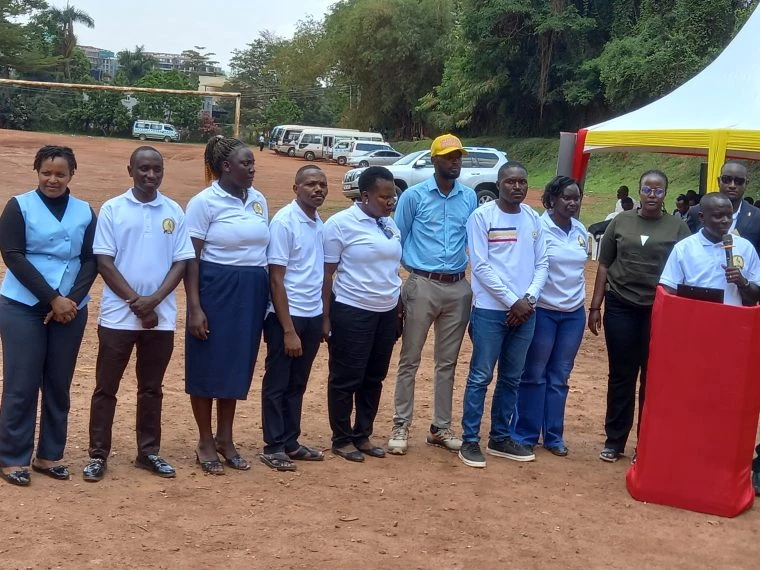
Byaruhanga made the remarks on Friday, September 18, 2026, while officiating at the launch of the National Youth Cadres Association (NYCA) Strategic Plan 2026/27 at Nakasero Primary School sports grounds in Kampala.
The strategic plan is themed “The Role of Youth in Advancing Tenfold Growth Strategy, Climate Change Mitigation and Environmental Conservation.”
The event brought together more than 600 participants from across the country, including youth leaders and representatives of National Resistance Movement (NRM) university and tertiary institution youth chapter councils and other youth development-oriented groups.
263 SACCOs unaccounted for
Byaruhanga said he had asked the Ministry of Finance to provide a comprehensive list of SACCOs registered in the metropolitan area in order to establish their operational status.
He said the findings were disturbing, with 263 SACCOs reportedly failing to be traced.
“Out of a total of 566, only 303 were practical, active and traceable on the ground, leaving 263 unaccounted for, yet they effectively benefited from government funding,” Byaruhanga said.
He questioned how SACCOs that were reportedly active and identifiable during registration could subsequently disappear after accessing public funds.
“These missing SACCOs must be ghosts because at registration they were active and visible with purported addresses, but after getting billions of government funds, they just disappeared without a trace,” he said.
Byaruhanga did not provide a breakdown of the amount of money received by each of the 263 SACCOs, but said the matter required urgent investigation to establish what happened to the organisations and the funds they received.
He subsequently tasked NYCA leaders with using their grassroots structures to help trace the missing SACCOs and establish whether they are still operational.
Where wrongdoing is established, he said, those responsible should face arrest and prosecution.
Youth urged to take advantage of government programmes
Beyond the SACCO accountability concerns, Byaruhanga urged young Ugandans to make greater use of government economic empowerment programmes, particularly Emyooga and the Parish Development Model (PDM).
He encouraged youth to form or join sector-specific SACCOs through which they can access government financing and collectively engage in income-generating activities.
Byaruhanga said the uptake of government funds by young people remained low, estimating youth participation at between 18 and 20 percent despite the official allocation of 30 percent for the youth category.
He argued that the low uptake represented a significant missed opportunity for young Ugandans.
According to Byaruhanga, about Shs1 trillion has been injected into the 18 PDM enterprise groups, and the difference between the targeted 30 percent allocation and the estimated 18–20 percent youth uptake could translate into a substantial amount of money that young people are not accessing.
He estimated that youth could be missing out on about Shs100 billion annually.
Questions over role of youth leaders in PDM
Byaruhanga also questioned the effectiveness of parish youth council chairpersons, who sit on parish PDM committees and are expected to help ensure that young people participate in the programme.
He urged youth leaders to become more active in mobilising their peers, explaining government programmes and helping eligible beneficiaries navigate the requirements for accessing public financing.
He said young people should take advantage of their numerical strength to access opportunities earmarked for different groups under government programmes.
These include allocations of 30 percent for women, 10 percent for older persons, 10 percent for persons with disabilities and 30 percent for youth.
Byaruhanga further said government had separately provided Shs45 billion annually for people and entities outside the designated categories under Emyooga and PDM.
He encouraged youth groups that qualify to explore the additional financing opportunities to strengthen and expand their SACCOs.
Anti-corruption unit calls for grassroots accountability
The Head of the State House Anti-Corruption Unit, Brig. Gen. Henry Isoke, who was represented at the event by the unit manager, Bamwine Muhorozi, urged NYCA members to use their structures and influence to support the fight against corruption at community level.
Muhorozi encouraged youth leaders to demand accountability from sub-county technical officials responsible for implementing government programmes and delivering public services.
He said youth cadres could play a significant role in monitoring government programmes and reporting cases where public resources are mismanaged.
“As State House, we look at you as a valuable resource group of cadres with potential and capabilities to confront, through the use of shared intelligence information, those responsible leaders entrusted with the mandate to offer quality social services to the public,” Muhorozi said.
He encouraged NYCA leaders to collaborate with Resident District Commissioners (RDCs), Resident City Commissioners (RCCs), town clerks, the Office of the Director of Public Prosecutions (ODPP), elected local council leaders and civil society organisations.
Such collaboration, he said, could strengthen monitoring of public programmes and improve service delivery at the grassroots.
PPDA highlights procurement opportunities for youth
The Public Procurement and Disposal of Public Assets Authority (PPDA) also used the event to sensitise young people about opportunities available to youth-owned enterprises in government procurement.
PPDA Executive Director Canon Benson Turamye was represented by the authority's Manager for Local Content, Ronald Tumuhairwe.
Tumuhairwe said about 65 percent of the government budget is allocated annually to the procurement of goods and services, making public procurement a potentially significant avenue for youth enterprises to access government business.
He said PPDA introduced Reservation Schemes guidelines in 2024 to increase the participation of youth and other marginalised Ugandans in public procurement.
Under the guidelines, government entities are required to reserve at least 15 percent of their annual procurement budgets for enterprises owned by youth and other marginalised groups.
Tumuhairwe explained that procurements valued at Shs30 million or less in central government entities are reserved for enterprises owned by youth and other marginalised Ugandans.
In local governments, procurements valued at Shs10 million or less are exclusively reserved for enterprises owned by youth and other marginalised groups.
Youth exempted from some tendering costs
Tumuhairwe said youth entrepreneurs participating under the reservation schemes are not required to pay bid securities or bidding fees to obtain bidding documents and participate in procurement processes.
Other measures include simplified bidding documents and the establishment of an advisory unit at PPDA to provide free guidance to young entrepreneurs on tendering procedures and preparation of responsive bids.
He encouraged NYCA members to work with PPDA in conducting community-centred sensitisation campaigns to ensure that young people understand how they can participate in public procurement.
He also pledged PPDA's commitment to working with NYCA to reach remote and hard-to-reach communities.
The partnership, he said, would also support efforts to build the capacity of local leaders to understand and participate effectively in government poverty eradication programmes.
NYCA pledges grassroots mobilisation
NYCA Chairperson Ahumuza Penkson welcomed the interventions by the different government agencies, saying the association was prepared to use its structures to mobilise communities and address challenges affecting young people.
Ahumuza said NYCA would support community-centred sensitisation campaigns focused on poverty reduction, accountability, environmental conservation and other grassroots concerns.
He also called on Byaruhanga's office to put pressure on the Microfinance Support Centre and other government agencies involved in public financing to reduce bureaucratic procedures that delay access to funds.
According to Ahumuza, reducing delays would enable more youth and other eligible beneficiaries to access government financing in time while also strengthening accountability among beneficiary SACCOs.
Shs6 million transport support
During the event, Byaruhanga also donated Shs6 million to facilitate delegates with transport back to their respective upcountry stations.
The NYCA strategic plan is expected to guide the association's activities during the 2026/27 period, with its priorities extending beyond economic empowerment to include anti-corruption mobilisation, environmental conservation, HIV/AIDS prevention and awareness, political mobilisation, civic participation and community development.
The concerns raised over the 263 untraceable SACCOs, however, put renewed emphasis on the need for stronger monitoring of government-funded community organisations and greater accountability for public resources.
For youth groups expected to benefit from programmes such as Emyooga and PDM, the discussions also highlighted the importance of both access to government financing and responsible management of funds once received.

John Kusolo is a Pastor, Sports Enthusiast and Ugandan journalist with Nile Chronicles News (NCN). With a strong commitment to journalistic excellence, he is recognized for his dedication, goal-oriented approach, and ability to thrive in challenging environments. Kusolo brings focused motivation and professionalism to his reporting and media assignments.











Comments (0)