
Jjagwe Raises Fresh Concerns Over Limited Visibility of Uganda’s Table Tennis at FEASSA Games
Jjagwe says it is particularly frustrating that Uganda’s table tennis team appears well positioned to win both Gold and Silver medals, with the possibility of additional Bronze medals, yet Ugandans are struggling to access information and visual content from the competition.
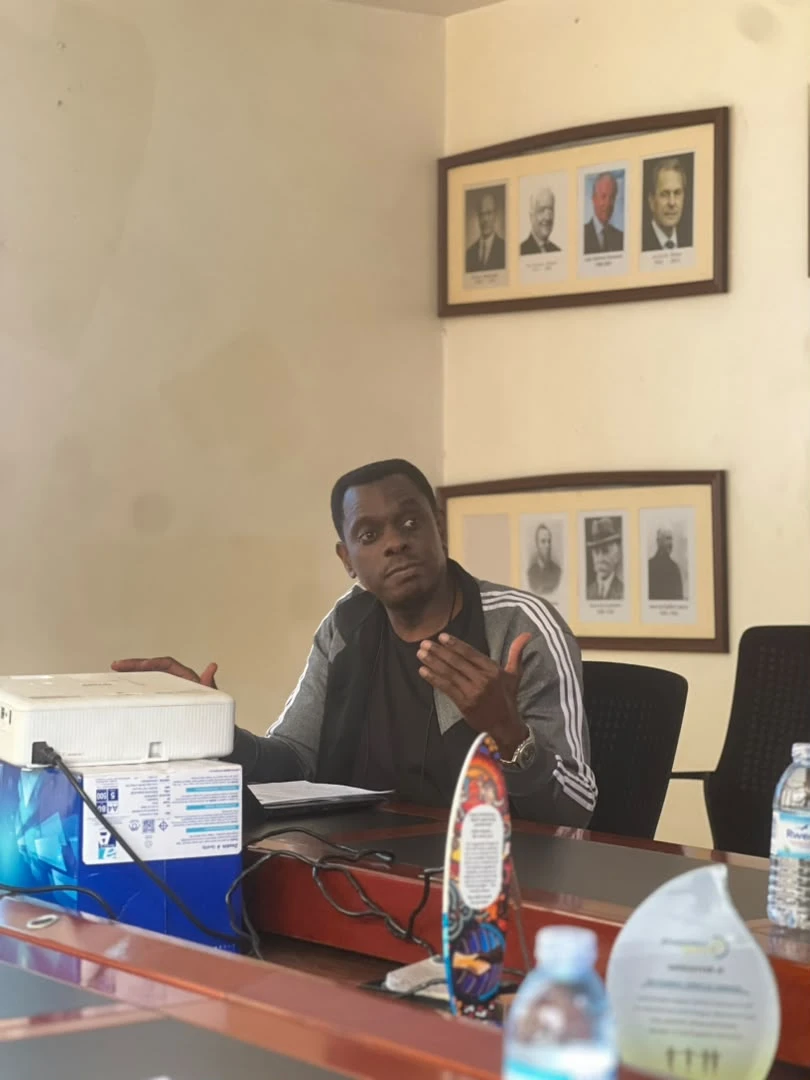
Former Uganda Table Tennis Association President Robert Jjagwe has renewed his criticism of the limited public visibility of table tennis competitions in Uganda, expressing disappointment over the lack of detailed results, photographs and videos from the ongoing Federation of East African Secondary Schools Sports Association (FEASSA) Games in Morogoro, Tanzania.
Jjagwe says it is particularly frustrating that Uganda’s table tennis team appears well positioned to win both Gold and Silver medals, with the possibility of additional Bronze medals, yet Ugandans are struggling to access information and visual content from the competition.
“It is very, very sad, disturbing and utterly unacceptable that we have Table Tennis well set to win both Gold and Silver Medals — and I believe some extra Bronze Medals too — at the ongoing FEASSA Games in Morogoro, Tanzania, but finding detailed results, photos and videos of these games is very hard because they do not seem to be anywhere,” Jjagwe said.
He questioned why information about Ugandan athletes participating in the regional school games is not readily available on digital platforms, particularly those operated by the Uganda Secondary Schools Sports Association (USSSA) and FEASSA.
“Not even on the Internet or social media handles of USSSA or the FEASSA online outlets, which also seem nearly non-existent,” he added.
‘How can you take our taxpayers’ money and go to play games we cannot follow?’
Jjagwe argues that sports organisations benefiting from public resources have a responsibility to ensure that the public can follow the competitions they support.
“You cannot take our taxpayers’ money and engage in games that we cannot even follow,” he said.
He believes the problem cannot simply be explained by the cost of television broadcasting. In his view, sports administrators can use affordable digital alternatives, including smartphones, social media platforms and delayed streaming.
“Even if live streaming is very expensive, you can do delayed streaming. You can record with your phones and upload later,” Jjagwe said.
He suggested that officials or individuals attending competitions could be tasked with recording matches using smartphones and uploading the footage to federation social-media pages and YouTube channels.
According to Jjagwe, modern smartphones can produce sufficiently clear footage for online audiences, while individuals with capable devices could also be contracted to document matches.
Results, photographs and match details
Jjagwe says the visibility problem goes beyond live coverage. He wants sports followers to have access to basic competition information, including match results, photographs, fixtures, medal standings and details showing which players defeated their opponents and by what margins.
“For example, their gold medal matches, semifinals were there. I want to watch. How did this one beat this one? Who beat who? By how many points?” he asked.
He argues that without such information, Ugandans cannot properly follow the progress of their athletes or appreciate their achievements.
He has also criticised the limited availability of photographs and match updates from school sports competitions, saying even simple and regular digital updates could significantly increase public interest in table tennis.
Visibility and commercial value
Jjagwe further argues that greater media exposure is essential to the growth and commercialisation of sport.
He says television and digital platforms give sports organisations an opportunity to build audiences, attract sponsors and create additional revenue streams.
“TV helps you to get other money,” he said, pointing to major international sporting competitions whose commercial success is closely linked to consistent television and digital exposure.
According to Jjagwe, sponsors and advertisers are naturally interested in sports that have visible and growing audiences.
He therefore believes media coverage should not be treated merely as publicity but as an important component of sports development and revenue generation.
“Ugandans cannot follow what they cannot see,” he said.
He contrasted the situation with the English Premier League, which has developed a huge following in Uganda largely because its matches are consistently available through television and digital platforms.
A complaint Jjagwe says he has raised for years
Jjagwe says his concerns about the visibility of sports are not new. He maintains that he has repeatedly raised the issue over several years, only to see the complaints ignored or dismissed.
“Some people keep just ignoring these complaints. Some say we are just ‘Noise Makers’,” he said.
Jjagwe questioned why sports stakeholders who raise concerns about the administration and visibility of competitions can sometimes be portrayed negatively.
“But how can you take our Tax money and go to play games that we cannot follow?” he asked.
He also expressed concern that escalating such complaints could result in sports stakeholders being labelled “trouble causers.”
“If we escalate these complaints to some interesting offices then they will say we have now become ‘Trouble Causers’,” he said.
For Jjagwe, however, raising concerns should be viewed as part of efforts to improve the sports sector rather than as an attempt to create conflict.
‘How can we develop sports like this?’
Jjagwe believes the lack of visibility is symptomatic of a broader challenge in Uganda’s sports-development pathway.
“But how can we ever truly develop our Sports Sector with such things continuing to happen year after year?” he asked.
“In my view this is utter mismanagement of the development pathway for the Sports Sector some of us love so much.”
He argues that sports administrators need to adopt a more deliberate approach to documenting and promoting competitions, particularly at school level where many athletes begin their competitive careers.
He says competitions such as FEASSA provide an important platform for identifying and nurturing future national athletes, making it even more important that their performances are properly documented.
‘I have done it myself’
Jjagwe has rejected suggestions that he is demanding standards he did not attempt to implement during his own tenure.
He points to his time as president of the Uganda Table Tennis Association, when he supported the use of digital platforms to make competitions accessible to audiences.
He recalled a tournament held in September 2024 at Ray Ray’s Primary School in Zambia, at the Slam Ping Pong Club, where table tennis matches were streamed.
For Jjagwe, the experience demonstrated that sports federations do not necessarily need expensive broadcasting infrastructure before they can begin sharing their competitions with the public.
He believes federations can start with simple, affordable digital solutions and gradually improve production quality as resources become available.
Call for a new approach
Jjagwe is calling on sports administrators to embrace technology and establish practical systems for recording matches, publishing results, sharing photographs and providing regular updates from competitions.
He says the objective should be to ensure that Ugandans can follow their athletes whether or not a competition has secured conventional television coverage.
His latest concerns about the FEASSA Games in Morogoro have therefore become another example he says demonstrates the urgent need for change.
For Jjagwe, the issue is ultimately about accountability, sports promotion, athlete recognition and building sustainable audiences.
He believes greater visibility would not only allow existing fans to follow Uganda’s athletes but could also introduce table tennis and other less-covered sports to a new generation.
His message to sports administrators is straightforward: if public resources and the contributions of Ugandans are supporting sports competitions, the public should have meaningful opportunities to see, follow and appreciate the athletes representing the country.
FEASSA Games 2026 Live Streaming statistics so far
Total Number of Sports Disciplines at the Games = 21
- No. of Sports Disciplines Live Streamed = 6 (29%)
- No. of Sports Disciplines not Live Streamed = 15 (71%)
- Sports Disciplines Live Streamed = Football, Basketball, Volleyball, Netball, Chess & Scrabble
- Live Stream sessions per Sport as at 8am on 21st Aug 2026 on USSSA YouTube Channel:
- 1. Football = only 7
- 2. Basketball = only 4
- 3. Netball = only 2
- 4. Volleyball = only 2
- 5. Chess = only 2
- 6. Scrabble = only 2 (and only total of 56 Minutes combined)

John Kusolo is a Pastor, Sports Enthusiast and Ugandan journalist with Nile Chronicles News (NCN). With a strong commitment to journalistic excellence, he is recognized for his dedication, goal-oriented approach, and ability to thrive in challenging environments. Kusolo brings focused motivation and professionalism to his reporting and media assignments.












Comments (0)