
Bamasaaba-Batooro Cultural Ties: The Story of Mzee Magwara’s Children Rose and John Twesigye
According to Hon. Steven Masiga, spokesperson of the Bamasaaba Cultural Institution, the relationship between the two communities extends beyond cultural interactions to include marriage, language, geography, politics, business and shared participation in national traditional leadership structures.
The longstanding cultural, family, social and economic ties between the Bamasaaba of Bugisu and the Batooro of Tooro have continued to demonstrate the deep connections that exist among Uganda’s traditional communities.
According to Hon. Steven Masiga, spokesperson of the Bamasaaba Cultural Institution, the relationship between the two communities extends beyond cultural interactions to include marriage, language, geography, politics, business and shared participation in national traditional leadership structures.
Speaking by telephone from Tooro, Masiga traced some of the historical connections between the communities to the formation of the Tooro Kingdom in the 19th century.
He explained that around 1820, King Nyamutukura of Bunyoro sent his son, Kaboyo, to collect taxes in Mwenge, then one of the counties under Bunyoro.
According to Masiga, Kaboyo, upon reaching Mwenge, became concerned about the long distance and suffering endured by the people under his administration.
He subsequently placed a royal braid in his hair, which Masiga said was interpreted as a signal that he intended to break away from his father.
News of Kaboyo's decision reportedly reached the Bunyoro palace, where it became known that he had broken away and established Tooro as a separate kingdom.
Kaboyo subsequently became known as Kaboyo Olimi, with Masiga explaining that the title was equivalent to that of an Umukuuka in the Bamasaba cultural system.
Shared Bantu heritage
Masiga said the Bamasaaba and Batooro belong to the wider Bantu grouping and have several cultural and linguistic similarities, alongside centuries of interaction.
He said marriage has been one of the strongest links connecting the two communities.
“The Batooro and Bamasaba people share extensive family ties with the people of Tooro,” Masiga said, noting that the relationship encompasses marriage, culture, language, geography and political interaction.
He also pointed to the cooperation between the Bamasaba Cultural Institution and the Tooro traditional institution as an example of the institutional ties between the two communities.
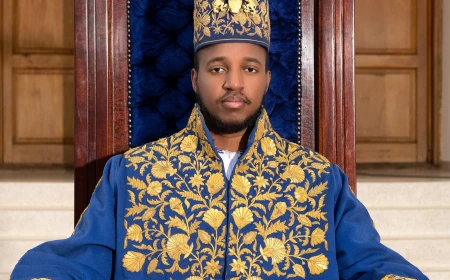
The late Omusinga Oyo Nyimba Kabamba Iguru Rukidi IV, who reigned over Tooro until his death in 2025, was among the traditional leaders whose institution participated in national engagements involving Uganda's cultural leaders.
The Magwara family connection
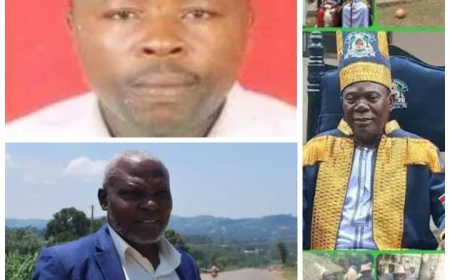
One of the families that illustrates the close relationship between the Bamasaba and Batooro is the family of the late Mzee Magwara, described as a prominent family in Tooro and one that maintained close relations with the former royal family.
Masiga highlighted the family stories of Mzee Magwara's children, including Rose Wekomba and John Twesigye, as examples of how marriage has helped build bridges between communities separated by hundreds of kilometres.
Rose Wekomba is married to Stephen Wekomba, a businessman with major commercial interests in Bugisu and Kampala.
John Twesigye, another child of the late Mzee Magwara, is married to Berna, who comes from the Wasike family in Nyondo, Bugisu.
The marriages have created family connections stretching from Tooro to Bugisu, demonstrating how cultural relationships are often strengthened through individual families.
Masiga said the Magwara family also had longstanding business and social links with prominent families associated with the Tooro royal establishment.
Business and economic connections
Beyond marriage and cultural relations, Masiga said the relationship between the Bamasaba and Batooro communities is also reflected in business and professional networks.
He described John Twesigye as a prominent businessman in Mbale City, where he has several commercial structures, and as an importer of Toyota vehicles in Bugisu and Uganda.
Other Batooro personalities have also established themselves in Bugisu.
Among those Masiga cited is Dr Kasoro, who owns a children's hospital, as well as SSP Agaba, who serves in the regional Criminal Investigations Directorate in the Elgon region.
“These are examples of the many connections between our communities,” Masiga said, explaining that the movement of people for business, employment, education and marriage has created families and professional networks that transcend traditional geographical boundaries.
The Babwisa connection
Masiga also drew attention to the presence of Batooro-related communities in Bugisu, particularly clusters associated with the Babwisa.
He said some members of the Babwisa community moved into the Bugisu area during the 19th-century period associated with the establishment of the Tooro Kingdom.
According to Masiga, some members of these communities served as page boys at the palace of Kamurasi and developed connections with other communities, including the Bakonzo of present-day Kasese.
He said these historical movements help explain some of the cultural similarities and relationships found among communities in different parts of western and eastern Uganda.
Respect and cultural identity
Masiga described the Batooro as a people whose royal heritage has strongly influenced their cultural identity and social conduct.
He said the community is widely associated with humility, dignity and respect, values he attributed partly to its longstanding royal traditions.
He also offered an interpretation of the name Tooro, saying it has historically been associated with the elegance and smartness of its people.
While the historical origins and interpretations of cultural names can vary, Masiga said such narratives remain important in understanding how communities preserve and explain their identities.
A visit that celebrated family ties
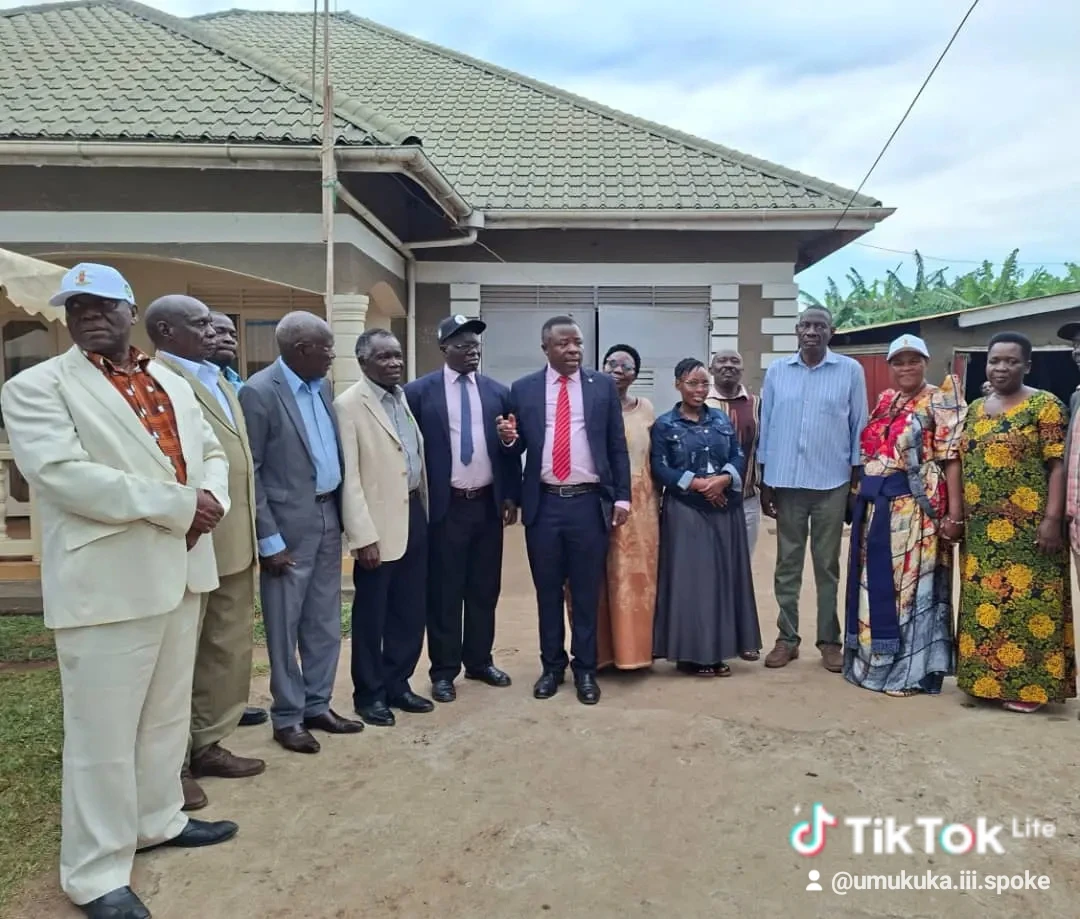
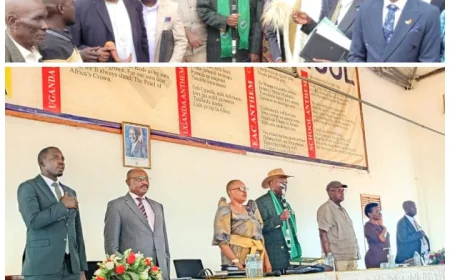
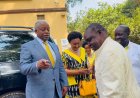
Masiga's remarks followed a visit to the home of the late Mzee Magwara in Tooro by a delegation from the Bamasaba Cultural Institution.
The delegation, led by Masiga as spokesperson, included members of the Bugisu cultural team as well as cultural representatives from the Lugbara community.
The visitors were hosted by Mzee Magwara's children, including Rose, John and Berna, who is married to John Twesigye.
Masiga expressed appreciation to the family for the warm reception accorded to the delegation.
“On behalf of the Bamasaaba Cultural Institution, I would like to thank Mzee Magwara's children Rose, John and our daughter Berna, who is married to John, for hosting us as Team Umukuka of Bugisu,” he said.
He added that the delegation had been “well received,” describing the visit as another demonstration of the strong bonds connecting the Bamasaba and Batooro.
Culture as a bridge
The story of the Magwara family illustrates how Uganda's traditional communities are connected in ways that extend far beyond their geographical locations.
From royal institutions and historical migrations to marriage, business, language and friendship, the Bamasaba-Batooro relationship demonstrates the role of families and cultural institutions in preserving Uganda's diverse but interconnected heritage.
For Masiga, such relationships provide an opportunity for cultural institutions to strengthen cooperation, promote mutual respect and remind younger generations that Uganda's communities have historically interacted, intermarried and built shared social and economic networks.
The visit to the Magwara family home therefore served not merely as a family gathering but as a reflection of the broader cultural ties between Bugisu and Tooro—ties that continue to evolve through marriage, commerce, traditional leadership and people-to-people relationships.

John Kusolo is a Pastor, Sports Enthusiast and Ugandan journalist with Nile Chronicles News (NCN). With a strong commitment to journalistic excellence, he is recognized for his dedication, goal-oriented approach, and ability to thrive in challenging environments. Kusolo brings focused motivation and professionalism to his reporting and media assignments.







Comments (0)