
CropLife Uganda Symposium Calls for Innovation, Sustainability and Stronger Regulation in Agriculture Sector
Speaking during the opening session, Dr. Paul Mwambu, Commissioner for Crop Inspection and Certification at Ministry of Agriculture, Animal Industry and Fisheries, emphasized the need for regulatory systems that promote innovation while maintaining safety standards.
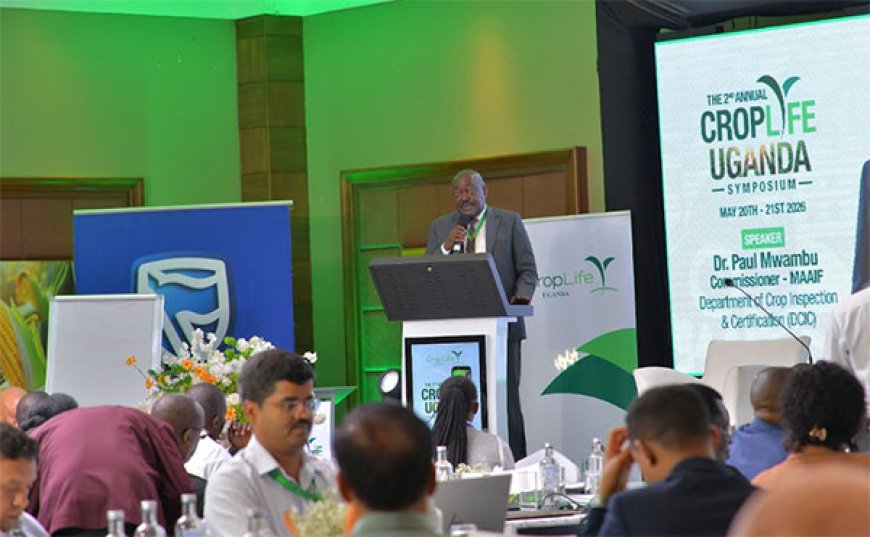
KAMPALA – Stakeholders in Uganda’s agriculture sector have called for stronger collaboration, science-driven regulation, and sustainable farming practices as CropLife Uganda opened its second annual two-day symposium at Sheraton Kampala Hotel.
The high-level symposium brought together senior government officials, agricultural experts, private sector leaders, researchers, and farmer representatives to discuss emerging trends in agrochemicals, seeds, and fertilizers amid growing concerns over climate change, food security, and market demands.
Held under the theme, “Emerging trends in seeds, crop protection products and the fertilizer industry: Embracing change and sustainability to ensure food security, health and safety,” the symposium aims to identify practical solutions to challenges affecting Uganda’s agricultural productivity, including unpredictable weather patterns, evolving pests such as the Fall Armyworm, and increasingly strict international market standards.
Speaking during the opening session, Dr. Paul Mwambu, Commissioner for Crop Inspection and Certification at Ministry of Agriculture, Animal Industry and Fisheries, emphasized the need for regulatory systems that promote innovation while maintaining safety standards.
Dr. Mwambu noted that agricultural regulations must continuously evolve to keep pace with scientific advancements and emerging technologies. He stressed the importance of evidence-based approvals and regional harmonization to ensure that agricultural inputs remain effective, safe for farmers, consumers, and the environment.
He further reaffirmed the ministry’s commitment to strengthening farmer education, promoting climate-resilient agricultural solutions, and deepening partnerships with private sector actors to support sustainable agricultural intensification across the country.
According to Dr. Mwambu, collaboration between regulators, researchers, manufacturers, and farmers remains critical in addressing modern agricultural challenges and improving productivity in a sustainable manner.
CropLife Uganda Chairperson Agnes Mbabazi described the symposium as an important platform for engagement between industry players and policymakers.
Mbabazi highlighted CropLife Uganda’s role as the legitimate voice of the plant science industry in the country and applauded the continued cooperation with MAAIF in improving registration processes for agricultural inputs.
She observed that despite operating in a challenging and volatile environment, the agricultural input sector has remained resilient and committed to supporting farmers with quality products and services.
Mbabazi also underscored the industry’s commitment to responsible stewardship, health and safety standards, and sustainable agricultural practices. She called for more coordinated action among regulators, private companies, and farming communities to address counterfeit products, misuse of agrochemicals, and environmental concerns.
The symposium also featured remarks from Odrek Rwabwogo, Chairman of the Presidential Advisory Committee on Exports and Industrial Development (PACEID) and Senior Presidential Advisor on Trade Promotion.
Rwabwogo urged stakeholders to prioritize locally sourced raw materials and inputs in the manufacture of agricultural equipment and related products.
He argued that increased local sourcing would reduce dependence on imports, eliminate harmful and toxic products from the market, and help protect public health while boosting local industries.
Rwabwogo further called for intensified farmer sensitization on the proper use of fertilizers and pesticides, noting that knowledge gaps among farmers continue to contribute to poor application practices and health risks.
He also encouraged closer cooperation between industry players and government authorities to identify and curb the circulation of counterfeit agricultural inputs, which he said undermine productivity, threaten food safety, and expose farmers to financial losses.
Participants at the symposium are expected to deliberate on a wide range of issues affecting the agriculture sector, including sustainable crop protection, fertilizer efficiency, seed innovation, climate adaptation, and regulatory reforms.
The two-day engagement(20th-21st May 2026) concluded with key commitments and science-based recommendations aimed at strengthening food security, improving agricultural productivity, and promoting environmentally sustainable farming practices in Uganda.
The symposium comes at a time when Uganda’s agriculture sector continues to face mounting pressure from climate variability, pest outbreaks, soil degradation, and growing demand for safe and high-quality agricultural produce in regional and international markets.

John Kusolo is a Pastor, Sports Enthusiast and Ugandan journalist with Nile Chronicles News (NCN). With a strong commitment to journalistic excellence, he is recognized for his dedication, goal-oriented approach, and ability to thrive in challenging environments. Kusolo brings focused motivation and professionalism to his reporting and media assignments.















Comments (0)