
Bridging Tradition and Law: The Case for Cultural Institutions in Uganda's Justice System
Masiga contends that law cannot be separated from the social and cultural environment in which it develops. However, he cautions that as Uganda embraces alternative justice mechanisms, the protection of human rights, particularly those of women, persons with disabilities (PWDs), and other vulnerable groups, must remain paramount.
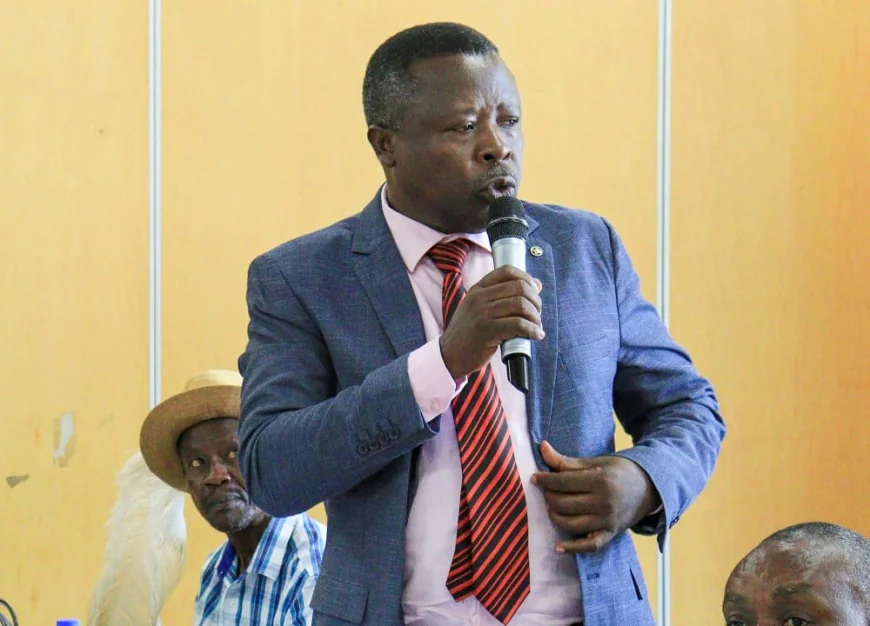
The spokesperson of the Bugisu Cultural Institution and interdisciplinary legal scholar, Hon. Steven Masiga, has called for cultural institutions to be placed at the centre of Uganda's Alternative Justice System (AJS), arguing that traditional dispute resolution mechanisms offer an effective solution to persistent court case backlogs while promoting access to justice at the grassroots level.
Masiga contends that law cannot be separated from the social and cultural environment in which it develops. However, he cautions that as Uganda embraces alternative justice mechanisms, the protection of human rights, particularly those of women, persons with disabilities (PWDs), and other vulnerable groups, must remain paramount.
"It is a well-settled jurisprudential assumption that law cannot be understood without the social milieu in which it has developed," Masiga notes. "While customary and traditional systems are deeply rooted in communities, human rights must never be sacrificed at the altar of patriarchal traditions."
Accessibility and Affordability
According to Masiga, informal justice systems such as customary and traditional dispute resolution mechanisms are often more accessible, affordable, and culturally acceptable than formal court processes. These systems provide communities with practical avenues for resolving disputes without the financial and procedural burdens associated with litigation.
He emphasizes, however, that both international and national human rights standards should guide the implementation of AJS to ensure fairness and inclusivity.
"Human rights must be fully observed in the implementation of alternative justice systems so that the rights to property and dignity of women, persons with disabilities, and other vulnerable groups are adequately protected," he argues.
Need for a Comprehensive Legal Framework
Masiga observes that Uganda still lacks a comprehensive and uniform legal framework governing Alternative Justice Systems. While the Arbitration and Conciliation Act provides some guidance, he argues that it primarily focuses on commercial arbitration and dispute resolution rather than broader community-based justice mechanisms.
He points to countries such as Kenya, Rwanda, and Ghana as examples of jurisdictions that have made significant strides in developing legal frameworks for alternative justice.
In Rwanda, community-based mechanisms such as the Gacaca Courts and Abunzi Reconciliation Committees have played a critical role in post-conflict reconciliation and social healing. These structures have helped communities recover from disputes and conflicts through dialogue and restorative justice approaches.
Addressing the Case Backlog Challenge
One of the strongest arguments advanced by Masiga is the potential of AJS to significantly reduce Uganda's court case backlog.
Despite the expansion of the judiciary and an increase in the number of judicial officers and judges, courts continue to grapple with a heavy workload. Masiga believes this is partly because many citizens still view courts as the only legitimate avenue for resolving disputes.
He says greater public awareness is needed to educate communities about alternative pathways for justice.
"Cultural institutions, when properly facilitated, can play a major role in resolving community disputes before they escalate into court cases," he notes.
The legal scholar further links the promotion of AJS to the United Nations Sustainable Development Goals, particularly the commitment to ensuring universal access to justice by 2030.
Understanding the Three Pillars of AJS
Masiga explains that Alternative Justice Systems operate through three key pillars:
Autonomous Alternative Justice Mechanisms – These are entirely community-driven processes where communities select trusted individuals to mediate and resolve disputes.
Third-Party Institutions – These involve independent bodies, some of which may be recognized or sanctioned by the state, to facilitate dispute resolution.
Court-Annexed Alternative Justice Systems – These operate under the guidance of the formal judiciary and may involve elders, mediators, or other community representatives working alongside courts.
He notes that while Alternative Dispute Resolution (ADR) mechanisms such as mediation and arbitration are often supervised by courts, AJS remains largely community-centred and independent.
Lessons from Buganda and Acholi
Masiga highlights the achievements of cultural institutions in Buganda and Acholi as examples of successful traditional justice systems.
In Acholi, the traditional reconciliation process known as Mato Oput has gained international recognition for resolving complex disputes, including cases involving homicide and inter-clan conflicts. The mechanism focuses on reconciliation, accountability, and restoration of social harmony rather than punishment.
He cites the widely publicized Uganda versus Kanyamunyu case as a recent example where traditional reconciliation mechanisms featured prominently in discussions about justice and community healing.
Another Acholi mechanism, Poro Lok, emphasizes negotiation and dialogue as a means of restoring peaceful relations among individuals and clans.
These practices, Masiga argues, demonstrate the effectiveness of culturally grounded approaches to justice.
Importance of Documentation and Institutional Support
A major challenge facing Uganda's Alternative Justice System, according to Masiga, is the lack of proper documentation and record-keeping.
He notes that many disputes resolved by cultural institutions are never formally documented, making it difficult to assess their impact or integrate them into the broader justice system.
"There is very limited documented data on disputes resolved through cultural institutions in Uganda. Such outcomes should be properly archived and recognized as legitimate resolutions," he says.
He suggests that lessons can be drawn from Kenya, where parties that voluntarily choose alternative justice pathways are generally expected to conclude their disputes through those mechanisms rather than returning to court over the same matter.
Call for Dedicated Legislation
Masiga believes that cultural institutions currently spearheading the promotion of AJS require stronger legal backing to perform their role effectively.
He argues that Uganda should enact a dedicated Alternative Justice System law that clearly defines the roles of cultural institutions, establishes standards and safeguards, and ensures recognition of outcomes generated through these mechanisms.
Such legislation, he says, would complement ongoing judiciary reforms and provide a coherent framework for integrating traditional justice practices into the national justice system.
"The cultural institutions that are championing Alternative Justice Systems need a legal instrument of their own in the form of an Act of Parliament to implement the programme meaningfully," he argues.
As Uganda continues to search for innovative ways of improving access to justice and reducing court case backlogs, Steven Masiga's proposal places cultural institutions at the heart of the conversation. While he acknowledges the need for robust human rights safeguards and legal oversight, he believes traditional justice mechanisms remain an underutilized resource capable of strengthening social cohesion, promoting reconciliation, and bringing justice closer to ordinary citizens.
His call for a comprehensive legal framework, improved documentation, and greater institutional support reflects a growing debate on how Uganda can effectively blend customary practices with modern legal principles to build a more accessible and people-centred justice system.

John Kusolo is a Pastor, Sports Enthusiast and Ugandan journalist with Nile Chronicles News (NCN). With a strong commitment to journalistic excellence, he is recognized for his dedication, goal-oriented approach, and ability to thrive in challenging environments. Kusolo brings focused motivation and professionalism to his reporting and media assignments.














Comments (0)