
Bugisu Cultural Institution Calls on Bamasaaba to Uphold Constitutional Process on Umukuuka
In a detailed statement addressing the ongoing disputes surrounding the leadership of the Umukuuka of Bugisu, Masiga argued that all disagreements concerning the cultural institution should be resolved through the Constitution of Uganda, the Institution of Traditional or Cultural Leaders Act, 2011, and the courts of law rather than parallel processes.
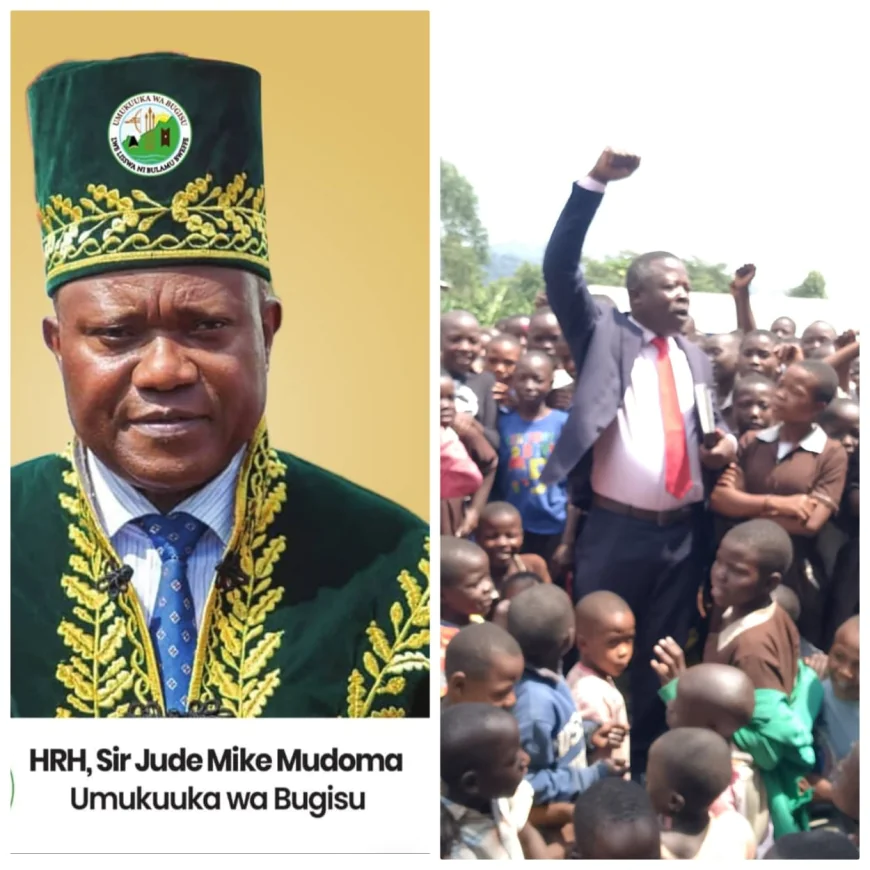
MBALE — The Spokesperson of the Bugisu Cultural Institution, Hon. Steven Masiga, has appealed to leaders and members of the Bamasaba community to embrace the laws governing traditional and cultural institutions, warning that continued disregard for the legal framework risks making the community "a laughing stock" among other cultural institutions in Uganda.
In a detailed statement addressing the ongoing disputes surrounding the leadership of the Umukuuka of Bugisu, Masiga argued that all disagreements concerning the cultural institution should be resolved through the Constitution of Uganda, the Institution of Traditional or Cultural Leaders Act, 2011, and the courts of law rather than parallel processes.
Masiga illustrated his appeal using a moral story about an elderly woman who attempted to remain loyal to both God and Satan by lighting candles for each.
According to the story, when she eventually died, neither accepted her because she had never fully committed to either.
"The lesson is that one cannot simultaneously pursue lawful judicial processes while organizing alternative mechanisms outside the law," he said.
Respect the Existing Legal Process
Masiga noted that after disagreements emerged over the legitimacy of the current Umukuuka, government invoked Section 16 of the Institution of Traditional or Cultural Leaders Act, which provides for mediation in resolving disputes concerning traditional leadership.
Following the mediation process, the government formally gazetted the current Umukuuka, giving him legal recognition under Ugandan law.
However, Masiga said some dissatisfied individuals petitioned the courts challenging the outcome, and those cases remain pending.
He questioned why some of the same individuals who sought judicial intervention have since abandoned the court process and instead begun mobilizing to install another cultural leader.
"If parties have already submitted themselves to court, they should patiently wait for the court's final determination instead of organizing parallel leadership structures," he said.
Constitution Provides the Legal Foundation
Masiga emphasized that the restoration of cultural institutions in Uganda was made possible by the 1995 Constitution after traditional institutions had previously been abolished under the 1967 Constitution.
He explained that Uganda's post-independence constitutional history shows that cultural institutions were stripped of official legal recognition during the republican era before being restored nearly three decades later.
According to him, because cultural institutions derive their present legal existence from the Constitution and subsequent legislation, any leadership within those institutions must equally comply with those laws.
"What the law gives can only be taken away by law," he argued.
No Alternative Legal Framework
Masiga expressed concern that some elders have attempted to create parallel procedures for choosing a cultural leader outside both statutory law and established customary practice.
He argued that Bugisu lacks a universally accepted customary succession system comparable to those found in some of Uganda's older kingdoms.
Because of this, he maintained that statutory law remains the only legitimate framework available for resolving leadership disputes.
"Where there are no settled customary practices governing succession, the community must rely on the laws enacted by Parliament," he said.
Call for Patience
The Bugisu Cultural Institution spokesperson urged all parties currently challenging the gazettement of the Umukuuka to allow the courts to conclude the matters before them.
He observed that Uganda's legal system provides adequate avenues for citizens to challenge government decisions whenever they believe they have been wronged.
Rather than abandoning ongoing litigation, he encouraged litigants to respect judicial processes until final judgments are delivered.
Historical Perspective on Bugisu
Masiga also reflected on the historical development of Bugisu, arguing that the region possesses a rich political and cultural history dating back several centuries.
He cited historical developments during the British Protectorate period, noting that Bugisu gradually emerged as a distinct administrative unit after the 1902 Orders in Council extended British administration into Eastern Uganda.
He further noted that by the early twentieth century, indigenous Bugisu chiefs had progressively replaced Baganda chiefs in administering the area.
Masiga maintained that Bugisu's historical identity predates many contemporary political debates and should be studied from a broader historical perspective rather than being narrowly viewed through the current leadership disagreements.
Diversity Within Bugisu
Addressing questions surrounding identity, Masiga observed that Bugisu has historically been home to various communities and groups, making it unrealistic to assume complete ethnic uniformity within the region.
He argued that this diversity should instead strengthen coexistence and reinforce the need for lawful institutions capable of managing differences peacefully.
Warning Against Violence
Masiga warned against attempts by any group to disrupt the activities of the reigning Umukuuka.
He expressed concern over reports that certain individuals with criminal backgrounds had allegedly been recruited to interfere with activities of the cultural institution.
He cautioned that such actions could lead to unnecessary violence and loss of life if not addressed through lawful means.
"The consequences of such actions would be unfortunate and avoidable," he warned.
He further alleged that some politically motivated actors were financing individuals to create instability within the institution, saying such conduct undermines the unity and dignity of the Bamasaaba community.
Appeal for Unity
Masiga concluded by urging all Bamasaaba leaders, elders and community members to uphold the rule of law and allow established legal institutions to resolve the ongoing disputes.
"As the spokesperson of the Bugisu Cultural Institution, my appeal is simple: let us respect the Constitution, obey the laws governing traditional institutions, and allow the courts to determine matters before them instead of pursuing unsanctioned processes," he said.
He added that preserving peace, unity and respect for lawful institutions remains essential for protecting the cultural heritage of Bugisu for future generations.
The writer is the Spokesperson of Bugisu Cultural Institution
Tel: 0782231577

John Kusolo is a Pastor, Sports Enthusiast and Ugandan journalist with Nile Chronicles News (NCN). With a strong commitment to journalistic excellence, he is recognized for his dedication, goal-oriented approach, and ability to thrive in challenging environments. Kusolo brings focused motivation and professionalism to his reporting and media assignments.













Comments (0)