
Finance Minister Musasizi Tables Budget Designed to Create Jobs and Expand Household Incomes
Delivered before Parliament, the budget is anchored on the theme: "Full Monetisation of Uganda's Economy through Commercial Agriculture, Industrialisation, Expanding and Broadening Services, Digital Transformation and Market Access."
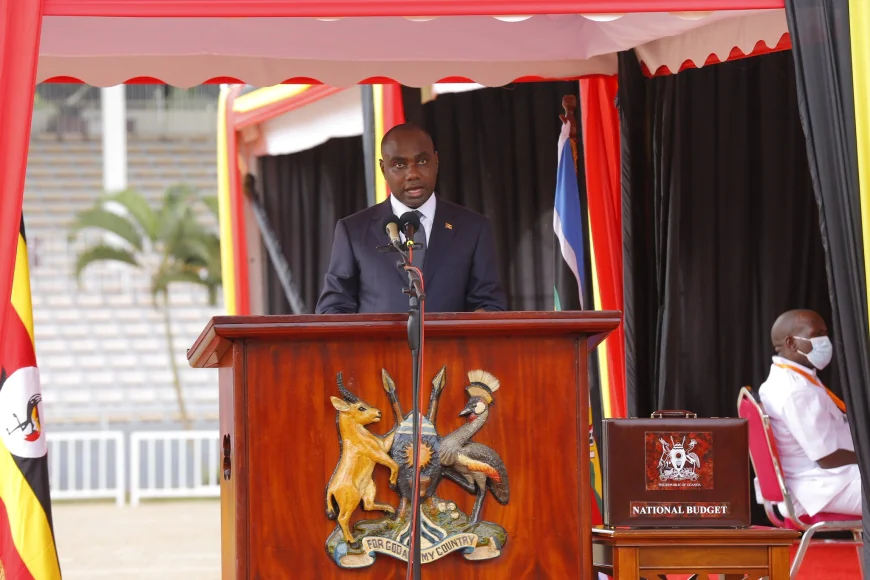
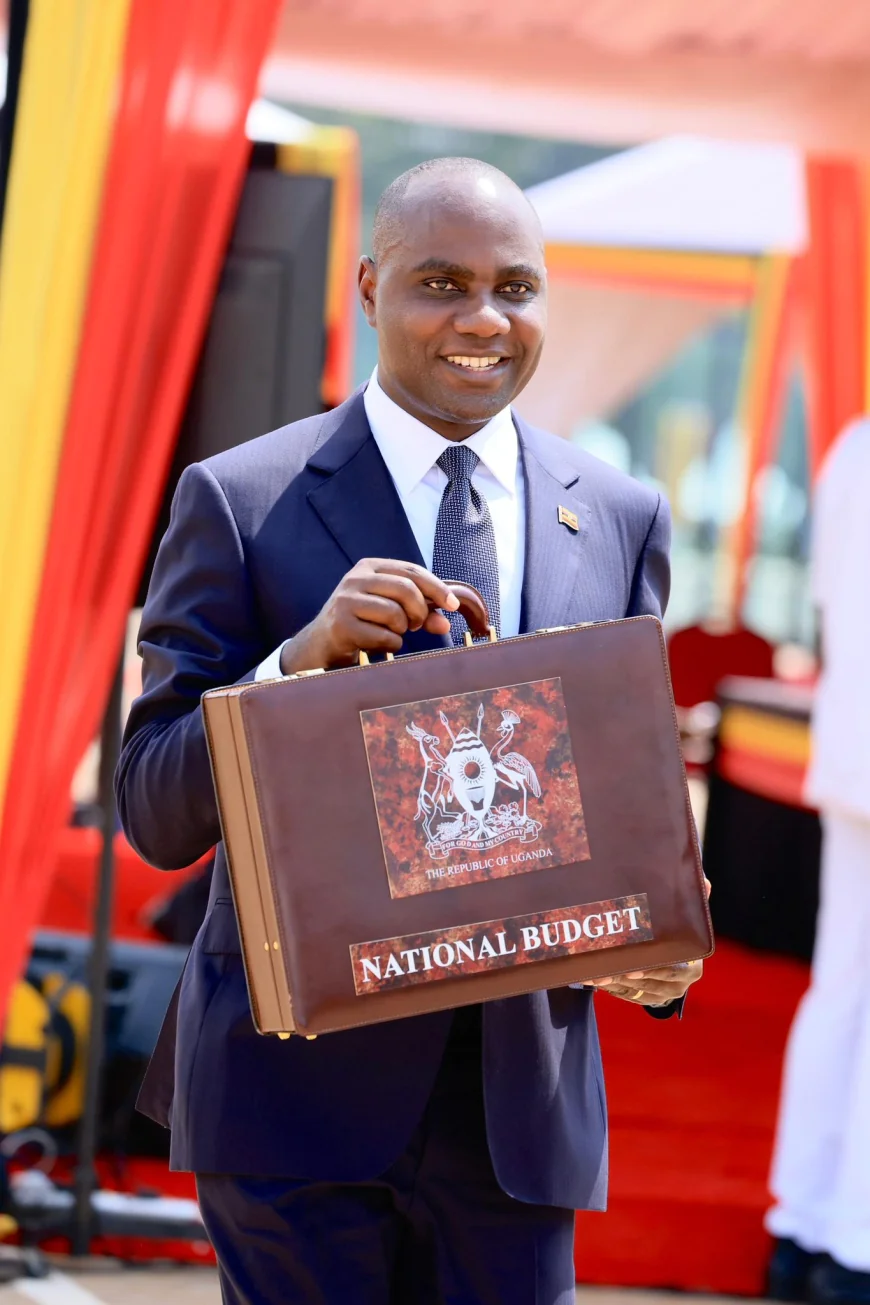
KAMPALA – The Minister of Finance, Planning and Economic Development, Hon. Henry Musasizi, has presented Uganda's Financial Year 2026/27 Budget Speech, outlining an ambitious roadmap aimed at accelerating economic growth, wealth creation, industrialisation, and the full monetisation of the economy.
Delivered before Parliament, the budget is anchored on the theme: "Full Monetisation of Uganda's Economy through Commercial Agriculture, Industrialisation, Expanding and Broadening Services, Digital Transformation and Market Access."
The budget marks a significant milestone as it is the first financial blueprint under the newly elected government and aligns with the National Resistance Movement (NRM) Manifesto and the Fourth National Development Plan (NDP IV), which seeks to transform Uganda into a tenfold-growth economy.
Economy Positioned for Accelerated Growth
Hon. Musasizi reported that Uganda's economy remains resilient despite global economic uncertainties. The country's Gross Domestic Product (GDP) is projected to grow by 6.4 percent in FY 2025/26, with growth expected to accelerate to 10.2 percent in FY 2026/27 following the commencement of commercial oil production.
The economy has expanded to approximately Shs 250.4 trillion (USD 69.3 billion), while inflation remains low and stable. The Minister highlighted increased exports, rising foreign direct investment, growth in remittances from Ugandans abroad, and a strong recovery in tourism as indicators of the country's positive economic trajectory.
According to the Minister, Uganda's export earnings have grown significantly, reaching USD 18.04 billion, while coffee exports alone generated USD 2.46 billion, reaffirming the country's position as one of Africa's leading coffee exporters.
Wealth Creation and Household Income Enhancement
A major focus of the budget is increasing household incomes and integrating more Ugandans into the money economy.
The government has continued investing heavily in wealth creation initiatives such as the Parish Development Model (PDM), Emyooga, the Agricultural Credit Facility, Uganda Development Bank financing, youth and women empowerment programmes, and support for creative industries.
Musasizi revealed that over Shs 4.4 trillion has already been disbursed to all parishes across Uganda under the Parish Development Model, benefiting millions of Ugandans.
To further boost wealth creation efforts, Government has allocated Shs 2.49 trillion in FY 2026/27 towards programmes aimed at supporting farmers, small businesses, youth, women entrepreneurs, and other wealth creators.
Agriculture Remains Central to Economic Transformation
Agriculture continues to be the backbone of Uganda's economy and remains a top government priority.
The sector has received an allocation of Shs 2.26 trillion to support irrigation development, agricultural research, extension services, mechanisation, agro-processing, quality assurance, and market expansion.
Government also plans to intensify investments in coffee production, livestock development, fisheries, and value addition to agricultural products to boost exports and farmer incomes.
The Minister emphasized that commercial agriculture remains a key pathway for lifting millions of Ugandans out of subsistence production into the money economy.
Oil and Gas Sector to Drive Growth
A key highlight of the budget is the anticipated commencement of commercial oil production.
Government reported substantial progress in the development of oil infrastructure, including the East African Crude Oil Pipeline (EACOP), central processing facilities, and upstream oil projects.
The sector has been allocated Shs 473.51 billion to facilitate the completion of critical infrastructure and prepare the country for First Oil.
Officials believe oil production will significantly boost government revenues, create jobs, attract investment, and accelerate industrialisation.
Tourism Recovery Gains Momentum
The tourism sector has continued its impressive recovery following the COVID-19 pandemic.
Government has allocated Shs 567.32 billion to support tourism marketing, conservation efforts, infrastructure development, and destination promotion.
Uganda's tourism earnings have risen to USD 1.86 billion, supported by global campaigns promoting the country as "The Pearl of Africa."
The government plans to continue investing in tourism facilities and attractions to position Uganda as a leading destination for international visitors.
Massive Infrastructure Investments
Infrastructure remains one of the biggest beneficiaries of the FY 2026/27 budget. Government has allocated Shs 8.79 trillion for transport infrastructure development, including roads, bridges, railways, airports, and water transport systems.
Key projects include:
Construction of the Standard Gauge Railway from Malaba to Kampala.
Rehabilitation of the Meter Gauge Railway network.
Expansion and maintenance of national roads.
Construction of strategic bridges.
Development of inland ports and ferry transport systems.
Operationalisation of Kabalega International Airport.
Expansion of Uganda Airlines through the acquisition of additional aircraft.
Government says these investments are intended to lower transport costs, improve connectivity, facilitate trade, and attract investment.
Expanding Energy Access
The energy sector has been allocated Shs 2.07 trillion to support electricity generation, transmission, and rural electrification.
Government plans to commence construction of the Kiba Hydropower Project, develop utility-scale solar power plants, expand transmission infrastructure, and advance preparations for nuclear energy generation in Buyende District.
Installed electricity generation capacity currently stands at 2,098 megawatts, with government targeting a dramatic increase to support industrialisation and economic growth.
Investing in Human Capital
Government continues to prioritise investment in people through health, education, water, sanitation, and social protection programmes.
The health sector has received Shs 5.23 trillion to strengthen healthcare delivery, improve access to medicines, expand specialised services, and support maternal and child health initiatives.
Major investments include regional cancer centres, specialised hospitals, emergency medical services, and digital health systems.
The education sector has been allocated Shs 6.66 trillion.
Priority areas include:
Universal Primary Education (UPE).
Universal Secondary Education (USE). STEM education.
Technical and vocational training. Teacher welfare. Research and innovation.
Sports infrastructure development ahead of AFCON 2027.
In a move welcomed by educators, Government has allocated an additional Shs 568.65 billion to improve salaries for primary school teachers and arts teachers.
Security and Governance
Recognising that peace and stability are prerequisites for economic development, Government has allocated Shs 10.21 trillion to security, governance, and rule of law institutions.
The funding will support modernization of the Uganda People's Defence Forces (UPDF), Uganda Police Force, intelligence agencies, border security, cybersecurity initiatives, and anti-corruption efforts.
Government also plans to strengthen community policing and improve national identification and immigration services.
Industrialisation and Manufacturing
To accelerate industrial development, Government has allocated Shs 1.03 trillion to manufacturing and industrialisation.
Priority interventions include expansion of industrial parks, value addition, industrial research, support to Uganda Development Corporation (UDC), and strengthening Special Economic Zones.
The number of formal factories in Uganda has continued to grow, reflecting increased investment in manufacturing and value addition.
Looking Ahead
Hon. Musasizi described the FY 2026/27 budget as a strategic blueprint designed to unlock Uganda's economic potential and transform the country into a prosperous middle-income economy.
With commercial oil production, continued infrastructure expansion, industrialisation, agricultural transformation, and investments in human capital, Government believes Uganda is entering a new phase of accelerated economic growth.
The Minister called upon all Ugandans to actively participate in wealth creation opportunities and support government efforts aimed at achieving inclusive and sustainable development.
"As we implement this budget, our focus remains on ensuring that every Ugandan participates in and benefits from economic growth," Musasizi said.
The FY 2026/27 Budget is expected to play a pivotal role in advancing Uganda's vision of becoming a modern, industrialised, and prosperous nation while improving the livelihoods of its citizens.

John Kusolo is a Pastor, Sports Enthusiast and Ugandan journalist with Nile Chronicles News (NCN). With a strong commitment to journalistic excellence, he is recognized for his dedication, goal-oriented approach, and ability to thrive in challenging environments. Kusolo brings focused motivation and professionalism to his reporting and media assignments.










Comments (0)