
Dr. Lawrence Muganga Breaks Silence After Parliament Rejects Ministerial Appointment
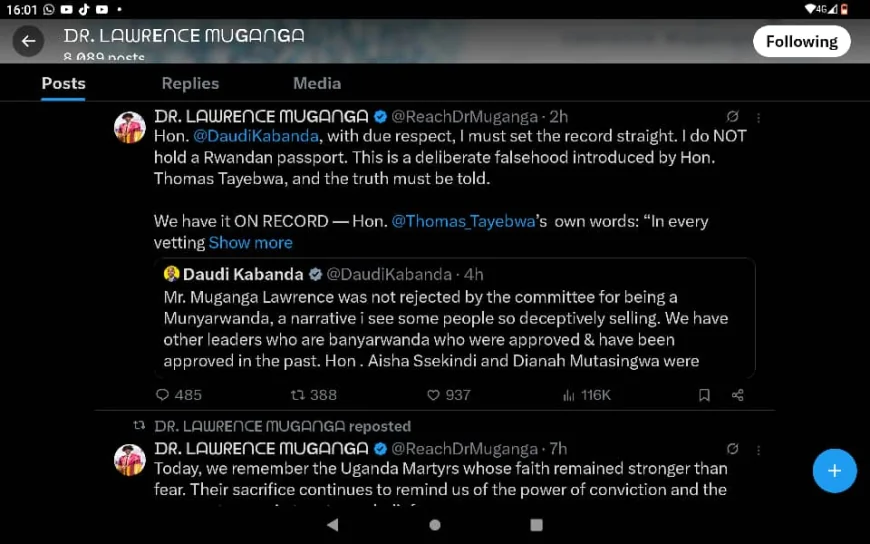
In a strongly worded public statement issued after the rejection, Dr. Muganga firmly denied claims that he possesses a Rwandan passport, describing the allegation as “a deliberate falsehood.”
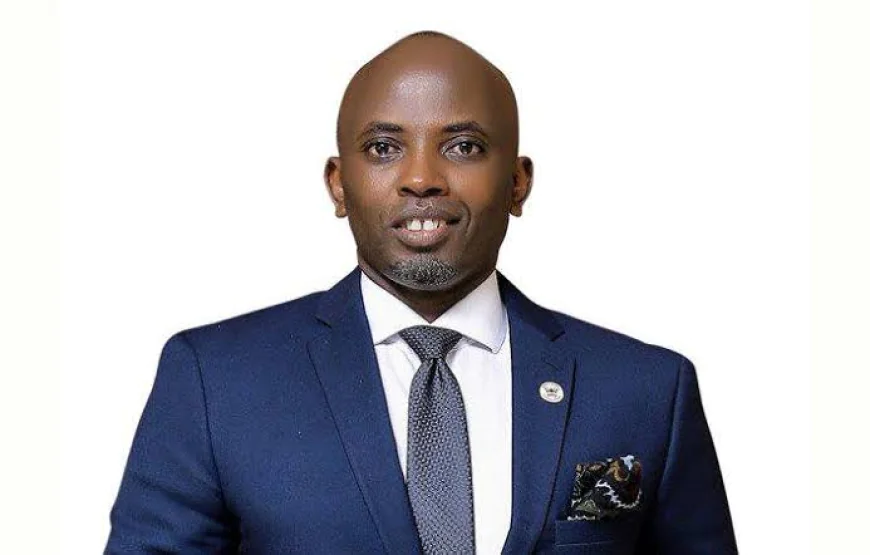
A storm of controversy has erupted following Parliament’s rejection of Dr. Lawrence Muganga’s appointment as State Minister for Internal Affairs, with the renowned educationist and public figure accusing members of the Appointments Committee of discrimination, prejudice, and orchestrating a predetermined process against him.
President Yoweri Kaguta Museveni had recently appointed Dr. Muganga to the ministerial position, a move that was initially seen as bringing a respected academic and institutional leader into government service. However, during the parliamentary vetting process, concerns reportedly emerged regarding his citizenship status, leading Parliament to decline to approve his appointment.
According to reports from the Appointments Committee, legislators established that Dr. Muganga allegedly holds citizenship in other countries in addition to Ugandan citizenship. Under Ugandan law, certain sensitive public offices require office holders to be citizens of Uganda only, without dual or multiple citizenship status.
The rejection immediately sparked public debate across the country, with many Ugandans questioning both the legal interpretation applied in the matter and the conduct of the vetting process itself.
Muganga Speaks Out
In a strongly worded public statement issued after the rejection, Dr. Muganga firmly denied claims that he possesses a Rwandan passport, describing the allegation as “a deliberate falsehood.”
“I must set the record straight. I do NOT hold a Rwandan passport. This is a deliberate falsehood introduced by one of the members of the Appointments Committee, and the truth must be told,” Muganga stated.
He further alleged that the outcome of the vetting process had already been predetermined before he appeared before the committee.
“We have it ON RECORD — the Hon. Member on the Committee in his own words: ‘In every vetting session we have to fail someone, and this time it had to be you, Dr. Muganga,’” he claimed.
According to Muganga, the process was not based on objective legal scrutiny but was instead influenced by personal bias and discrimination.
“This rejection was decided before the process even began. It was never about passports, qualifications, or integrity. It was personal. It was calculated. It was discriminatory,” he added.
Allegations of Discrimination
Dr. Muganga went further to accuse the influential Committee member and members involved in the vetting process of targeting him because of his ethnic background as a Munyarwanda.
“What I experienced in that committee was not parliamentary oversight. It was hatred. It was discrimination. It was racism directed at me simply because I am a Munyarwanda,” he said.
He emphasized that Banyarwanda are legitimate Ugandan citizens who have contributed immensely to the country’s development and nation-building.
“We Banyarwanda are Ugandans. We were born here. We pay taxes here. We build institutions here. We have given our lives to serve this nation,” Muganga stated.
The former university vice chancellor highlighted his extensive international experience, saying he had worked across dozens of countries and interacted with thousands of professionals globally without facing the level of hostility he allegedly encountered during the parliamentary vetting exercise.
“I personally have spent decades working tirelessly for Uganda, conducting thousands of interviews, engaging with thousands of people, sitting in hundreds of boardroom meetings across 56 countries. In all those years and in all those rooms, I have never once encountered the kind of hostility that the influential committee member directed at me", he said.
Calls for Accountability
In one of the most explosive aspects of his statement, Dr. Muganga alleged that there exists audio evidence supporting his claims about the vetting process being manipulated.
“And in due course, we shall release the audio that proves it. Stay tuned,” he declared.
He also challenged members of the Appointments Committee, including opposition legislators, to speak openly about what transpired during the closed-door sessions.
“I do not have to take my word for it. Ask the other members of the Appointment Committee, including those from the Opposition side. They were there. They witnessed it,” he said.
Muganga questioned why his appointment appeared to attract unusual resistance and suggested that some individuals may have feared his potential role within the Internal Affairs ministry.
“So I ask one simple question: what is this particular influential Committee member so afraid of? What remains hidden that my presence at Internal Affairs would threaten to uncover?” he asked.
Broader National Debate
The rejection of Dr. Muganga’s appointment has since triggered broader national discussions surrounding citizenship, national identity, constitutional eligibility for public office, and the treatment of minority communities within Uganda.
While supporters of Parliament’s decision argue that the law regarding citizenship requirements for certain public offices must be upheld strictly and uniformly, others believe the matter raises deeper concerns about fairness, equal treatment, and the politicization of identity.
Muganga concluded his statement by insisting that all Ugandans, regardless of ethnic background, deserve equal treatment under the law.
“Uganda belongs to ALL its citizens equally. Banyarwanda included. We are not second-class citizens. We will not be treated as such,” he stated.
He added: “This selective and discriminatory application of the law must be called out loudly, and it must stop. The law is not a weapon to be aimed at one community of our own people.”
As debate over the matter continues, many observers are now waiting to see whether Parliament, government officials, or members of the Appointments Committee will publicly respond to Dr. Muganga’s allegations.
The controversy is likely to remain a major topic in Uganda’s political discourse in the coming days, especially if the promised audio recordings are released publicly.

John Kusolo is a Pastor, Sports Enthusiast and Ugandan journalist with Nile Chronicles News (NCN). With a strong commitment to journalistic excellence, he is recognized for his dedication, goal-oriented approach, and ability to thrive in challenging environments. Kusolo brings focused motivation and professionalism to his reporting and media assignments.


Comments (0)