
MORE UGANDAN HOUSEHOLDS RUNNING BUSINESSES AS NEW UBOS SURVEY REVEALS SHIFT IN ECONOMIC ACTIVITY
Harmonised Integrated Survey shows rising enterprise ownership, declining agricultural employment, and growing literacy as Uganda's socioeconomic landscape evolves
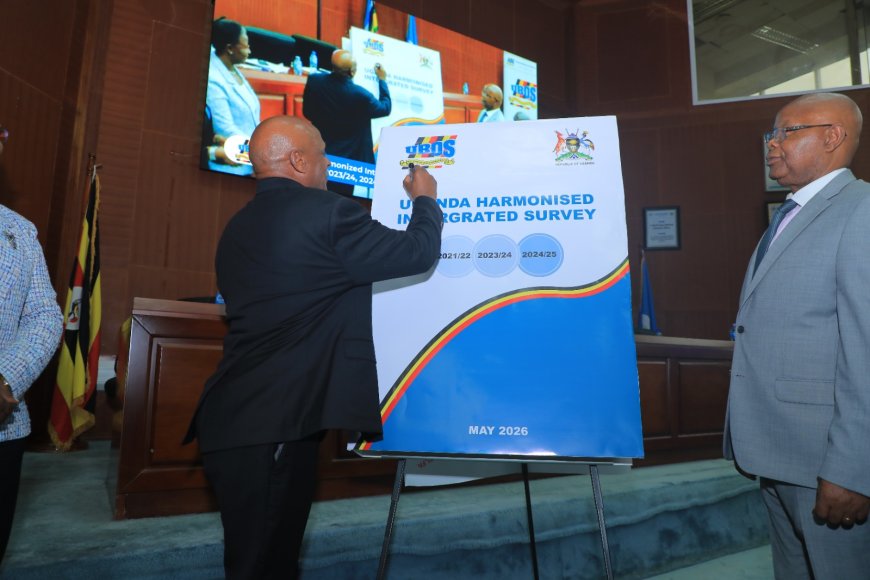
The Uganda Bureau of Statistics has released findings from the Uganda Harmonised Integrated Survey Report showing a steady rise in the number of households operating enterprises, alongside notable shifts in employment patterns, literacy rates, and household economic participation across the country.
Launched on Thursday 21 May 2026 at Statistics House, the UHIS Report covers three survey waves representing the periods 2021/22, 2023/24, and 2024/25, offering one of the most comprehensive multi-year snapshots of Uganda's evolving socioeconomic conditions. The release was presided over by UBOS Executive Director Dr. Chris Mukiza.
Among the headline findings, the proportion of households operating enterprises rose from 36.9 percent to 38.8 percent nationally, signalling a gradual but consistent expansion of small-scale business activity across Ugandan homes. The report further reveals that 66.9 percent of households are now participating in the money economy, while 33 percent remain in the subsistence sub-sector.
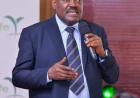
UBOS Board of Directors Chairman Albert Byamugisha commended the bureau's leadership and stakeholders for their role in producing the statistical data, urging policymakers and development partners to put the findings to practical use.
"UHIS provides statistical evidence to help stakeholders understand targeted interventions and is a very important policy tool. The report shows that 66.9 percent of households are in the money economy while 33 percent still remain in the subsistence sub-sector," he said.
On employment, the report records a significant decline in agricultural sector participation. Employment of persons in the agriculture, forestry, and fishing sector fell by 8.3 percentage points between 2021/22 and 2024/25, while the proportion of people aged 15 and above who worked for subsistence purposes declined by 4.6 percent over the same period.
The findings suggest a gradual movement of Uganda's workforce away from traditional agricultural livelihoods toward other forms of economic activity.
The survey also captured shifting dynamics in household headship. The proportion of male-headed households declined by 2 percent, dropping from 66.3 percent in 2022 to 64.3 percent in 2025, with female headed households recording a corresponding increase over the same period, indicating a slow but measurable change in household leadership structures across the country.
On literacy, the report presents encouraging progress. The literacy rate among persons aged 10 years and above in rural areas increased by 15.4 percentage points, rising from 67.8 percent in 2022 to 83.2 percent in 2025, with the gains observed to be more pronounced in urban areas than in rural communities.
The Uganda Harmonised Integrated Survey is an annual programme that integrates the Uganda National Panel Survey and the Annual Agricultural Survey, providing data and statistics on socioeconomic and agriculture indicators required for national planning, policy formulation, and reporting against regional and international development frameworks.
Dr. Byamugisha called upon data users across government, the private sector, and civil society to utilise the report as a policy instrument to guide interventions across different sectors, describing Uganda's trajectory as one of measurable progress in socioeconomic transformation.

Benjamin Mwibo is a talented, passionate and creative journalist with a commitment to high quality out put that is factual and researched. Above all Dedicated with a strong desire to identify the truth of the matter.











Comments (0)