
UBOS BASELINE EDUCATION CENSUS REVEALS GIRLS OUTNUMBER BOYS AT ALL SCHOOL LEVELS
Report Shows Uganda Has Over 10.8 Million Learners Across Pre-Primary, Primary, and Secondary Schools

The Uganda Bureau of Statistics on Thursday released the Baseline Education Census 2025 Report, unveiling a comprehensive snapshot of Uganda's formal education landscape that reveals girls outnumber boys at every level of schooling, from pre-primary through to secondary.
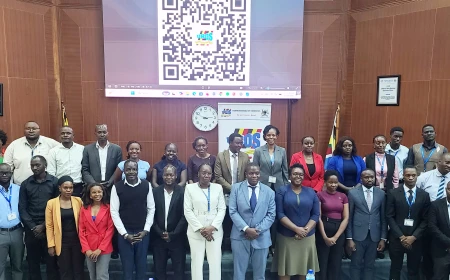
The report, disseminated at the Statistics House Conference Hall in Kampala, was designed to generate nationally representative baseline education statistics to strengthen Uganda's Education Management Information System, covering learners, teachers, non-teaching staff, school numbers, infrastructure, and a broad overview of the sector.
Speaking at the dissemination event, UBOS Executive Director Dr. Chris Mukiza said the report delivers high quality, timely data that government, planners, and policymakers can rely on for evidence based decision making.
He commended the Ministry of Education and Sports for its close collaboration throughout the census process.
"This marks the climax of releases under the calendar that we started on 12th March 2026 with a series of statistical reports, which are also on the UBOS website," Dr. Mukiza said, urging data users to rely on official UBOS statistics for planning and policy action.
The headline finding of the report is the consistent gender pattern across all school levels. In pre-primary education, Uganda recorded a total of 2,374,024 learners, comprising 1,166,708 female learners against 1,207,966 male learners. At primary level, female pupils numbered 4,586,979, representing 53 percent of the total, compared to 4,531,346 male learners.
The trend continued at secondary level, where out of 2,008,133 total learners, females stood at 1,069,055, representing 53.3 percent, against 938,278 male students.
The report further revealed that Uganda has 5,498 secondary schools, of which only 27 percent are government-owned public institutions, with the remaining majority being privately operated.
Regionally, Buganda recorded the highest number of both private and public schools, while Madi sub-region and Karamoja posted the lowest school numbers respectively.
Permanent Secretary of the Ministry of Education and Sports, Ms. K. Turyagenda, welcomed the data, noting that it would enable the government to better target interventions to areas of greatest need.
She said the 27 percent share of public schools was a reflection of government's ongoing commitment to expanding access to education, even as private institutions continue to dominate the sector in terms of numbers.
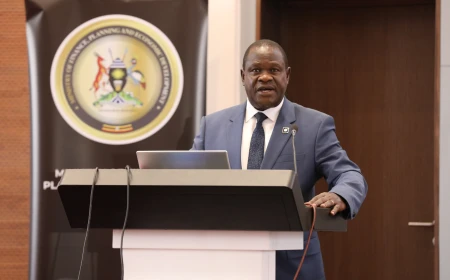
Board of Directors Chairman Dr. Albert Byamugisha, who presided over the event as Chief Guest, described the BEC report as a strategic national milestone in evidence-based education planning.
"The report is essential for targeted investments, resource allocation, and policy making. It reminds us that challenges still exist. We must invest in education and strengthen linkages between learning and labour demand to address skills mismatch," Dr. Byamugisha said.
Thursday's release forms part of a broader statistical output push by UBOS, which has released more than 12 survey reports since March 2026 in collaboration with various stakeholders across government and the private sector.

Benjamin Mwibo is a talented, passionate and creative journalist with a commitment to high quality out put that is factual and researched. Above all Dedicated with a strong desire to identify the truth of the matter.













Comments (0)