
Bugisu Cultural Institution Dispute Resolution: A Case of African Jurisprudence and the Reconciliation Theory of Law
The reconciliation theory of law prioritises healing, restoration and social harmony over punitive, adversarial and State-driven retribution. It is consistent with traditional African philosophies such as Ubuntu, Ubuntu-bulamu and Butwela in the Lumasaaba understanding of communal life and social responsibility.
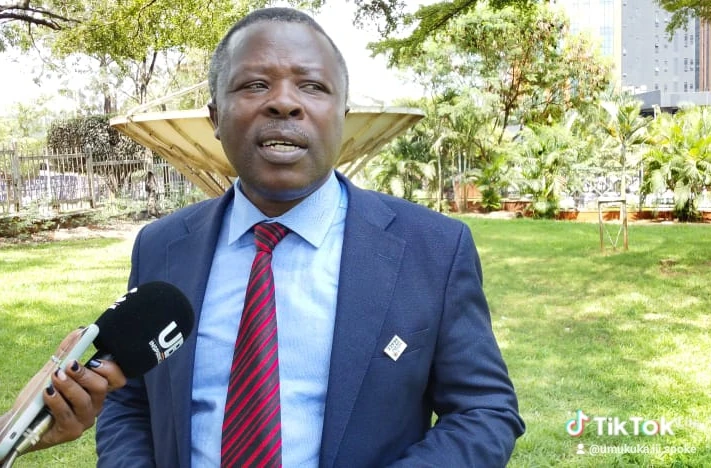
By Hon. Steven Masiga Legal Scholar and Spokesperson, Bamasaaba Cultural Institution
The resolution of the long-standing leadership disputes within the Bugisu Cultural Institution offers an important opportunity to reflect on the place of African jurisprudence in modern conflict resolution, particularly the reconciliation theory of law.
The reconciliation theory of law prioritises healing, restoration and social harmony over punitive, adversarial and State-driven retribution. It is consistent with traditional African philosophies such as Ubuntu, Ubuntu-bulamu and Butwela in the Lumasaaba understanding of communal life and social responsibility.
At its core, this approach views law not merely as an instrument for punishing wrongdoing, but as a means of repairing damaged relationships, restoring dignity and rebuilding communities that have been divided by conflict.
Justice as restoration and reconciliation
African communities have historically understood justice within a communal framework. A dispute between two individuals is rarely viewed as affecting only the parties involved. Instead, it can have consequences for families, clans, institutions and the wider community.
The reconciliation theory therefore places emphasis on restoring relationships rather than permanently isolating disputants from one another.
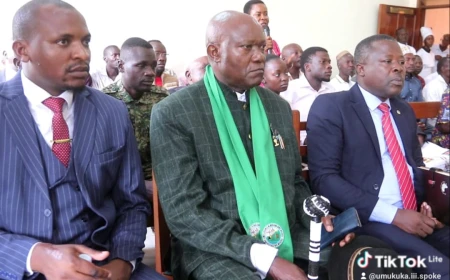
This philosophy was demonstrated during the recent mediation of disputes surrounding the leadership of the Bugisu Cultural Institution. I participated in the mediation on behalf of His Highness the Umukuuka as the institution sought to resolve disagreements that had previously generated considerable tension and litigation.
During the mediation process at the High Court, an incident occurred involving an elderly man, Engineer Sakwa, who is in his early eighties. Although the circumstances could have resulted in further confrontation and potentially additional legal proceedings, I chose forgiveness and reconciliation.
Had I pursued the matter through a purely adversarial approach, the incident could have taken a different direction, with allegations bordering on assault, battery and conduct contrary to court decorum becoming part of another legal dispute.
I chose peace over vengeance.
This is not because wrongdoing should be ignored, but because reconciliation can sometimes achieve what punishment cannot: restoring relationships and preventing a community from descending further into conflict.
Our people should always be encouraged to choose peace where peace is possible. A community consumed by vengeance ultimately destroys the very social bonds that hold it together.
The African understanding of justice
The reconciliation theory of law argues that the primary objective of a justice system should, where circumstances permit, include restoring social harmony and facilitating community healing.
Conflict-resolution mechanisms should therefore seek to repair damaged relationships, encourage accountability and facilitate reintegration rather than simply isolating disputants.
This does not mean that laws should be disregarded or that serious wrongdoing should go unaddressed. Rather, it recognises that justice has a restorative dimension, particularly where parties are members of the same community and must continue living and working together after a dispute.
The experience of Bugisu demonstrates the relevance of this philosophy.
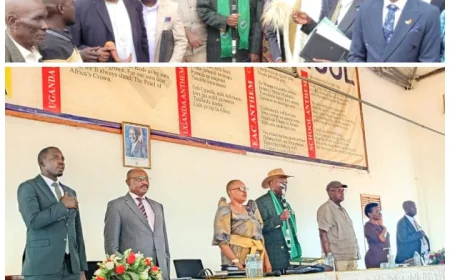
When the Bamasaba began resolving their cultural differences, there were open handshakes between groups that had for a long time appeared to be adversaries. Those gestures represented more than personal reconciliation; they symbolised the possibility of rebuilding a community that had been divided by prolonged disagreement.
We must therefore resist the temptation to return to confrontation.
Respecting the court-mediated settlement
The July 2026 court-mediated settlement represents an important milestone in the search for lasting peace within the Bugisu Cultural Institution.
It is my sincere hope that the parties will respect the terms of the settlement and avoid actions that could undermine the progress that has been achieved.
There is an old African proverb which says that buffaloes are held by their horns, but men are held by their words.
The message is profound. A person's word should carry weight. Agreements should be honoured, particularly when they are reached after difficult negotiations and with the involvement of institutions entrusted with administering justice.
The peace covenant reached through the mediation process should therefore not be treated casually. Any individual who chooses to act contrary to the agreed terms should bear responsibility for the consequences of their own actions rather than dragging the entire Bamasaba community back into conflict.
The community has already paid a heavy price for division. There is no justification for reopening wounds that are beginning to heal.
Keeping politics away from cultural institutions
There is also a need to protect cultural institutions from unnecessary political interference.
Politicians of whatever political persuasion should not be allowed to turn cultural spaces into arenas for political confrontation.
What recently happened at Mutoto during the Imbalu launch was regrettable. Cultural ceremonies should provide opportunities for unity, identity, tradition and community celebration. They should not become platforms for hooliganism, confrontation or political provocation.
Those involved in acts that disrupted the peace and dignity of the cultural occasion should, where appropriate, render apologies and help restore confidence among members of the community.
We cannot allow individuals, regardless of their political affiliations or positions, to make a mockery of the cultural peace that the Bamasaba have worked hard to achieve.
Bugisu's cultural space belongs to the people of Bugisu. It should be treated with dignity and protected from actions that threaten communal harmony.
The role of mediation in ending the conflict
I am pleased to acknowledge my own contribution to the cultural peace process in Bugisu.
At a time when many people feared that confrontation would continue, I chose mediation and petitioned for the Bugisu cultural conflicts to be addressed through dialogue rather than prolonged adversarial litigation.
My invitation to the Munyonoyo by the former Chief Justice, His Lordship Owiny-Dollo, was an important part of this process. I also recognise the contribution of Prof. Khaukha, the panelists and all the other actors who worked behind the scenes to facilitate the mediation.
Special appreciation should also go to the mediation panel led by the Deputy Chief Justice Emeritus, His Lordship Richard Butera.
Their work demonstrates that the judiciary can play a constructive role beyond simply determining winners and losers in disputes. Through mediation, the courts can provide space for parties to listen to each other, confront difficult issues and find solutions that preserve relationships.
From more than 100 cases to one community
The magnitude of the dispute should not be underestimated. The leadership of the cultural institution had been involved in more than 100 cases, while other parties had also instituted proceedings against the cultural institution.
Such a situation had the potential to perpetuate division for many years.
Instead, the parties embraced mediation and reconciliation, allowing the disputes to be resolved through mechanisms that placed greater emphasis on peace and restoration.
The result is significant: a community that was deeply divided now has an opportunity to move forward together under one cultural leadership.
The importance of this development goes beyond the legal cases themselves. Litigation may end a particular dispute, but reconciliation can help heal an entire community.
One Bugisu, one cultural identity
Ontologically and culturally, Bugisu has one cultural identity and one recognised cultural leadership structure.
The existence of competing claims and institutions had created an impression of fragmentation. The resolution of the disputes provides an opportunity to restore institutional coherence and strengthen the cultural identity of the Bamasaba.
The cultural regalia and symbols associated with rival structures should remain subject to the terms of the court-mediated settlement, while the community focuses on rebuilding trust.
However, reconciliation should not end with the signing of agreements.
The cultural leadership should consider reintegrating some of the brothers and sisters who were previously on opposing sides into the broader leadership and development structures of the institution, where appropriate and consistent with the agreed framework.
We are one community.
We may not have everyone on board immediately, but we must make every effort to bring as many people as possible on board.
Reconciliation must become a culture
The experience of Bugisu should provide a broader lesson for Uganda and Africa.
Our justice systems should continue to recognise the value of mediation, reconciliation and restorative justice, particularly in disputes where the parties must continue to coexist after the conflict.
African jurisprudence should not be dismissed as an outdated concept. It contains principles that remain relevant to modern societies, including communal responsibility, forgiveness, restoration, dialogue and reintegration.
The Bugisu experience demonstrates that sometimes the most important victory is not one side defeating another in court.
The greatest victory is when former adversaries can shake hands, sit at the same table and begin rebuilding their community.
That is the essence of reconciliation.
That is the spirit of Ubuntu-bulamu and Butwela.
And that is the spirit in which the Bamasaba should protect the peace that has been achieved.
The people of Bugisu have an opportunity to turn a painful chapter of division into a foundation for unity, cultural renewal and collective development.
We should not waste that.
Peace must now become our common responsibility.

John Kusolo is a Pastor, Sports Enthusiast and Ugandan journalist with Nile Chronicles News (NCN). With a strong commitment to journalistic excellence, he is recognized for his dedication, goal-oriented approach, and ability to thrive in challenging environments. Kusolo brings focused motivation and professionalism to his reporting and media assignments.












Comments (0)