
Umukuuka Mudoma Seeks Shs9m Rehabilitation Fund for Landslide Victims, Requests Meeting with Museveni
In a memorandum dated October 22, 2026, Mudoma proposed that government retain the existing Shs18 million one-off relocation package while providing an additional Shs750,000 per household every quarter for three years to help affected families rebuild their livelihoods after leaving their ancestral homes.
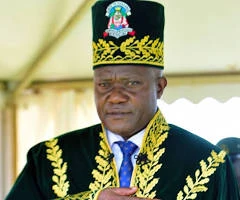
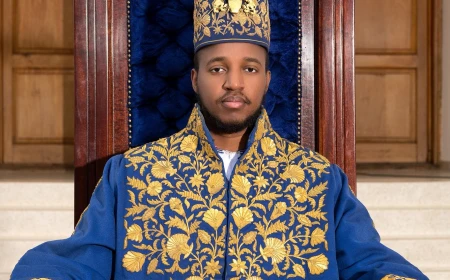
The Umukuuka of Bugisu, HRH Sir Jude Mike Mudoma III, has petitioned President Yoweri Kaguta Museveni to introduce a three-year rehabilitation fund worth Shs9 million per household for families relocated from landslide-prone areas of the Bugisu sub-region.
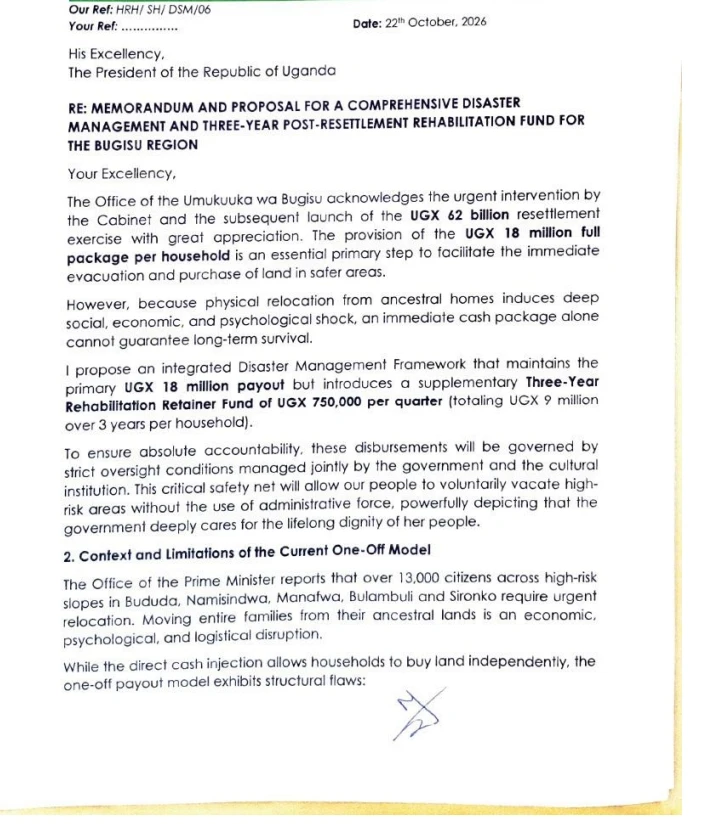
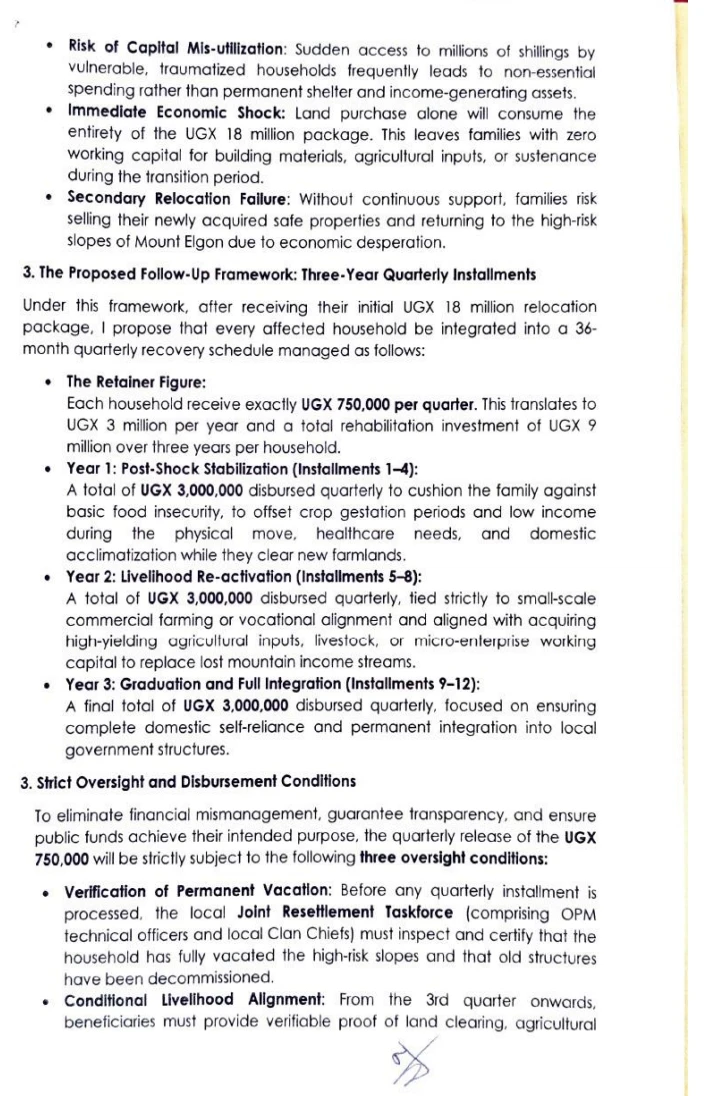
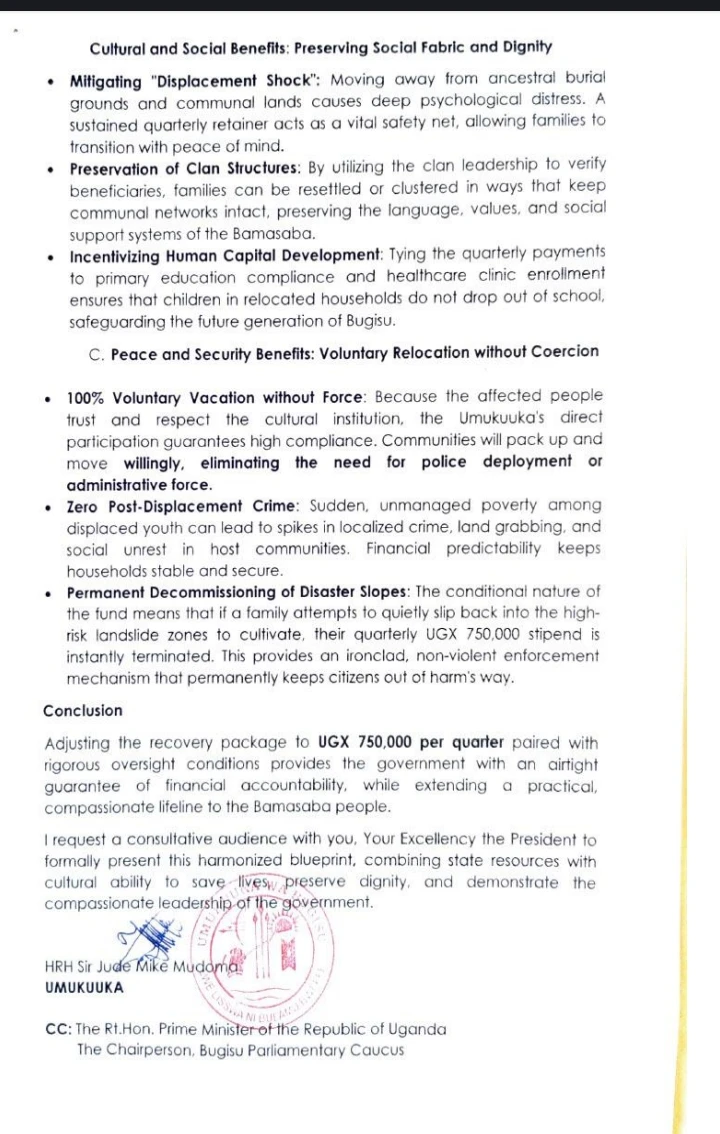
In a memorandum dated October 22, 2026, Mudoma proposed that government retain the existing Shs18 million one-off relocation package while providing an additional Shs750,000 per household every quarter for three years to help affected families rebuild their livelihoods after leaving their ancestral homes.
The proposal seeks to address what the cultural leader describes as the economic, social and psychological challenges associated with relocating entire families from high-risk areas on the slopes of Mount Elgon.
Mudoma acknowledged the government's intervention through the Cabinet and the launch of a Shs62 billion resettlement exercise, describing the Shs18 million package as an important first step towards helping affected households acquire land in safer locations.
However, he argued that the one-off payment may not be sufficient to guarantee long-term survival, particularly when families must spend much of the money purchasing land and are left with limited resources to construct homes, establish new sources of income and meet their basic needs.
"The provision of the UGX 18 million full package per household is an essential primary step," Mudoma wrote, while proposing additional support to ensure that relocation leads to lasting recovery rather than merely moving people away from danger.
Three-year rehabilitation plan proposed
Under the proposed framework, every eligible household would receive Shs750,000 quarterly for 36 months, translating into Shs3 million annually and a total of Shs9 million over the three-year period.
The additional funding would be structured around three phases intended to help families transition from emergency relocation to economic independence.
During the first year, described as the post-shock stabilisation phase, the proposed Shs3 million would help households meet food requirements, healthcare expenses and other immediate needs while adjusting to their new surroundings and preparing land for cultivation.
Mudoma argues that families need this initial support because moving away from established homes and livelihoods can disrupt agricultural production and create periods of low income before newly planted crops begin producing.
The second year would focus on livelihood reactivation. Under this phase, the proposed Shs3 million would support small-scale commercial farming, vocational activities, agricultural inputs, livestock acquisition and working capital for small enterprises.
The objective would be to help relocated households replace income streams lost when they abandoned their former homes and agricultural land in the high-risk mountain areas.
In the third year, the final Shs3 million would support households to achieve greater self-reliance and become fully integrated into their new communities and local government structures.
The cultural leader's proposal is therefore designed to complement the initial relocation payment with a longer-term recovery mechanism rather than treating the purchase of safer land as the end of the resettlement process.
Mudoma raises concerns over one-off payments
In his memorandum, Mudoma identifies three major risks associated with relying exclusively on a one-time cash payment.
First, he warns that vulnerable households experiencing the trauma of displacement may struggle to allocate a large sum of money effectively, potentially spending funds on immediate needs without securing permanent shelter or productive assets.
Second, he argues that the cost of acquiring land could consume the entire Shs18 million package, leaving families without adequate working capital for construction materials, agricultural inputs and daily sustenance.
Third, he cautions that households facing prolonged economic hardship could be tempted to sell their newly acquired properties and return to landslide-prone areas in search of familiar livelihoods.
According to Mudoma, a predictable stream of financial assistance would help reduce these risks by giving families time to establish themselves economically in safer locations.
The proposal places particular emphasis on agriculture, reflecting the importance of farming and land-based livelihoods to communities in the Bugisu region.
Cultural institution proposes joint monitoring system
To promote accountability and ensure that the proposed money serves its intended purpose, Mudoma has recommended a joint monitoring arrangement involving government technical officers and clan leaders.
Under the proposal, a Joint Resettlement Taskforce comprising officials from the Office of the Prime Minister and local clan chiefs would verify that beneficiaries have permanently vacated high-risk slopes before quarterly payments are processed.
The memorandum also proposes linking subsequent payments to evidence of livelihood recovery, including land preparation, agricultural activities and other productive investments.
The framework further identifies education and healthcare as important components of successful resettlement, proposing that support be linked to school attendance and access to health services to protect children and other vulnerable household members.
Mudoma argues that combining government oversight with the participation of traditional leadership would strengthen transparency, improve beneficiary verification and help ensure that public funds reach the intended households.
The proposed involvement of clan leaders also reflects the cultural institution's concern that resettlement should preserve community relationships and social support networks that may be disrupted when families move away from their ancestral land.
Preserving Bugisu's social fabric
Beyond the financial implications, Mudoma's memorandum highlights the cultural and psychological consequences of displacement.
For many families, ancestral land is not simply an economic asset. It is connected to family history, burial grounds, clan identity, language and community relationships built over generations.
The Umukuuka argues that relocation without sustained social and economic support can create significant distress, particularly where families lose access to familiar communal networks.
He proposes that clan leadership help organise and verify beneficiaries in ways that preserve social connections among relocated households, allowing communities to maintain elements of their cultural identity and mutual support systems.
The memorandum also proposes that the rehabilitation programme support children's continued education and families' access to healthcare, reducing the risk that displacement will deepen existing vulnerabilities.
Mudoma believes that a carefully managed resettlement programme should therefore go beyond physical safety to protect human dignity, family stability and the long-term welfare of affected communities.
Voluntary relocation and public safety
The cultural leader has also presented the proposed rehabilitation fund as a way of encouraging voluntary relocation and reducing the need for coercive enforcement.
He argues that affected communities are more likely to cooperate with the resettlement programme if they have confidence that government will support them beyond the initial payment.
According to the memorandum, involving the cultural institution in community mobilisation and beneficiary verification could help build trust and encourage households to leave dangerous areas willingly.
Mudoma further warns that unmanaged poverty following displacement could contribute to localised crime, land disputes and tensions between relocated families and host communities.
He proposes that continued financial support be conditional on beneficiaries remaining away from designated high-risk areas, with payments terminated if households return to those zones.
The proposal presents this condition as a non-violent way of discouraging a return to dangerous locations while reinforcing the objective of permanent resettlement.
The effectiveness of such a system, however, would depend on clear eligibility rules, transparent monitoring, accessible grievance procedures and safeguards to ensure that vulnerable households are not unfairly denied assistance.
More than 13,000 people identified for relocation
Mudoma's memorandum cites information from the Office of the Prime Minister indicating that more than 13,000 people living on high-risk slopes in Bududa, Namisindwa, Manafwa, Bulambuli and Sironko require urgent relocation.
These communities face the challenge of moving from areas exposed to landslides while establishing new homes and sustainable livelihoods elsewhere.
The proposed three-year rehabilitation arrangement seeks to address the period after relocation, when families may be physically safer but still face difficulties rebuilding their economic lives.
If adopted in full, the proposal would add Shs9 million in rehabilitation assistance to the existing Shs18 million package for each beneficiary household, bringing the proposed total support to Shs27 million per household over the relocation and recovery period.
The figures in the memorandum represent the Umukuuka's recommendations to government; the letter does not establish that the proposed additional funding has been approved.
Mudoma requests meeting with Museveni
In concluding the memorandum, Mudoma requested a consultative audience with President Museveni to formally present the proposed disaster management and post-resettlement rehabilitation framework.
He urged the government to combine state resources with the cultural institution's community networks to improve accountability, protect the dignity of affected families and make resettlement more sustainable.
The letter was also copied to the Prime Minister and the chairperson of the Bugisu Parliamentary Caucus, signalling the cultural leader's desire to bring the proposal to the attention of key government and parliamentary stakeholders.
The proposal now places emphasis on the question of whether government can extend the resettlement programme beyond the initial cash transfer to provide structured assistance for the difficult transition that follows displacement.
For Bugisu's landslide-prone communities, the central concern raised by Mudoma is that successful relocation should not end when a household purchases safer land. It should also enable families to establish secure homes, restore their livelihoods, keep their children in school and rebuild their lives without being driven back into danger by economic hardship.

John Kusolo is a Pastor, Sports Enthusiast and Ugandan journalist with Nile Chronicles News (NCN). With a strong commitment to journalistic excellence, he is recognized for his dedication, goal-oriented approach, and ability to thrive in challenging environments. Kusolo brings focused motivation and professionalism to his reporting and media assignments.








Comments (0)