
Uganda’s UNLF Ghosts of Moshi 1979: Why Executive Compromise Without Constitutional Clarity Always Collapses
Yet, as a constitutional barrister-at-law, I most respectfully submit that Moshi was less a durable social contract and more an uneasy truce built upon a fatal legal contradiction.
CONSTITUTIONAL & HISTORICAL ANALYSIS
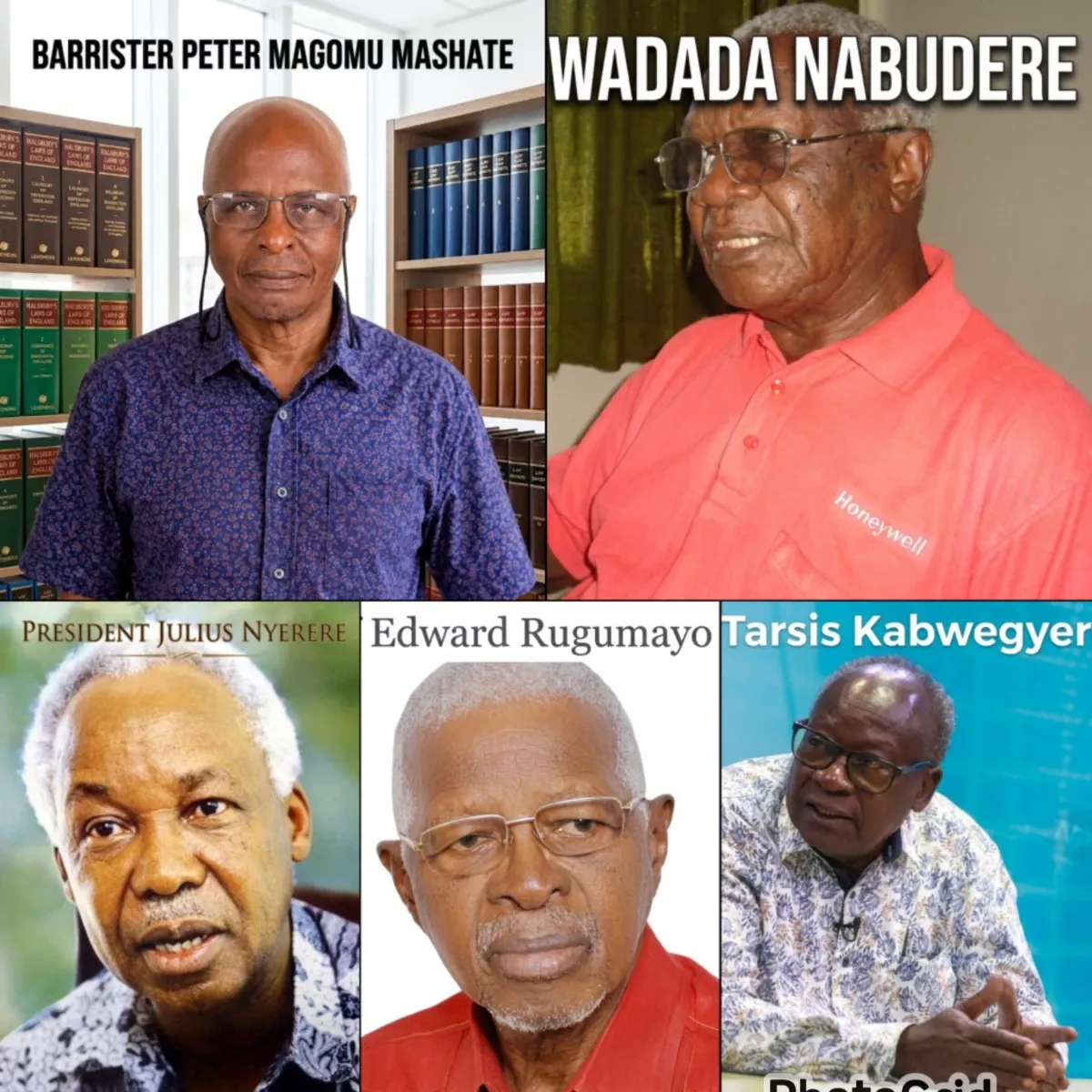
BY BARRISTER PETER MAGOMU MASHATE
When we examine Uganda’s recurring constitutional crises, few episodes are as instructive—or as sobering—as the rise and rapid fall of the Uganda National Liberation Front (UNLF) in 1979.
On paper, the Moshi Conference of March 24–26, 1979, was a triumph of exiled diplomacy. Under the watchful eye of Tanzanian President Julius Nyerere and organizational steering by figures like Professor Tarsis Kabwegyere, Omara Atubo, and Professor Dan Wadada Nabudere, roughly two dozen fractious groups—spanning armed outfits like Kikosi Maalum, FRONASA, and the Save Uganda Movement, alongside traditional parties like the UPC and DP and Elite and Academic, Dar-es-Salaam, Nairobi, Lusaka etc discussion Groups or Think-Tanks —forged a common civilian front to succeed Idi Amin.
Yet, as a constitutional barrister-at-law, I most respectfully submit that Moshi was less a durable social contract and more an uneasy truce built upon a fatal legal contradiction.
Within 68 days of taking office, that contradiction shattered the post-Amin administration.
To understand why the UNLF imploded so swiftly, we must first look at the politics of selection which Dr Apollo Milton Obote characterised as politics of Exlusion at Moshi.
The delegates faced an immediate legitimacy crisis: how to pick a leader acceptable to both the armed liberation factions and a deeply suspicious southern electorate.
However, Milton Obote was wisely advised by Nyerere to stay away so as not to derail the talks.
When names were floated for the chairmanship of the Executive Council—effectively the presidency—obvious contenders hit immediate roadblocks.
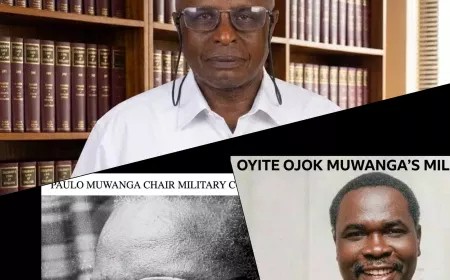
Paulo Muwanga, carrying the UPC banner, was fiercely rejected by Buganda and anti-Obote delegates who viewed him as a mere placeholder for Obote’s return; indeed, Dr. Martin Aliker famously dismissed his candidacy on the conference floor.
Andrew Adimola lacked the cross-factional muscle to bridge the divide between the armed fighters and the traditionalists.
Meanwhile, sharp left-wing ideologues like Proffessor Dan Wadada Nabudere and Edward Rugumayo strategically avoided contesting the presidency, knowing a Marxist intellectual could never command broad consensus among conservative delegates.
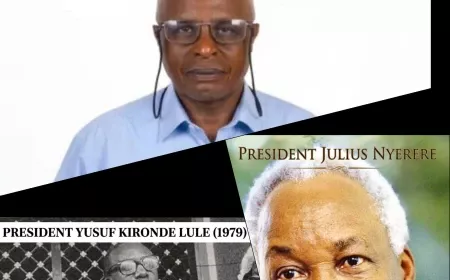
Out of this deadlock emerged a Dark-horse compromise Prof. Yusuf Lule. A former Makerere University Vice-Chancellor and Commonwealth diplomat, Lule had no guerrilla army and no partisan baggage. As a respected Muganda technocrat, he was the ultimate compromise candidate—chosen not for his political strength, but for his perceived neutrality.
To appease the rejected UPC wing, Muwanga was handed the chairmanship of the Military Commission, with Yoweri Museveni as his deputy. Its worth noting that Yoweri Museveni’s secondment to vice chairmanship of Military Position was acknowledged on the basis that Fronansa military faction were active combatants on the ground and the Gang of the four saw Museveni as a liberal with a national character and an encompassing counter-balance to Obote's Muwanga with Kikosi Maalum of Oyite Ojok and the Okellos predominantly from Northern Uganda.
In hindsight, it's arguable that placing the presidency in the hands of a consensus civilian while handing the levers of coercion to partisan militarists was an invitation to disaster as events subsequently turned out.
Once in Kampala, Lule’s government survived just 68 days—from April 13 to June 20, 1979—before collapsing under the weight of an irreconcilable legal clash between two competing sources of constitutional authority.
On one hand stood the 1967 Republican Constitution, formally restored through Legal Notice No. 1 of 1979 as the supreme law of the land. Ironically, this is a consititution under which Professor Yusuf Kironde Lule took oath as president of Uganda and arguably this was inconsistent with the Moshi UNLF consititution or call it Pact under which Lule was born. Its worth noting that the 1967 consititution was the contested Dr Apollo Milton Obote’s Pigoen-hall consititution hand- drafted by his then Attorney General Godfrey Binaisa.
Under that Moshi framework, executive authority was centralized in the President. However, by publication of Legal Notice No 1 of 1979, re-introduced the 1967 Obote's consititution enabling Lule to enjoy the unilateral prerogative to appoint and reshuffle ministers without parliamentary vetting.
On the other hand stood the UNLF Constitution—the political covenant agreed upon at Moshi—which subordinated the Executive Council to the interim legislature, the National Consultative Council (NCC), requiring full ratification for all cabinet and military appointments. Worth noting is that some of these elements have been adopted in the 1995 consititution.
Lule governed as an executive president under the 1967 text, bypassing the NCC, expanding his cabinet from 37 to 52 members, and filling key posts with conservative allies and fellow Baganda or call them "STAYEES or those who didnt go to exile but remained".
To the liberation fighters and left-wing intellectuals, this looked like a unilateral hijacking of a collective victory.
When Nyerere summoned both sides to Mwanza and affirmed that Tanzania recognized the Moshi Agreement as supreme, Lule’s legal defense evaporated. On June 20, 1979, the NCC ousted him in a bloodless vote of no confidence.
What is often overlooked in popular memory is just how powerful the civilian intellectual wing—later dubbed the "Gang of Four" by Lule’s successor, Godfrey Binaisa—truly was during this period. Comprising Professor Dan Wadada Nabudere, Prof. Edward Rugumayo, Prof. Yash Tandon, and Prof. Omwony Ojwok, this bloc commanded the institutional machinery of the UNLF.
Professor Dan Wadada Nabudere, as Chairman of the Political and Diplomatic Commission, was the primary architect of the Front’s ideology and organizational structure. Nabudere was the one who introduced the the "Mayumba Kumi" (the genesis of current Local Council) administrative model that was copied from Tanzania Chama Cha Mapinduzi (CCM) "Tawi/branches" Model and during UNLF this national model was directly answerable to Professor Nabudere as Chairman of Political and Diplomatic Commission not to President Lule or Binaisa.
Suffice to say that Professor Dan Wadada Nabudere was arguably and effectively the defacto Prime Minister and defecto Foreign Minister of Uganda under that supreme UNLF Pact, notwithstanding Lule’s and Binaisa's formal presidential appointments made to those cabinet portfolios.
Prof. Edward Rugumayo, as Chairman of the NCC, wielded the parliamentary gavel that checked and ultimately removed Lule.
Together, they expanded the NCC to dilute traditional UPC and DP loyalists and championed a no-party "umbrella" (copied by the NRM until 2005) electoral model designed to prevent the return of sectarian party politics and in particular in 1979 the return of Dr Milton Obote.
However, the tragedy of the Gang of Four illustrates a timeless rule of Ugandan political history: institutional cleverness without control of the instruments of force is always temporary.
While Nabudere and Rugumayo controlled the floor of the NCC, Paulo Muwanga and the commanders controlled the barracks.
By May 1980, when the civilian leadership attempted to assert authority over the military, the Military Commission simply brushed aside President Binaisa, dissolved the NCC’s supremacy, and forced the Gang of Four back into exile.
The lesson of 1979 remains urgent for Uganda today. Whenever political elites paper over deep ideological and regional fractures with vague compromise arrangements—leaving fundamental questions of constitutional supremacy and civilian control of the military unresolved—the center cannot hold.
Rules written on paper at conference tables will always yield to the reality of power on the ground unless a nation first agrees on a single, unambiguous supreme law like unequivocally the 1995 consititution.
THE WRITER IS BARRISTER PETER MAGOMU MASHATE, AN ADMINISTRATIVE, CONSTITUTIONAL & HUMAN RIGHTS BARRISTER-AT-LAW, CALLED TO THE BAR BY THE HONOURABLE SOCIETY OF LINCOLN’S INN OF COURT, LONDON, UNITED KINGDOM.

John Kusolo is a Pastor, Sports Enthusiast and Ugandan journalist with Nile Chronicles News (NCN). With a strong commitment to journalistic excellence, he is recognized for his dedication, goal-oriented approach, and ability to thrive in challenging environments. Kusolo brings focused motivation and professionalism to his reporting and media assignments.





Comments (0)