
Umukuuka-Led Bugisu Delegation Presents Museveni Seven-Point Plan to Boost Household Incomes, Complete Landslide Resettlement and Unlock Elgon Tourism
The memorandum, titled “Bugisu: Safe Homes, Higher Incomes – Seven Decisions to Make Bugisu a Showcase of the Money Economy,” was presented on Sunday, November 22, 2026, to the NRM First National Vice Chairperson, Rt. Hon. Al-Hajji Moses Kigongo, for onward consideration by President Yoweri Kaguta Museveni.
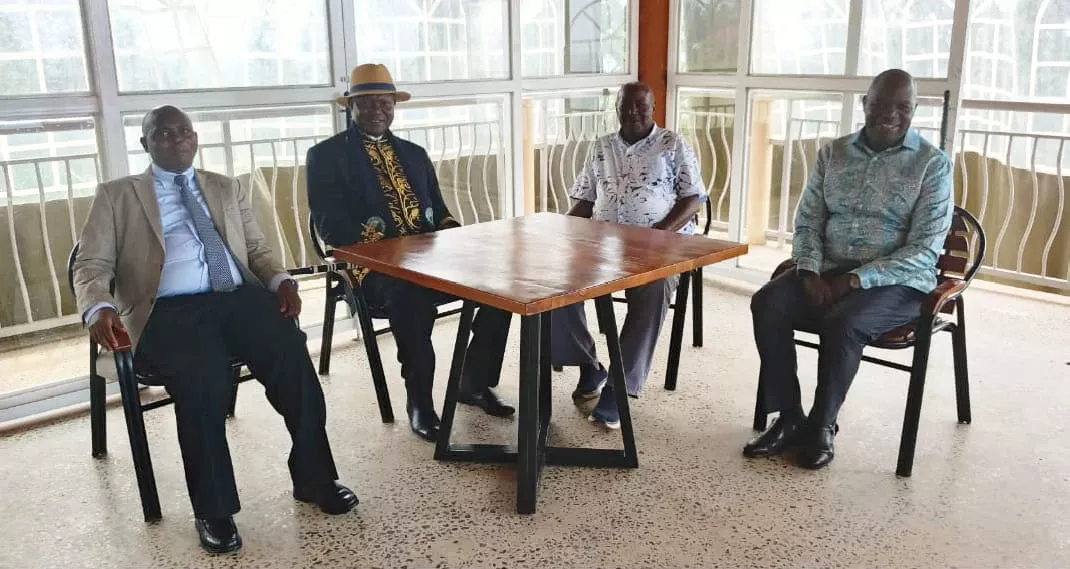
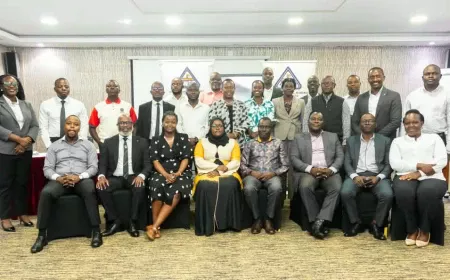
A high-level delegation led by the Umukuuka of Bugisu, His Royal Highness Sir Jude Mike Mudoma III, alongside the Mufti of Uganda and the Bugisu Professional Association, has presented a comprehensive seven-point development memorandum to the Government, seeking urgent interventions to transform the Bugisu sub-region into a model of household wealth creation, economic growth and sustainable development.
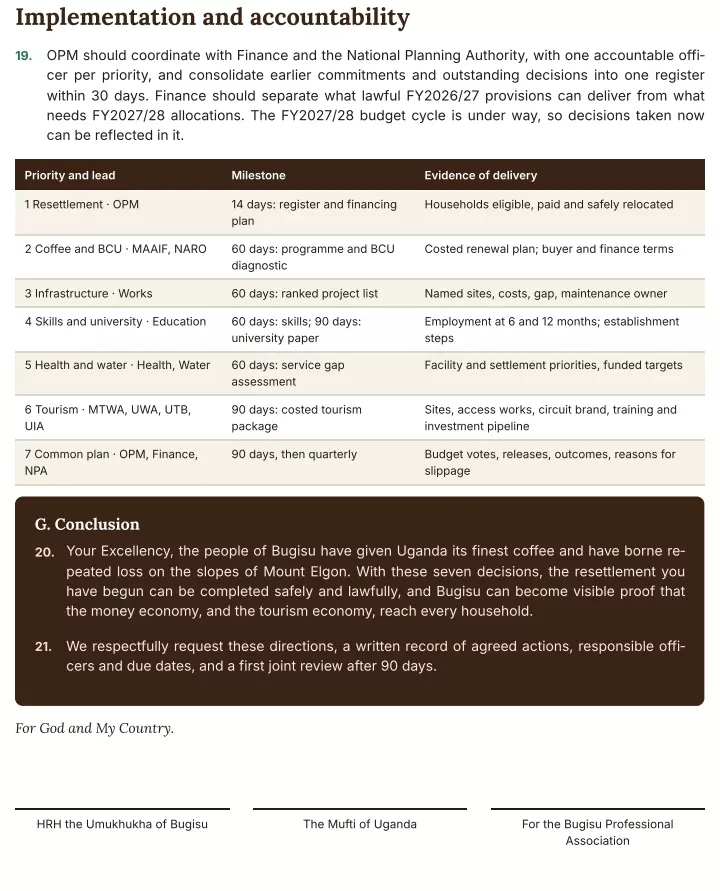
The memorandum, titled “Bugisu: Safe Homes, Higher Incomes – Seven Decisions to Make Bugisu a Showcase of the Money Economy,” was presented on Sunday, November 22, 2026, to the NRM First National Vice Chairperson, Rt. Hon. Al-Hajji Moses Kigongo, for onward consideration by President Yoweri Kaguta Museveni.
The proposals cover Bududa, Bulambuli, Manafwa, Mbale, Namisindwa and Sironko districts, as well as Mbale City, and seek to align the region's development priorities with the Fourth National Development Plan (NDP IV) and the Government's Tenfold Growth Strategy.
At the heart of the memorandum is a call for Government to complete the resettlement of families living in landslide-prone areas of Mount Elgon while simultaneously investing in premium Arabica coffee production, infrastructure, education, healthcare, tourism and skills development.
The delegation commended President Museveni for the Cabinet decision of October 5, 2026, which approved a one-off payment of UGX 18 million to each household living in landslide-prone areas of Mount Elgon to facilitate their relocation to safer places.
However, the leaders warned that the commitment requires additional financing and a coordinated implementation framework to ensure that every eligible household is safely resettled.
According to the memorandum, more than 13,000 households have been mapped in landslide-prone areas, requiring approximately UGX 234 billion to implement the UGX 18 million resettlement package.
The Prime Minister Rt. Hon. Robinah Nabanja reportedly indicated that Government currently has UGX 43 billion available, representing less than one-fifth of the estimated requirement and leaving a funding gap of approximately UGX 191 billion.
The delegation is therefore asking the Office of the Prime Minister, working with the Ministries of Finance, Lands, Water and Environment, the Uganda Wildlife Authority and local governments, to develop a phased financing and implementation plan within 14 days.
The proposed plan would include verification of beneficiaries, identification of safe relocation destinations, secure land tenure, provision of essential services and mechanisms for addressing grievances and correcting omissions in the beneficiary register.
The leaders further emphasised that payment of the relocation package alone should not be considered complete resettlement, arguing that affected families must have access to secure land, water, schools, healthcare and sustainable livelihood opportunities.
They also called for immediate protection measures, including early-warning systems, evacuation arrangements and temporary shelter for communities still exposed to landslide risks.
Reviving Bugisu's premium Arabica coffee industry
The second major proposal focuses on revitalising Bugisu's coffee industry through a comprehensive Arabica Coffee Renewal Programme.
Bugisu is one of Uganda's leading Arabica coffee-producing regions, reportedly accounting for approximately 43 per cent of the country's Arabica coffee exports.
The memorandum highlights the region's premium coffee reputation, noting that Mount Bugisu coffee grades topped Uganda's export price list in October and November 2025, with one grade fetching approximately US$8.30 per kilogram.
However, the delegation expressed concern over declining productivity arising from ageing coffee trees, with many plantations reportedly containing trees that are more than 70 years old.
The leaders argue that without systematic replacement of old trees, improved agricultural practices and better post-harvest handling, farmers risk losing the economic benefits associated with Bugisu's internationally recognised coffee reputation.
They are proposing a staggered coffee tree replacement programme that would allow farmers to maintain their existing incomes while new trees mature.
The programme would also provide certified, disease-resistant seedlings based on National Agricultural Research Organisation (NARO) recommendations, strengthen agricultural extension services, improve drying and grading facilities, and establish better coffee traceability systems.
The Ministry of Agriculture, Animal Industry and Fisheries (MAAIF), working with NARO and the Ministry of Trade, Industry and Cooperatives, is expected to develop the programme within 60 days.
The memorandum also calls for an independent assessment and recovery plan for Bugisu Cooperative Union (BCU), with any public support tied to an approved and audited recovery programme.
The delegation believes that strengthening coffee production and marketing would increase household incomes, support agro-industrialisation and contribute to environmental conservation through improved farming practices, terraces and shade-tree planting.
Better roads to connect farmers, industries and tourism sites
The third proposal calls for Government to prioritise critical roads, bridges and drainage infrastructure connecting agricultural production areas, settlements, tourist attractions and industrial facilities to markets.
While acknowledging major road projects already completed or under implementation, including the Mbale–Magale–Namisindwa road, the delegation wants Government to identify and rank additional priority infrastructure projects based on safety, the number of households served, market access and project readiness.
Particular attention is being drawn to roads connecting the Budadiri trailhead, Wanale Ridge and Sisiyi Falls, which are considered important tourism destinations with significant economic potential.
The memorandum also calls for stronger connections between local producers and businesses operating at the Sino-Uganda Industrial Park in Mbale to increase opportunities for local suppliers, employment and enterprise development.
The Ministry of Works and Transport, working with local governments, has been asked to produce a prioritised list of infrastructure projects, including their estimated costs, funding gaps and designated maintenance responsibilities within 60 days.
Bugisu University of Science and Technology proposed
Education and youth employment also feature prominently in the seven-point memorandum.
The delegation is proposing the establishment of a Bugisu University of Science and Technology to provide specialised training in agriculture, engineering, healthcare, technology, hospitality and other disciplines required to accelerate the region's economic transformation.
The proposed institution would serve a sub-region with a population of approximately 1.83 million people, according to the 2024 National Population and Housing Census.
The leaders argue that Bugisu deserves its own public university, alongside and distinct from the university pledged for the neighbouring Sebei sub-region.
They point out that the proposed institution would complement existing higher education facilities, including Islamic University in Uganda, Busitema University's Mbale campus and Uganda Technical College Elgon, rather than duplicate their programmes.
The memorandum also highlights the Bugisu Zonal Presidential Industrial Hub at Lukhonge, which has reportedly trained more than 1,100 young people.
The delegation wants the hub and existing training institutions to strengthen partnerships with employers and introduce courses directly linked to available employment opportunities.
It further proposes apprenticeships, industrial placements and a system of tracking graduates to establish how many secure employment six and twelve months after completing their training.
According to the memorandum, approximately 54 per cent of young people aged 18–30 in Bugisu are not in employment, education or training, underscoring the need for interventions that connect skills development to actual jobs.
The Ministry of Education and Sports, working with State House, has been asked to develop an employment-oriented skills programme within 60 days and submit a detailed decision paper on establishing the proposed university within 90 days.
The paper would address land availability, feasibility studies, legal requirements, academic programmes, financing and the proposed opening timetable.
Improved healthcare, water and sanitation services
The fifth proposal seeks improvements in essential public services, particularly healthcare, water and sanitation.
The delegation wants Government to assess the operational capacity of Mbale Regional Referral Hospital and other district health facilities, focusing on staffing levels, medicine availability, diagnostic equipment, maternal and newborn care, emergency transport and other critical services.
Rather than concentrating exclusively on constructing new facilities, the memorandum recommends prioritising the resources required to make existing health institutions function effectively.
The leaders have also called for improved access to safe water and sanitation in resettlement destinations and underserved communities.
The memorandum cites 2024 census figures indicating that only 37 per cent of households in Bugisu had access to improved sanitation, while 63 per cent lacked improved sanitation facilities.
The Ministries of Health and Water and Environment, together with local governments, are expected to identify service delivery gaps and propose interventions within 60 days.
Unlocking Mount Elgon's tourism potential
One of the most ambitious proposals is the development of an integrated Mount Elgon tourism circuit to position Bugisu as one of Uganda's leading adventure, cultural and nature tourism destinations.
The delegation argues that while Uganda's tourism industry recorded impressive performance in 2025, with tourism receipts reaching a record UGX 5.83 trillion and international arrivals hitting approximately 1.64 million, the benefits remain concentrated in a relatively small number of established destinations.
Mount Elgon, which rises to 4,321 metres above sea level at Wagagai Peak, is identified as one of the country's underutilised tourism assets.
Despite its spectacular landscapes, one of the world's largest intact calderas, mountain trails, caves, waterfalls and rich cultural heritage, Mount Elgon National Park recorded only 3,519 visitors in 2019.
The memorandum estimates that visits to the park subsequently declined by approximately 62 per cent between 2019 and 2024.
The delegation believes that developing the mountain's tourism potential could create employment for young people through tour guiding, porter services, hospitality, transport, homestays, crafts and coffee tourism.
Among the attractions identified for development are the Sasa Trail, which starts from Budadiri in Sironko District and provides the shortest route to Wagagai Peak; Wanale Ridge near Mbale City; and Sisiyi Falls in Bulambuli District.
The leaders have also proposed promoting Imbalu, the traditional circumcision cultural season of the Bamasaaba, through a respectful heritage tourism calendar developed in consultation with the cultural institution.
Other opportunities include coffee farm visits, coffee tasting, cultural experiences, Kakungulu heritage sites in Mbale and the caves and landscapes of Namisindwa.
The proposed Elgon Circuit would connect Bugisu's attractions with Sebei's Sipi Falls and the Kenyan side of Mount Elgon, creating a broader regional tourism product.
The Ministry of Tourism, Wildlife and Antiquities, working with Uganda Wildlife Authority, Uganda Tourism Board, Uganda Investment Authority and local governments, has been asked to develop a costed tourism development package within 90 days.
The proposed interventions include improving access roads, upgrading mountain trails and campsites, installing tourism signage, strengthening rescue and safety facilities, training local guides and preparing investment opportunities for hospitality businesses.
The delegation also wants communities living around protected areas to benefit more directly from tourism through timely revenue-sharing arrangements.
One coordinated plan to ensure accountability
The seventh proposal calls for the establishment of a single coordinated implementation framework bringing together all Government agencies responsible for the proposed interventions.
The delegation wants the Office of the Prime Minister to coordinate the process with the Ministry of Finance and the National Planning Authority, with a clearly identified responsible officer for each priority area.
Within 30 days, the agencies would be expected to consolidate previous Government commitments, outstanding decisions and proposed interventions into one implementation register.
The framework would also distinguish between activities that can be financed through existing FY2026/27 budget provisions and those requiring additional allocations in the FY2027/28 national budget.
The memorandum proposes quarterly progress reports and a joint review meeting between Government and the Bugisu delegation after 90 days.
This arrangement, according to the leaders, would ensure that the proposed interventions move beyond political commitments to measurable outcomes, with clear timelines, responsible institutions and transparent reporting.
Bugisu leaders pledge support for Government programmes
The delegation emphasised that the region was not approaching Government merely to demand assistance but was also prepared to contribute to the implementation of the proposed development agenda.
Subject to agreement within their respective institutions, the cultural institution and religious leaders pledged to mobilise communities to embrace safe relocation, commercial agriculture and peaceful resolution of land and boundary disputes.
Members of the Bugisu Professional Association also offered to provide professional expertise in project preparation, community feedback and independent monitoring.
The proposed contribution would include ensuring that women, young people and persons with disabilities are represented in community engagement and development processes.
The memorandum, however, makes it clear that the cultural institution and professional association would play advisory and mobilisation roles consistent with Article 246 of the Constitution, while public expenditure, procurement and beneficiary selection remain the responsibility of the legally mandated Government institutions.
A development agenda for a prosperous Bugisu
In their conclusion, the leaders reminded President Museveni that Bugisu has made significant contributions to Uganda through its renowned Arabica coffee and other economic activities, while communities on the slopes of Mount Elgon continue to endure the consequences of recurring landslides.
They argued that completing the resettlement programme while investing in agriculture, infrastructure, education, healthcare and tourism would provide an opportunity to transform the region's economic fortunes.
The delegation is seeking presidential guidance on the seven proposed decisions, a written record of agreed actions, designated responsible officers and implementation deadlines, as well as a first joint review after 90 days.
The overarching vision is to make Bugisu a model of Uganda's transition from subsistence livelihoods to a modern money economy in which households earn sustainable incomes from commercial agriculture, tourism, industry and skilled employment.
For the Umukuuka-led delegation, the proposed interventions represent an opportunity to turn the Mount Elgon region's natural resources, agricultural potential and cultural heritage into tangible prosperity while ensuring that communities living in high-risk areas are protected from future disasters.

John Kusolo is a Pastor, Sports Enthusiast and Ugandan journalist with Nile Chronicles News (NCN). With a strong commitment to journalistic excellence, he is recognized for his dedication, goal-oriented approach, and ability to thrive in challenging environments. Kusolo brings focused motivation and professionalism to his reporting and media assignments.






Comments (0)