
Masiga Rejects Alleged Inzu Ya Masaaba Roadmap, Calls for Constitutional Review Before Fresh Elections
In a statement dated August 26, 2026, Masiga said the document had been forwarded to him by Hon. Anthony Wanyoto, the Deputy Secretary General of the Bamasaaba Cultural Institution cabinet, but that he initially chose not to respond to it.
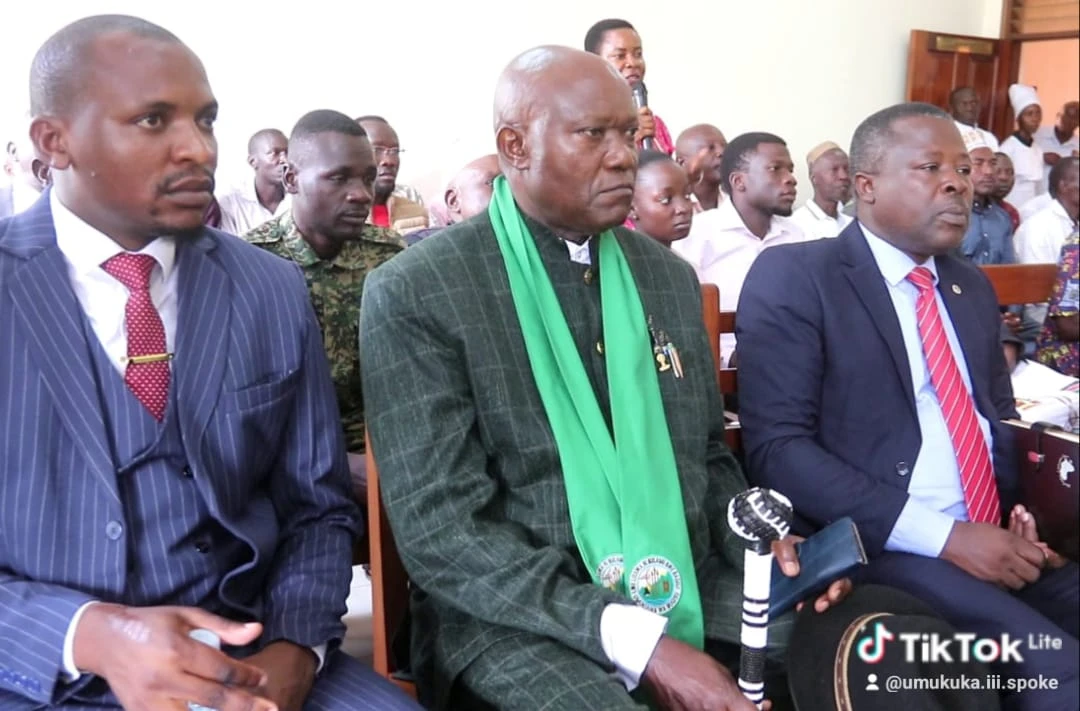
The spokesperson of the Bamasaba Cultural Institution, Hon. Steven Masiga, has strongly rejected what he describes as an “impugned and alarming” roadmap allegedly linked to efforts to reorganise the leadership and governance of Inzu Ya Masaaba.
In a statement dated August 26, 2026, Masiga said the document had been forwarded to him by Hon. Anthony Wanyoto, the Deputy Secretary General of the Bamasaba Cultural Institution cabinet, but that he initially chose not to respond to it.
He said he was later persuaded by His Highness the Umukuuka of the Bamasaaba people, Sir Jude Mike Mudoma III, to issue an official response on behalf of the cultural institution, its cabinet and the wider Bamasaaba community.
Masiga said the cultural institution’s priority remains preservation of peace among the Bamasaaba, warning against actions that could reopen divisions experienced in previous years.
“There is an old African proverb which says a flea can give an elephant sleepless nights,” Masiga said, stressing that peace within the community remains paramount.
He described the period of intense disagreements among sections of the Bamasaaba as unfortunate and regrettable, saying the community should not be hurried back into what he referred to as the “Misiri” period, when Bamasaaba were sharply divided.
Dispute over interpretation of mediation settlement
A major part of Masiga’s response concerns the interpretation of the recent court-mediated settlement over the governance of Bukuka and Inzu Ya Masaaba.
He challenged the use of the term “litigants” in correspondence dated August 15, 2026, arguing that the terminology does not accurately reflect the position of the parties after they agreed to mediation.
According to Masiga, although the parties were previously involved in an adversarial legal process, mediation changed the nature of their engagement.
He argued that continued use of adversarial terminology risks perpetuating divisions at a time when the community should be concentrating on implementing the spirit of the mediated settlement.
Masiga further disputed what he described as an assertion that the mediation resulted in the restoration of the Inzu Ya Masaaba Constitution and its alignment with the 2011 version.
He said his understanding, and that of the other parties involved in the mediation, was that the constitution would be restored but subsequently subjected to extensive consultations involving various stakeholders.
The ultimate objective, he said, would be to align the constitution with Uganda’s legal framework governing traditional and cultural institutions, particularly the Institution of Traditional and Cultural Leaders Act, 2011.
Calls for broad constitutional consultation
Masiga cautioned that the consultative process could result in significant changes to several provisions of the Inzu Ya Masaaba Constitution.
He said Bamasaaba people and legal experts would have to scrutinise the constitution to ensure that none of its provisions conflicts with Uganda’s laws regulating traditional and cultural institutions.
He stressed that the process should not be controlled by a small group of individuals, but should involve the wider Bamasaba community.
Using traditional sayings, Masiga cautioned against having too many individuals claiming authority over the same institution.
He also raised concern over what he described as the emergence of several individuals claiming the position of Secretary General of Inzu Ya Masaaba.
According to Masiga, some individuals have reportedly appeared in court seeking or obtaining copies of recent judgments, including decisions relating to matters in which they were not parties.
Masiga questions continued recognition of Mayatsa
The Bamasaaba cultural institution spokesperson also criticised what he described as continued references to Mr Mayatsa as Umukuka IV by some of the parties involved in the previous disputes.
Masiga said that despite the recent court-mediated settlements, some correspondence addressed to Mayatsa allegedly continued to create an impression that he remains the recognised Umukuka of Inzu Ya Masaaba.
He argued that such conduct would undermine the mediation settlement and urged all parties to demonstrate what he termed “entire fidelity to the law” and to the spirit of the mediated outcomes.
“The entire spirit of the mediation outcomes” must be respected, Masiga said, urging stakeholders to avoid actions that could reignite the disagreements that led to the legal battles.
Opposition to proposed ad hoc Electoral Commission
Another key issue raised by Masiga is the reported move to establish an ad hoc Electoral Commission to organise the election of another Umukuuka.
He described the move as premature, arguing that the Inzu Ya Masaaba Constitution must first undergo the review and consultation process agreed upon during mediation.
Masiga urged those behind the proposed electoral process to wait until the constitutional review has been completed before embarking on any fresh election.
He illustrated his argument using a Lumasaaba expression, comparing the proposed process to preparing a home before a calf is born.
“Give it time,” he urged the proponents of the proposed electoral process.
Government expected to guide the process
Masiga said the administration of Umukuka Jude Mike Mudoma intends to formally engage the Government of Uganda for guidance on how to implement the recent court-mediated settlement.
He said the cultural institution also envisages seeking government support to finance a comprehensive consultative process through which the Inzu Ya Masaaba Constitution would be thoroughly reviewed.
According to Masiga, the review should ultimately produce a constitutional framework that is consistent with Ugandan law while reflecting the aspirations and interests of the Bamasaba.
He acknowledged that the process could result in substantial changes to the existing structure of the institution.
Using an analogy of a patient undergoing surgery, Masiga said the constitutional review could leave the institution with a different structure from its current form.
He emphasised, however, that whatever structure emerges should be the product of broad consultation among Bamasaba rather than being imposed by individuals or factions.
No room for “shareholders” and “founder members”
Masiga further argued that once the consultation process is completed, the resulting constitution should belong to the entire Bamasaaba community.
He rejected the idea of a cultural institution being treated as the property of particular groups, individuals, shareholders or founder members.
He said the future framework should instead establish a governance system in which all Bamasaba have a stake in determining the direction of their cultural institution.
“Our prayer is that when the time of review of the Inzu Ya Masaaba Constitution comes, the constitution will be reviewed or shaped in a manner that is not conflictual to the Constitution of Uganda and other laws like the Institution of Traditional and Cultural Leaders Act, 2011,” Masiga said.
Bamasaba must be consulted on Bukuka
The spokesperson insisted that the Bamasaaba must be given an opportunity to participate in decisions concerning Bukuka and the governance of their cultural institution.
He warned against what he described as attempts to “imprison or cage” Bamasaba from determining the future of their cultural institution.
Masiga said broad consultation would ultimately determine how Bukuka governance evolves within the legal framework of Uganda.
He also appealed to all stakeholders to allow the administration of Umukuka Jude Mike Mudoma to lead efforts to mobilise financial resources from Government and other stakeholders for the consultative process.
He said other stakeholders, including groups that have been involved in the disputes, would be invited to contribute their views on the appropriate constitutional and policy framework for Bukuka in Bugisu.
Masiga concluded by saying that invitations to participate in the consultative process would be delivered to the various stakeholders at the appropriate time.
The statement was copied to Resident District Commissioners and other officials in Bugisu, security and intelligence agencies in the Elgon region, parties to the mediation settlement on Bukuka, and media platforms.
The latest reaction adds another dimension to the continuing debate over the future governance of Inzu Ya Masaaba, with Masiga's position firmly centred on peace, implementation of the mediation settlement, legal compliance and broad consultation before any new leadership election is undertaken.

John Kusolo is a Pastor, Sports Enthusiast and Ugandan journalist with Nile Chronicles News (NCN). With a strong commitment to journalistic excellence, he is recognized for his dedication, goal-oriented approach, and ability to thrive in challenging environments. Kusolo brings focused motivation and professionalism to his reporting and media assignments.










Comments (0)