
Victoria University Graduates Challenged to Turn Academic Qualifications into Practical Solutions
Victoria University Vice Chancellor Lawrence Muganga challenges 2,559 graduates to turn academic knowledge into practical skills, innovation and solutions as they enter the workforce.
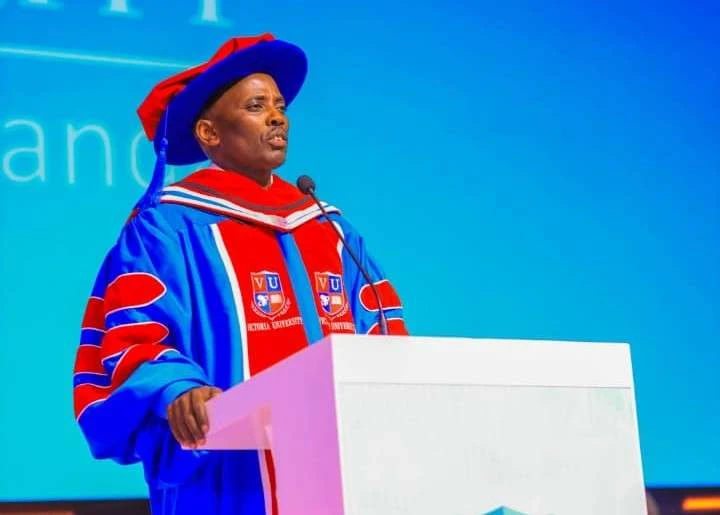
KAMPALA — Victoria University Vice Chancellor Professor Lawrence Muganga has challenged graduates to prove the value of their education through practical skills, innovation and problem-solving, saying academic qualifications alone are no guarantee of success.
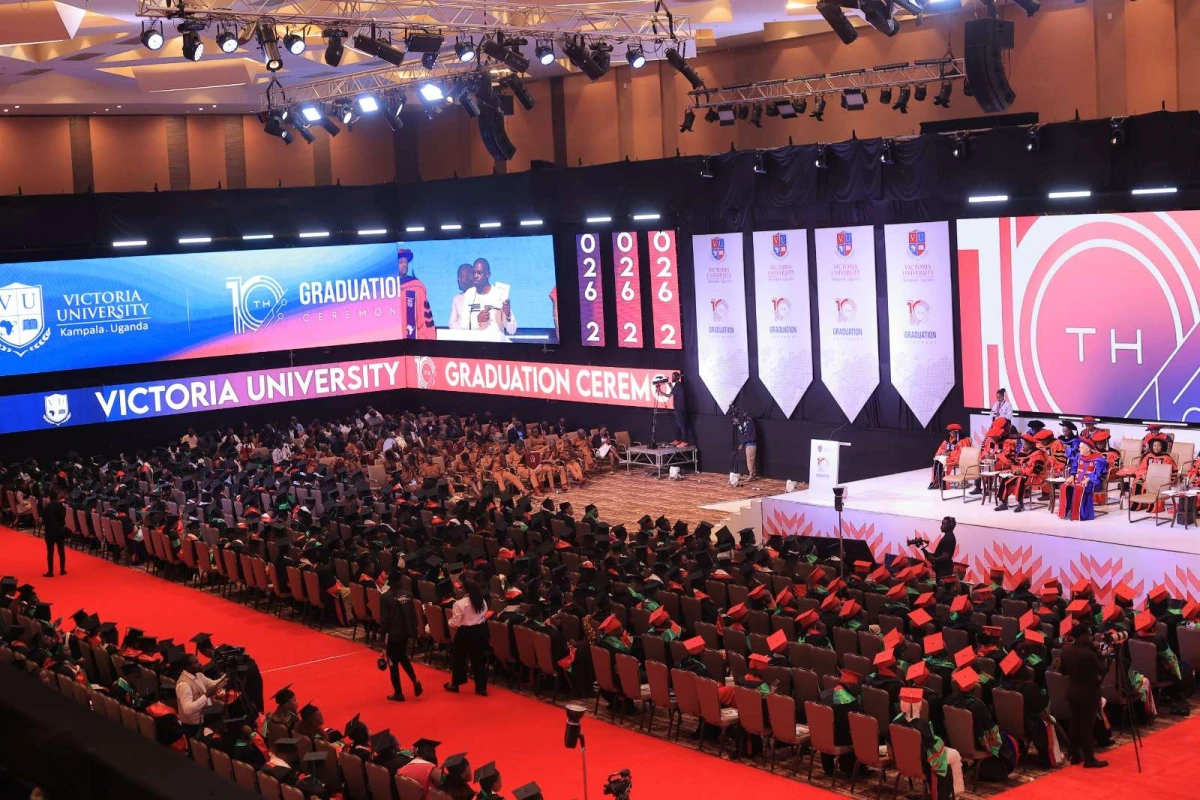
Speaking at the university’s 10th graduation ceremony at Speke Resort Munyonyo on Monday, Prof. Muganga urged the graduates to translate classroom knowledge into tangible results that address society’s challenges and create opportunities for others.
Approximately 2,559 students received Masters, degrees and diplomas at the ceremony, held under the theme “The Future Is Here.”
“Knowledge alone has never built anything,” Prof. Muganga said, describing the graduating class as “doers” expected to apply their education beyond the university environment.
He challenged the graduates to recognise that their academic qualifications represent only part of their preparation for the world of work, arguing that their ability to deliver results would ultimately distinguish them in their respective professions.
Prof. Muganga illustrated this point by telling graduates that they carry two transcripts, one documenting their academic achievements and another, invisible one, reflecting what they can actually do with the knowledge acquired.
He encouraged them to demonstrate their capabilities through entrepreneurship, innovation, professional competence and practical solutions to problems affecting their communities.
Prof. Muganga also highlighted the growing role of artificial intelligence (AI) in higher education, describing the graduating cohort as pioneers in learning and applying the technology within Victoria University's curriculum.
He said the graduates had an opportunity to use AI productively and responsibly as they entered a job market increasingly influenced by technological change.
“AI is not alien to you. Nobody will have to beg you to use it productively, responsibly, and ethically. You already do,” he said.
The vice chancellor urged the graduates to use their technological knowledge to improve productivity, develop solutions and respond to emerging opportunities across different sectors.
His remarks placed practical competence and responsible technology use at the centre of the university's message to the graduating class.
Warns Against Neglecting Foundational Knowledge
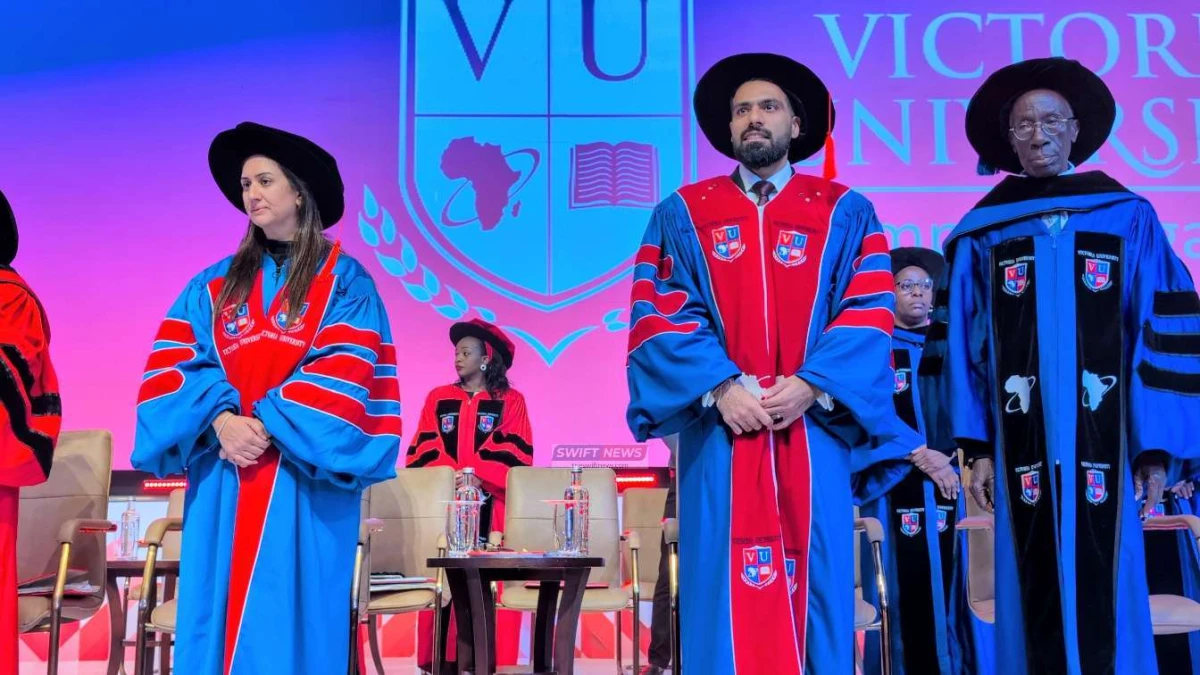
Victoria University Chancellor Professor John Opuda-Asibo, meanwhile, urged universities to embrace technological advancement without abandoning the academic disciplines that support innovation.
He said artificial intelligence should complement, rather than replace, established areas of study such as mathematics, languages, statistics, economics, the humanities and the sciences.
Prof. Opuda-Asibo explained that these disciplines equip learners with essential skills in communication, critical thinking, research, decision-making and problem-solving.
He particularly emphasised the importance of statistics and reliable data in supporting research and the effective application of AI, noting that technological progress also depends on adequate energy and infrastructure.
The chancellor called for curricula that connect foundational knowledge with emerging technologies to prepare graduates for a rapidly changing world.
Call for Employers to Open Doors
The graduation ceremony also brought attention to the role of employers, entrepreneurs and innovators in helping young professionals transition from university into the workplace.
Prof. Muganga thanked parents, guardians and sponsors for supporting the graduates throughout their education and appealed to employers to give the new graduates opportunities to demonstrate their abilities.
The university's 10th convocation is scheduled to run over two days, October 19 and 20, 2026, to accommodate the approximately 2,559 graduates.
The ceremony comes amid continued debate over graduate employability, the relevance of university curricula and the need for higher education institutions to produce professionals equipped with both academic knowledge and practical skills.
For the graduating class, the message from the university leadership was clear, earning a qualification is an important milestone, but applying knowledge, embracing innovation and delivering results will be essential to making a lasting contribution to society.

Benjamin Mwibo is a talented, passionate and creative journalist with a commitment to high quality out put that is factual and researched. Above all Dedicated with a strong desire to identify the truth of the matter.















Comments (0)