
Uganda Moves to Build a Globally Recognized National Halal Certification System
The initiative has received support from Trade Minister Hon. Sanjay Tanna, who called for urgent action to address gaps identified during the assessment and establish a credible National Halal Certification System.
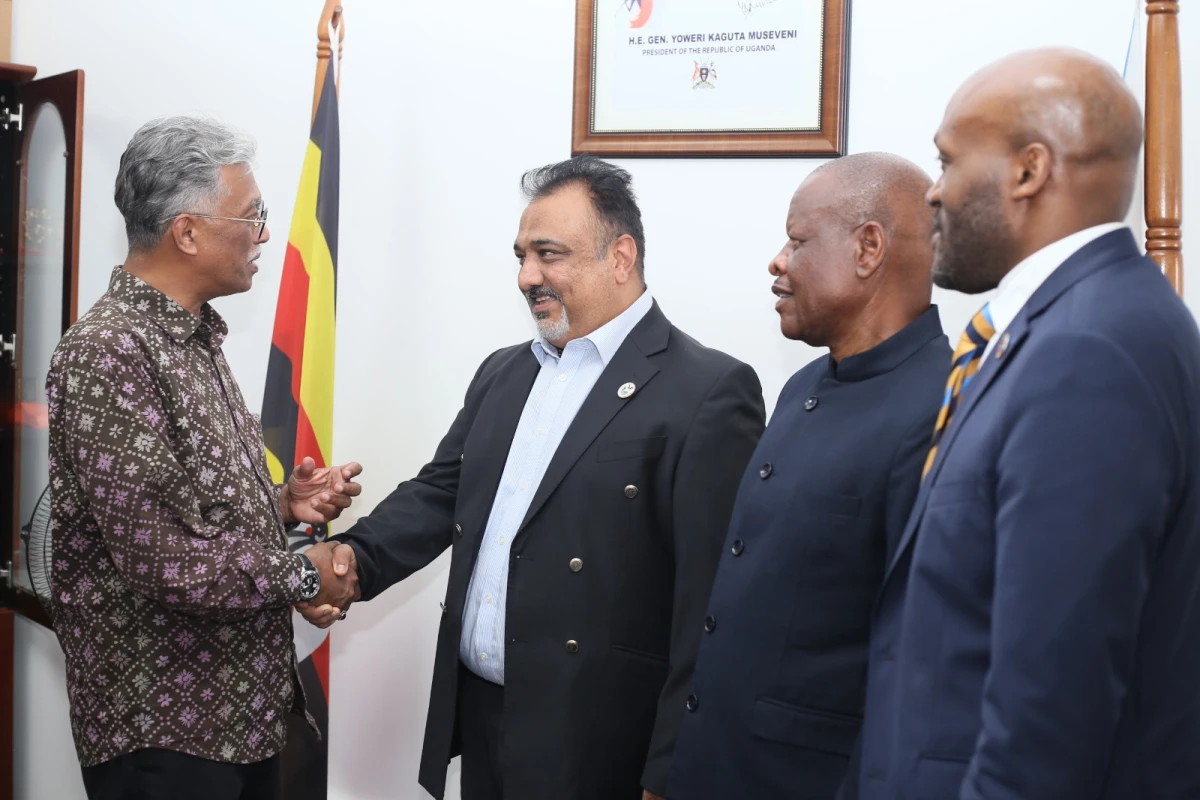
Uganda is stepping up efforts to develop a globally recognized national Halal certification ecosystem as the country seeks to position itself as a leading Halal production and export hub for East Africa and the wider African continent.
The initiative, being championed by the Uganda National Bureau of Standards (UNBS), is aimed at transforming Halal certification from a largely compliance-based requirement into a strategic tool for trade, industrialization, investment, value addition and enterprise growth.
The drive is being spearheaded by UNBS Executive Director, Eng. James N. Kasigwa, who says Uganda can leverage its agricultural and livestock resources, strategic geographical position and growing quality infrastructure to access the rapidly expanding global Halal economy.
With support from Uganda's Ambassador to Malaysia, H.E. Dr. Betty Oyella Bigombe, and Uganda's Ambassador to Sudan and Presidential Advisor on Halal Exports, H.E. Dr. Rashid Yahya Ssemuddu, UNBS invited officials from Malaysia's Halal Development Corporation (HDC) to Uganda to conduct a pre-assessment of the country's Halal ecosystem, infrastructure and institutional framework.
The Malaysian agency, which operates under the Ministry of Investment, Trade and Industry, brings more than five decades of experience in developing Malaysia's internationally recognized Halal industry.
UNBS Seeks a Coordinated National Approach
During the assessment, Eng. Kasigwa introduced the HDC delegation to senior government and diplomatic leaders, including the Minister of Trade, Industry and Cooperatives, Hon. Sanjay Tanna; the State Minister for Trade, Hon. Gen. Wilson Mbasu Mbadi; Presidential Envoy for the Great Lakes Region, South Sudan and Ethiopia, Rt. Hon. Amama Mbabazi; and Ambassador Rashid Ssemuddu.
The engagements were intended to build support for a coordinated national approach bringing together standards, certification, accreditation, laboratory testing, industry and government institutions.
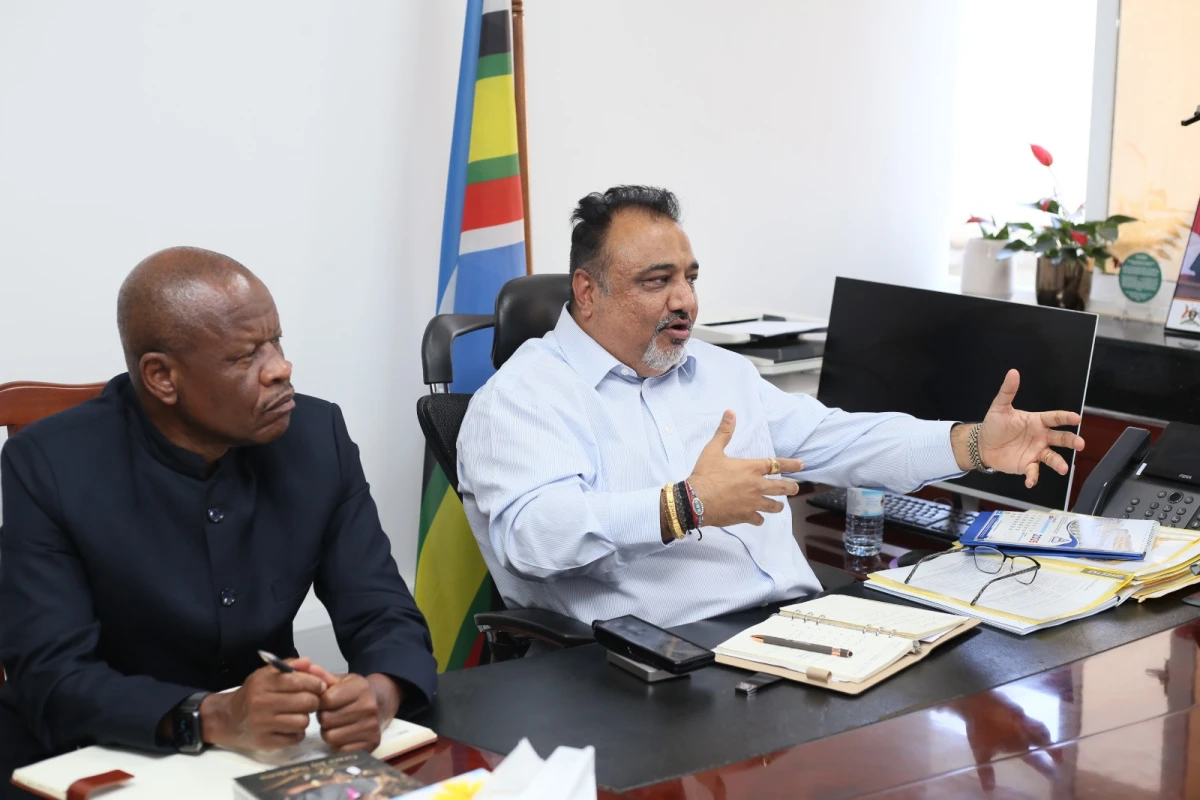
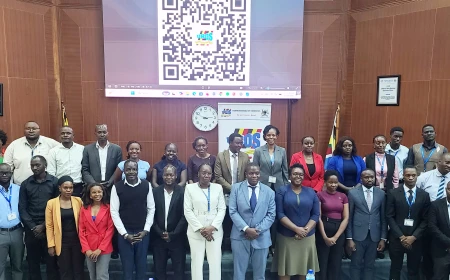
The HDC delegation also participated in a National Halal Assessment briefing attended by key stakeholders, including the Ministry of Trade, Industry and Cooperatives, Uganda Free Zones and Export Promotion Authority (UFZEPA), Uganda Halal Bureau, Islamic University in Uganda (IUIU), Uganda Muslim Supreme Council (UMSC), Halal Assurance Institute of Uganda, Uganda National Accreditation Services (UGANAS), Ministry of Agriculture, Animal Industry and Fisheries (MAAIF) and Global Consumer Center, among others.
For UNBS, the Halal initiative is part of a broader strategic shift towards using standards as instruments for economic transformation.
“Standards are tools for trade. Through needs-based standardization, we are looking at leveraging standards to grow value chains around the natural resources we have,” Eng. Kasigwa said.
He explained that UNBS is moving from traditional demand-driven standardization towards needs-driven standardization, with greater emphasis on standards that respond to Uganda's economic priorities, facilitate market access and strengthen domestic industries.
A Multi-Trillion-Dollar Opportunity
UNBS estimates that the global Halal economy is already worth approximately US$7.3 trillion and is projected to exceed US$10 trillion by 2030.
This presents Uganda with an opportunity to capture a greater share of international markets by adding value to its agricultural, livestock and other natural-resource-based products and ensuring that they meet internationally accepted Halal requirements.
The opportunity also fits into Uganda's broader ambition to grow its economy tenfold to approximately US$500 billion.
While Uganda's economic target represents only a fraction of the projected global Halal economy, UNBS believes that Halal-related production, certification, processing, value addition and exports can make a meaningful contribution to the country's industrialization and export agenda.
Uganda's strategic position is further strengthened by its membership of the Organization of Islamic Cooperation (OIC) and its participation in the East African Community.
Uganda is also a member of the Standards and Metrology Institute for Islamic Countries (SMIIC), an organization bringing together 57 member countries and providing a platform for participation in the development and harmonization of standards relevant to Islamic markets.
Government Backs National Halal Certification System
The initiative has received support from Trade Minister Hon. Sanjay Tanna, who called for urgent action to address gaps identified during the assessment and establish a credible National Halal Certification System.
Tanna emphasized the need to adopt and domesticate internationally recognized Halal protocols while strengthening the human resource, infrastructure, financial resources, branding, incentives and governance arrangements required to support a competitive Halal industry.
He said these elements would be critical if Uganda is to build confidence among international buyers and position its Halal products competitively in global markets.
State Minister for Trade Hon. Gen. Wilson Mbasu Mbadi stressed that Uganda's objective should not simply be to gain entry into international markets but to develop the capacity to remain competitive in those markets.
“Accessing a market is one thing; sustaining it is another,” Gen. Mbadi said.
He called for a comprehensive review of Uganda's existing legal framework to establish what additional provisions may be required to regulate and strengthen the Halal sector.
Mbabazi: Halal Is a Business Opportunity
Presidential Envoy Rt. Hon. Amama Mbabazi described the initiative as timely and important to Uganda's economic transformation.
“Halal is not only a Sharia-based religious concept; it is also a business and trade opportunity, and we cannot afford to be left out,” Mbabazi said.
He noted that Uganda has considerable potential in agriculture and livestock but needs the necessary knowledge, infrastructure and institutional systems to transform this productive capacity into competitive domestic and international businesses.
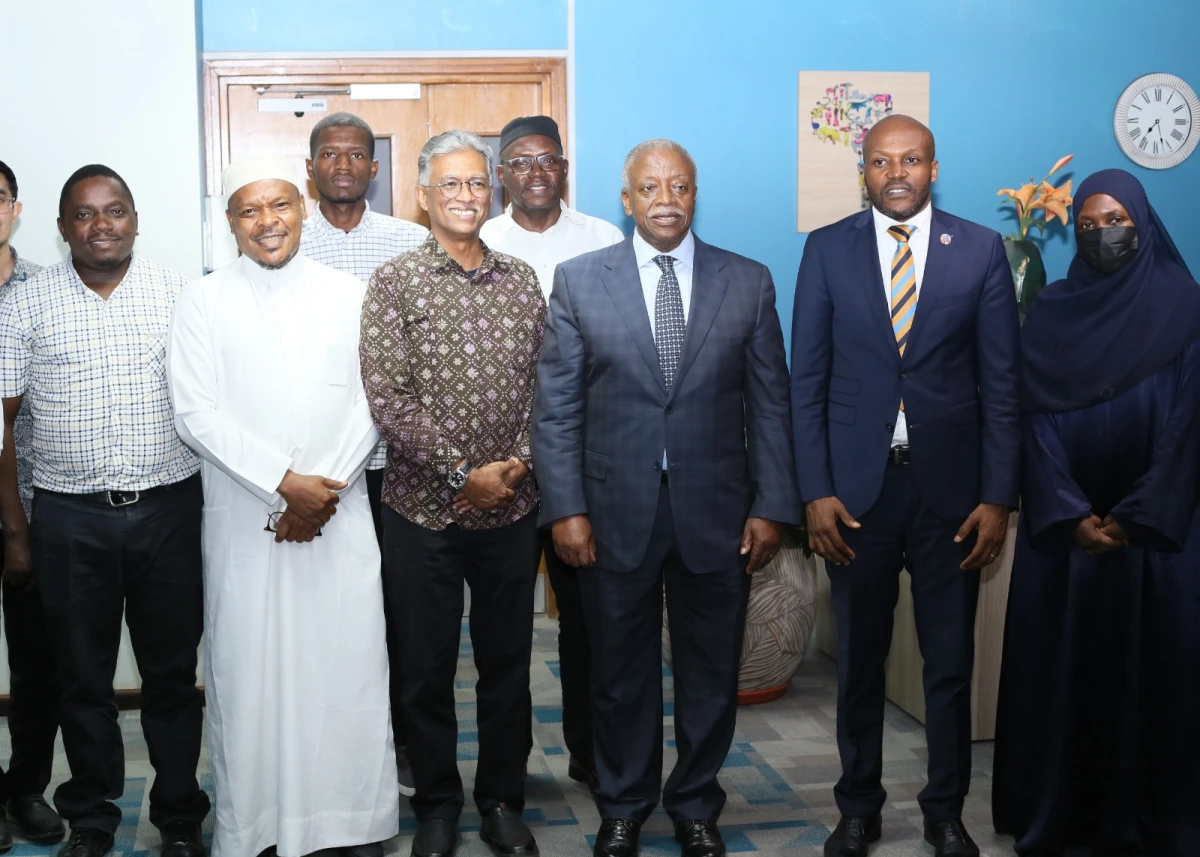
Mbabazi and Ambassador Ssemuddu are among the pioneers of efforts to establish a national Halal ecosystem in Uganda, having championed the initiative for more than 15 years.
They were also instrumental in facilitating the signing of a tripartite agreement on Halal development involving UNBS, the Uganda Muslim Supreme Council, the Islamic University in Uganda and the Uganda Halal Bureau.
Uganda Expands Its Halal Standards
Uganda currently has three Halal certification bodies: the Uganda Muslim Supreme Council, which is mainly involved in slaughter certification; the Uganda Halal Bureau; and the Halal Assurance Institute Uganda.
According to Ambassador Ssemuddu, the Uganda Muslim Supreme Council laid the foundation for Halal certification in the slaughter sector before UNBS established a standards-based Halal Technical Committee, UNBS/TC 411, Halal Integrity.
The technical committee brings together the Uganda Muslim Supreme Council, Uganda Halal Bureau, Islamic University in Uganda, UNBS, Ministry of Foreign Affairs and other relevant stakeholders.
UNBS currently has 17 Halal standards covering areas including food, pharmaceuticals and cosmetics.
Ambassador Ssemuddu described Halal as more than a religious requirement, saying it represents faith, quality, health, safety and responsibility while also providing a commercial value proposition.
He said Uganda has the potential to meet the requirements of markets in the Gulf Cooperation Council (GCC) and the Middle East and North Africa (MENA), among other regions.
He urged Uganda to pursue the ambition of becoming a leading Halal export hub for East and Central Africa.
Ssemuddu also called for the integration of food and non-food sectors into Uganda's Halal strategy and stronger legal and policy frameworks to provide a solid foundation for the industry.
Malaysia Shares Five Decades of Experience
The participation of Malaysia's Halal Development Corporation is expected to provide Uganda with practical lessons on how to build an internationally credible Halal ecosystem.
HDC Chief Commercial Officer Mohd Zamulud Awang Kechik said Uganda already possesses much of the productive base required to participate in the global Halal market, particularly through agriculture and livestock.
However, he noted that Uganda needs stronger systems capable of converting its raw production into internationally recognized and marketable Halal products.
The technical assessment conducted by the HDC-Malaysia team identified several areas requiring attention, including human capacity development, public and business awareness, quality infrastructure and government incentives.
These areas will be critical in ensuring that certification is supported by reliable testing, competent personnel, trusted institutions and internationally accepted processes.
Standards to Drive Industrialization
The Halal initiative is also linked to UNBS' National Standardization Strategy to 2030, which seeks to develop standards around Uganda's natural resources and priority value chains.
The strategy is intended to support export promotion, import substitution and industrialization in line with the priorities of National Development Plan IV (NDP IV).
For Uganda, the development of a functional Halal ecosystem could therefore extend beyond certification.
It could encourage investment in processing plants, laboratories, logistics, packaging, cold-chain systems, animal production, food processing, pharmaceuticals, cosmetics and other sectors capable of serving Halal markets.
A stronger national system could also help Ugandan businesses reduce dependence on foreign certification arrangements and improve consumer and buyer confidence in products produced locally.
From Agricultural Potential to Exportable Products
Uganda's large agricultural and livestock base provides a significant foundation for the development of a Halal economy.
However, stakeholders acknowledge that producing agricultural commodities alone is not enough.
The country must strengthen value addition, processing, traceability, quality assurance, certification and market linkages if it is to convert its resources into higher-value exports.
The Malaysian assessment therefore provides an opportunity for Uganda to identify institutional and infrastructure gaps and develop a practical roadmap for addressing them.
A nationally coordinated Halal certification system could ultimately allow producers, processors and exporters to work under clearer and more consistent requirements while improving Uganda's credibility in international markets.
Positioning Uganda as a Regional Halal Hub
The emerging partnership between Uganda and Malaysia marks a significant step in Uganda's efforts to build an internationally competitive Halal industry.
With the support of government institutions, Muslim leadership, standards and accreditation bodies, academia and the private sector, Uganda is seeking to move from fragmented Halal certification towards an integrated national ecosystem.
The ambition is not simply to certify products consumed domestically, but to create an industrial and trade ecosystem capable of producing, certifying and exporting Halal products to Africa, the Middle East, Asia and other international markets.
If successfully implemented, the initiative could open new opportunities for Ugandan enterprises while strengthening value addition, industrialization and export diversification.
For UNBS, the message is clear: standards should not merely tell businesses what they must comply with—they should help businesses reach new markets and grow.
Uganda's push to develop a globally recognized Halal certification ecosystem is therefore being positioned as part of a much broader economic transformation agenda, linking standards, quality infrastructure, investment, industrialization, value addition and international trade. With Malaysia's experience serving as a reference point, Uganda now faces the task of translating the assessment findings into a coordinated national framework capable of turning its agricultural and industrial potential into internationally trusted Halal products and services.

John Kusolo is a Pastor, Sports Enthusiast and Ugandan journalist with Nile Chronicles News (NCN). With a strong commitment to journalistic excellence, he is recognized for his dedication, goal-oriented approach, and ability to thrive in challenging environments. Kusolo brings focused motivation and professionalism to his reporting and media assignments.










Comments (0)