
Mudoma Champions Government-Traditional Leaders Partnership for Africa's Transformation
Addressing journalists during an official post-conference press briefing, Mudoma highlighted major resolutions reached at the continental gathering, including the adoption of the Addis Ababa Declaration, the inauguration of the African Traditional Leaders Council (ATLC), and the recognition of traditional leadership as an important partner in Africa’s socio-economic transformation.
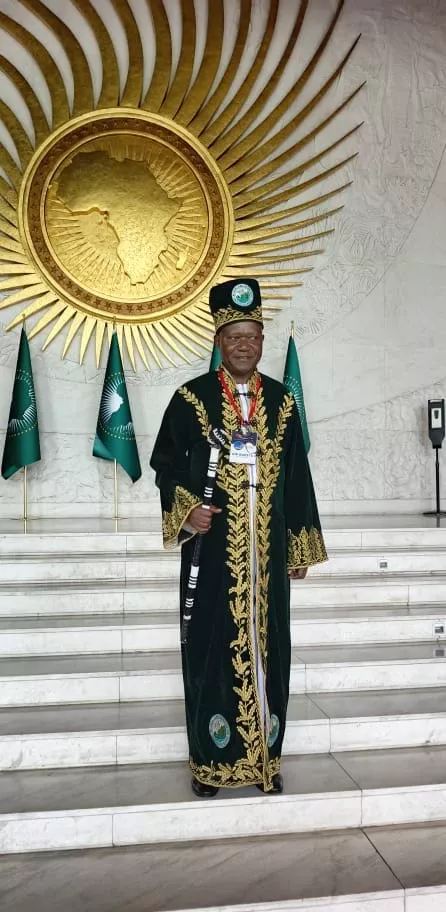
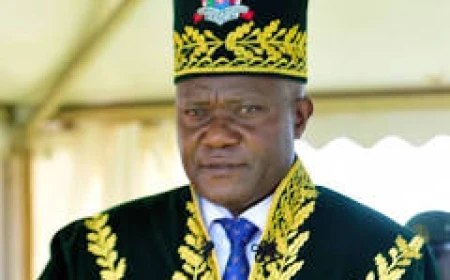
The Umukuuka wa Bugisu, HRH Sir Jude Mike Mudoma III, has outlined an ambitious continental agenda for traditional institutions following his return from the 6th Continental African Traditional Leaders Conference held at the African Union (AU) Headquarters in Addis Ababa, Ethiopia.
Addressing journalists during an official post-conference press briefing, Mudoma highlighted major resolutions reached at the continental gathering, including the adoption of the Addis Ababa Declaration, the inauguration of the African Traditional Leaders Council (ATLC), and the recognition of traditional leadership as an important partner in Africa’s socio-economic transformation.
One of the significant achievements announced by the Bugisu cultural leader was the elevation of East Africa to a strategic leadership position in the establishment of the new continental council.
Mudoma revealed that his delegation successfully secured the position of Vice Chairperson of the Ad Hoc Interim Committee responsible for drafting the foundational Charter of the African Traditional Leaders Council.
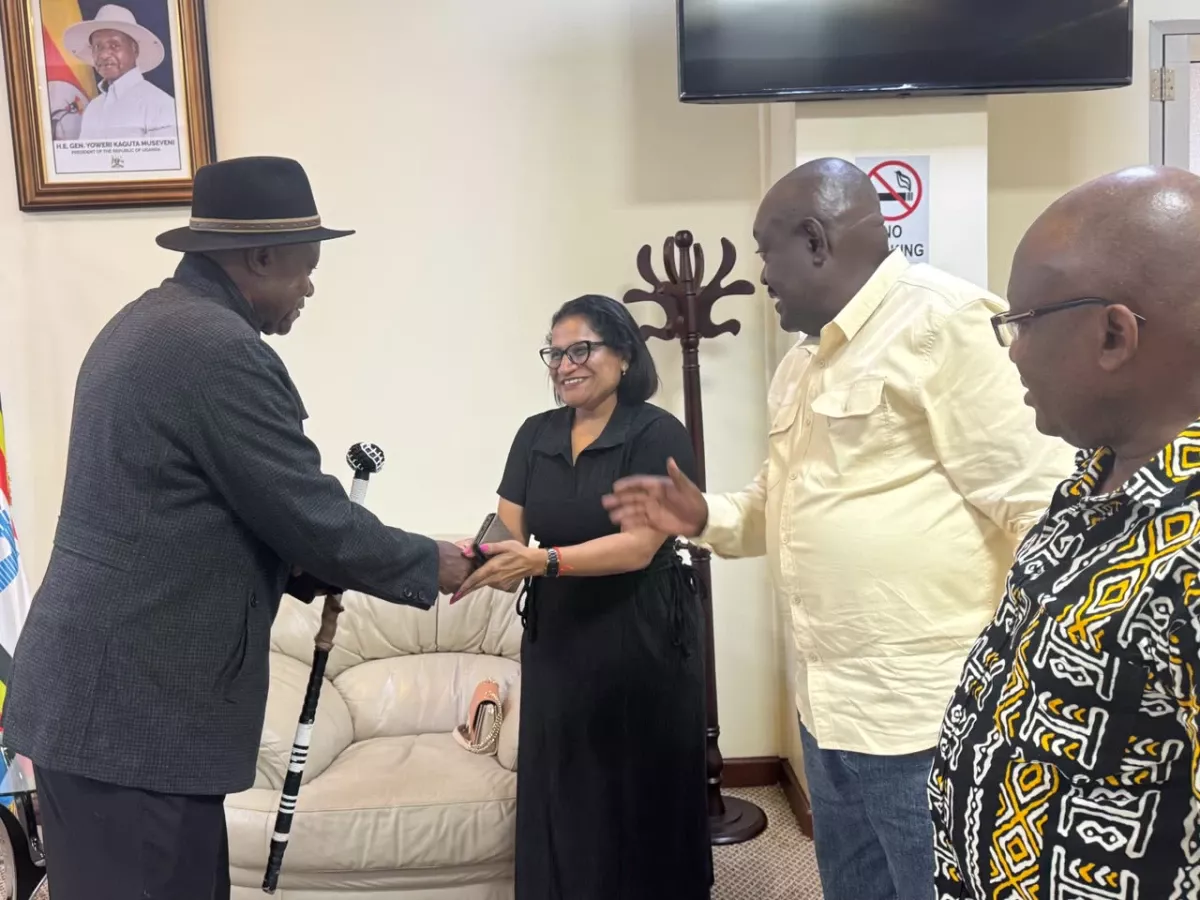
He said the achievement followed his strong advocacy for equitable regional representation across the five geographical regions of the African Union, arguing that a continental institution can only enjoy legitimacy when all regions have an equal opportunity to participate in shaping its governance structures.
"A continental council can only carry true legitimacy if every region has an equal voice at the drafting table," Mudoma said.
He explained that the position gives East Africa a direct leadership mandate in developing the institutional framework and governing principles that will guide traditional leadership across the continent.
Addis Ababa Declaration gives traditional leaders a continental development role
Mudoma described the unanimous adoption of the Addis Ababa Declaration as a historic milestone that formally anchors traditional leadership within Africa's broader continental development framework.
The declaration emerged from deliberations involving kings, queens, chiefs and cultural custodians from different parts of Africa and the global African diaspora.
According to Mudoma, the conference sought to define how indigenous leadership structures can contribute to Africa's modern transformation while preserving cultural identity, traditional governance systems and indigenous knowledge.
He also announced the inauguration of the African Traditional Leaders Council, an independent and nonpartisan continental platform established to preserve African heritage, champion indigenous governance and complement constitutionally established governments.
The council is expected to provide a common platform through which traditional institutions can engage continental development processes, promote peace and contribute to sustainable economic development.
Mudoma was quick to clarify that the new institution is not intended to compete with elected governments or replace existing state structures.
He emphasized that traditional institutions should work alongside governments in a complementary relationship based on mutual respect, constitutional order and shared development objectives.
He pointed to the reception he received at Entebbe International Airport upon returning from Ethiopia as an illustration of the partnership between the State and traditional institutions.
Four pillars to guide Africa's traditional institutions
Mudoma said the Addis Ababa conference united traditional institutions around four critical areas that will guide their contribution to Africa's development.
These include grassroots peacebuilding, the elevation of women and queenship in leadership, preservation of indigenous knowledge systems, and sustainable economic governance.
He explained that traditional leaders have a responsibility to use their influence and community connections to promote peaceful coexistence, strengthen women's participation in leadership and safeguard indigenous knowledge for future generations.
The conference also secured a commitment to connect local artisans, farmers and cultural industries directly to opportunities under the African Continental Free Trade Area (AfCFTA).
Mudoma said the initiative recognizes that traditional institutions can play an important role in organizing local producers, strengthening cultural industries and helping communities access wider regional markets.
The African diaspora was also recognized as the continent's Sixth Region, reflecting the importance of engaging Africans and people of African descent beyond the continent in heritage preservation and economic development.
Mudoma presents Dual-Direction Growth Model for Africa
A major highlight of Mudoma's participation in the Addis Ababa conference was his presentation of the Dual-Direction Growth Model for African Union Member States and Traditional Leaders.
The framework seeks to address what he described as a longstanding disconnect between government development programmes and grassroots communities.
He argued that African governments possess legislative authority, macroeconomic policy instruments, financial resources and diplomatic influence, while traditional leaders command community trust, moral authority and custodial responsibility over land, culture and indigenous institutions.
According to Mudoma, sustainable development requires these two sources of influence to work simultaneously rather than independently.
Under the Top-Down Direction, governments and AU Member States are expected to provide the necessary policy and regulatory frameworks, capital financing, infrastructure, digital connectivity and access to regional trade markets.
This includes investing in rural roads, irrigation systems and other infrastructure while integrating traditional councils into national development planning.
Governments are also expected to facilitate trade opportunities under AfCFTA by opening regional export corridors and supporting standards certification for agricultural and artisanal products.
Under the Bottom-Up Direction, traditional leaders would mobilize communities and translate national development policies and the AU Agenda 2063 aspirations into practical grassroots activities.
This would involve mobilizing young people into entrepreneurship, supporting women's enterprises, promoting climate-smart agriculture, organizing youth cooperatives and strengthening cultural heritage industries.
Traditional leaders would also use indigenous mediation mechanisms to address land, boundary and communal resource disputes before they escalate into costly legal battles or wider conflicts.
Mudoma maintained that economic development cannot thrive in an environment characterized by persistent community conflicts, making traditional institutions important partners in maintaining the peace and stability required for investment.
He said the two approaches must converge around the shared objectives of Agenda 2063, regional stability and inclusive prosperity.
Bugisu to pursue government and private-sector partnerships
Following his return, Mudoma said the immediate priority is to translate the continental resolutions into practical programmes that can benefit communities in Bugisu and Uganda at large.
He announced plans for structured engagements with relevant government ministries, diplomatic missions and private-sector partners to establish working relationships that will connect local agricultural, cultural and artisanal sectors to regional markets.
The engagements will particularly focus on opportunities for local coffee producers, agricultural enterprises, artisans and cultural heritage initiatives to benefit from the expanding African market.
He explained that the success of the Dual-Direction Growth Model depends on combining government financing, infrastructure and trade opportunities with the mobilization capacity and community trust of traditional institutions.
The Bugisu cultural leader said his institution will also continue fulfilling its continental responsibilities through participation in the ATLC Interim Charter Committee.
Mudoma appreciates government leaders and family for Entebbe reception
At the beginning of his press conference, Mudoma expressed gratitude to national leaders and family members who welcomed him and his delegation upon their arrival at Entebbe International Airport from Ethiopia.
He specifically thanked the Prime Minister, the Attorney General and the Chief Cabinet Secretary for making time to receive the delegation despite their demanding official responsibilities.
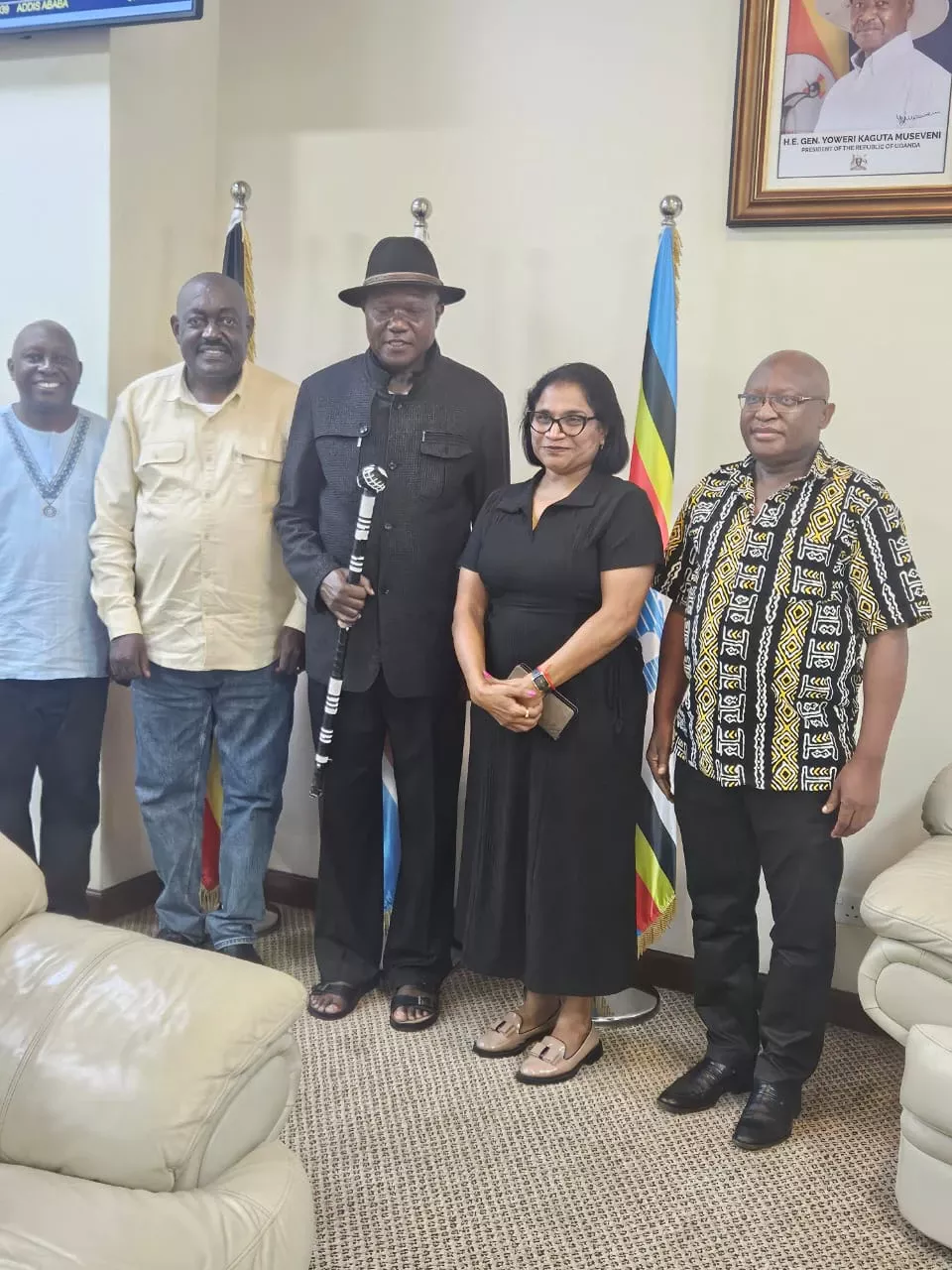
He described their presence at the airport as more than a ceremonial gesture, saying it demonstrated the partnership between government and traditional institutions that he had advocated for during the Addis Ababa conference.
Mudoma also extended personal appreciation to Her Majesty the Queen and his daughter for their warm welcome and support.
"The strength of any cultural institution begins with the unity and support of the family," he said.
Traditional institutions positioned for Africa's transformation
Mudoma's post-conference briefing signals an effort to position traditional leadership beyond its conventional cultural preservation responsibilities and establish it as an active participant in peacebuilding, economic development, environmental protection and continental integration.
Through the Addis Ababa Declaration and the proposed African Traditional Leaders Council, traditional institutions are seeking a more coordinated voice in Africa's development agenda.
For Bugisu, the securing of the Vice Chairperson position on the Interim Charter Committee provides an opportunity to contribute to the institutional foundations of the emerging continental body.
The proposed Dual-Direction Growth Model further presents a framework through which the Bugisu cultural institution intends to strengthen collaboration between government, traditional leadership, communities and the private sector.
Mudoma concluded by thanking national leaders, his family and the media for their support, before opening the floor to questions from journalists.

John Kusolo is a Pastor, Sports Enthusiast and Ugandan journalist with Nile Chronicles News (NCN). With a strong commitment to journalistic excellence, he is recognized for his dedication, goal-oriented approach, and ability to thrive in challenging environments. Kusolo brings focused motivation and professionalism to his reporting and media assignments.











Comments (0)