
Tumwebaze: Give Us Accurate Data to Drive Uganda’s Irrigation Revolution
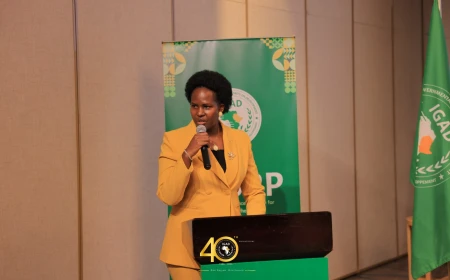
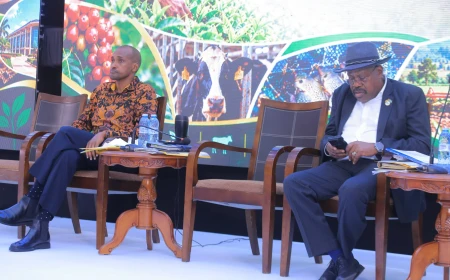
Tumwebaze made the call on Wednesday, October 7, 2026, while opening a two-day engagement with district leaders at Imperial Royale Hotel in Kampala, where government officials are discussing key interventions aimed at improving agricultural production, livestock disease control, fisheries management and extension service delivery. The engagement is focusing on four major areas: irrigation development, compulsory Foot and Mouth Disease (FMD) vaccination, the regulatory framework for wild-capture fisheries and fisheries resources management, and agricultural extension services.
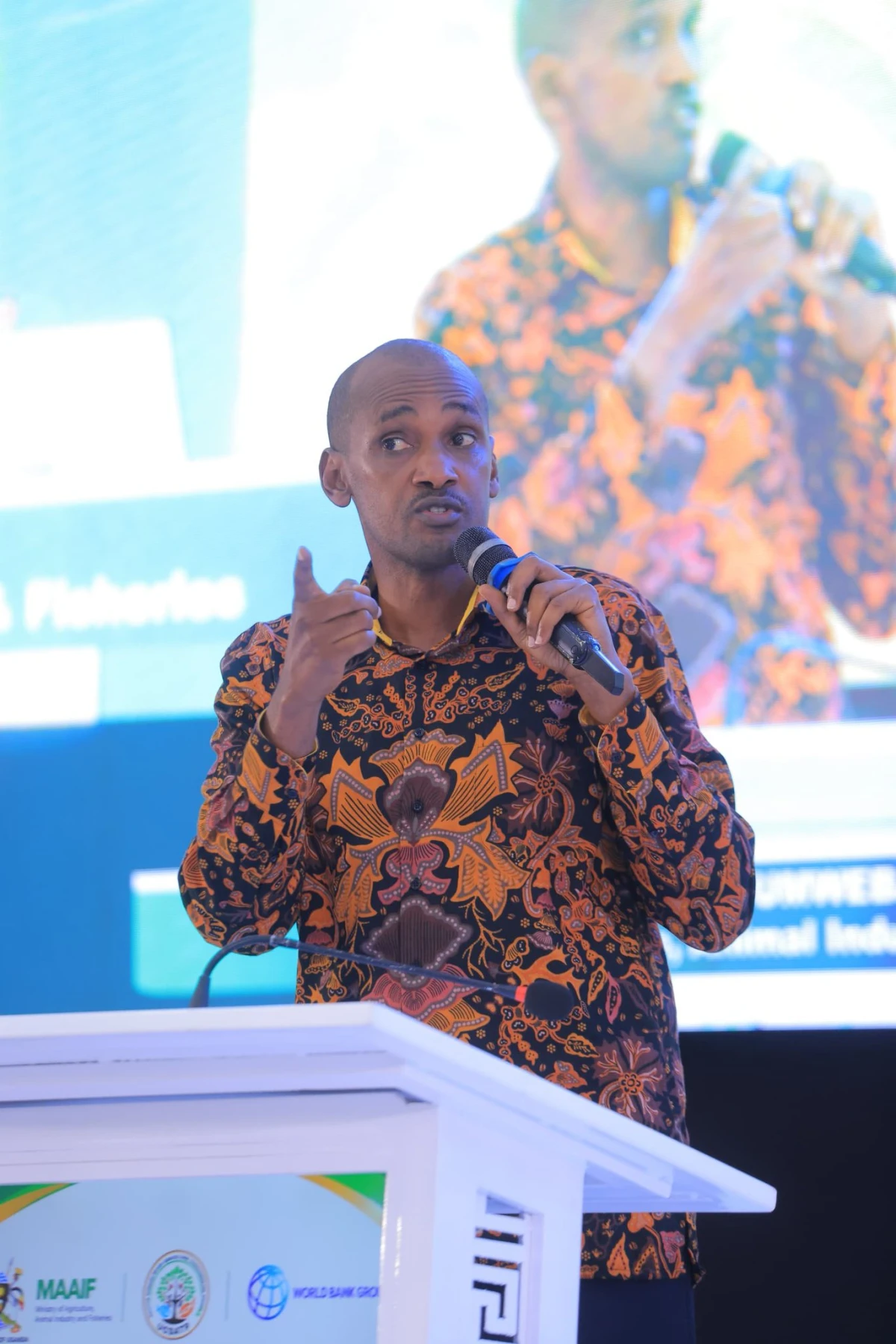
The Minister of Agriculture, Animal Industry and Fisheries, Hon. Frank Tumwebaze, has called on district leaders across Uganda to provide accurate, verified and up-to-date information to guide the design and implementation of the proposed National Irrigation Development Project.
Tumwebaze made the call on Wednesday, October 7, 2026, while opening a two-day engagement with district leaders at Imperial Royale Hotel in Kampala, where government officials are discussing key interventions aimed at improving agricultural production, livestock disease control, fisheries management and extension service delivery.
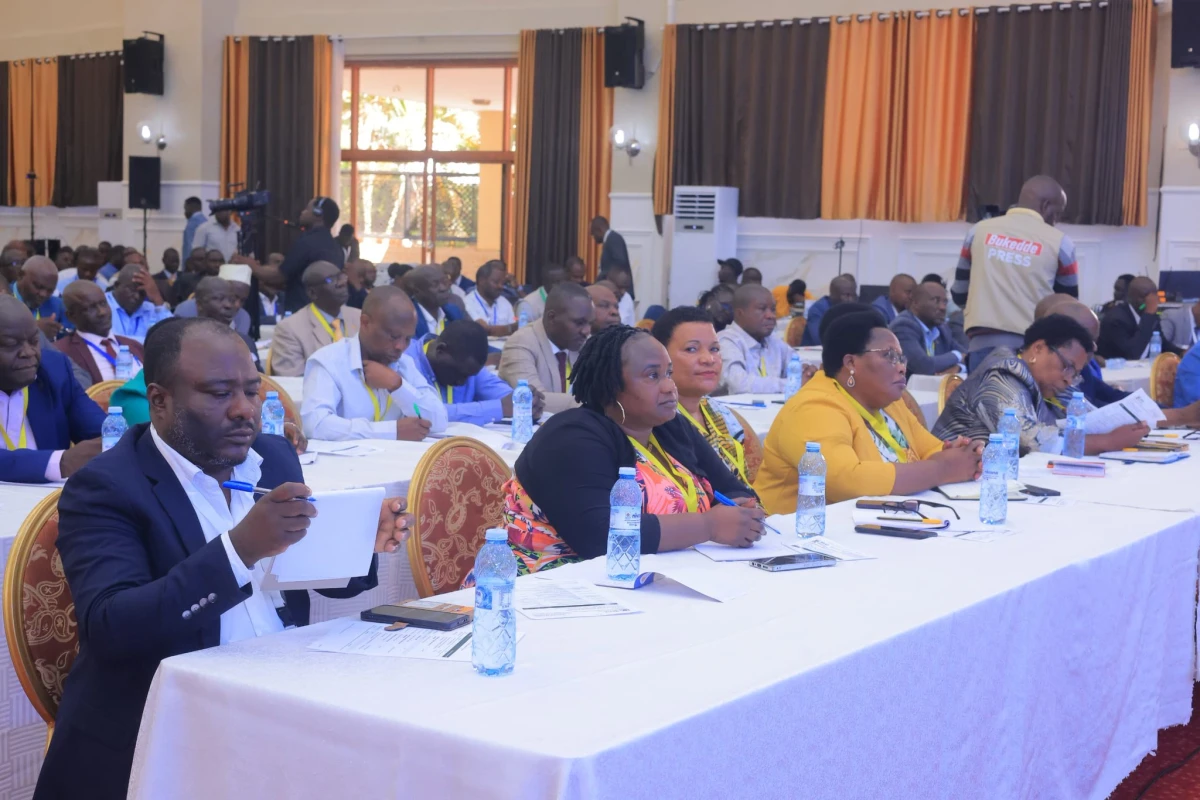
The engagement is focusing on four major areas: irrigation development, compulsory Foot and Mouth Disease (FMD) vaccination, the regulatory framework for wild-capture fisheries and fisheries resources management, and agricultural extension services.
Uganda must reduce dependence on rainfall Tumwebaze said Uganda's agricultural sector remains heavily dependent on rainfall, yet changing weather patterns are increasingly making rain-fed agriculture unreliable.
He noted that less than two per cent of Uganda's agricultural land is currently under irrigation, compared to approximately 3.5 to 4 per cent in Sub-Saharan Africa and about 28 per cent in Northern Africa.
According to the Minister, the gap demonstrates the need for Uganda to accelerate investment in irrigation if the country is to stabilise agricultural production, improve productivity and protect farmers from the effects of unpredictable weather.
He said President Yoweri Kaguta Museveni has prioritised mass irrigation development as part of efforts to transform agriculture from predominantly subsistence production into a more productive and commercially oriented sector.
Tumwebaze argued that increasing irrigation coverage would enable farmers to produce more consistently throughout the year rather than depending entirely on the timing and reliability of rainfall.
District data critical to irrigation planning
The proposed National Irrigation Development Project is expected to take a broad approach to expanding access to water for agricultural production.
Tumwebaze said the project will include on-farm water conveyance in areas where reliable water sources already exist, as well as the development of irrigation systems around seasonal rivers and streams.
Government also intends to profile and rehabilitate non-functional irrigation schemes previously developed by the Ministry of Agriculture, Animal Industry and Fisheries (MAAIF) and the Ministry of Water and Environment.
The project will further consider bulk water systems for water-stressed communities and other interventions aimed at bringing water closer to farmers.
The Minister therefore urged district leaders to submit verified information on existing irrigation facilities, available water sources and the status of last-mile water connectivity in their respective areas.
He said reliable district-level information would enable government to identify existing gaps, avoid duplication of interventions and ensure that investments are directed to communities with the greatest need.
Tumwebaze said MAAIF is currently finalising a project concept that will be submitted to the Ministry of Finance for consideration.
Fish ponds and agricultural machinery
The proposed irrigation programme will also incorporate aquaculture and agricultural mechanisation as part of the wider strategy to increase productivity.
Tumwebaze said government is considering increased support for fish ponds, particularly in the regions of Bukedi, Busoga, Luwero and Kigezi.
The inclusion of fish farming is intended to expand livelihood opportunities for communities while contributing to food and nutrition security.
The project will also support increased access to agricultural machinery, which the Minister said is important for reducing dependence on manual labour and improving the scale and efficiency of agricultural production.
Tumwebaze challenges districts on extension services
Beyond irrigation, Tumwebaze used the engagement to challenge district leaders to account for gaps in agricultural extension service delivery.
He identified staffing, mobility and facilitation as key factors affecting the ability of extension workers to reach farmers.
The Minister questioned why farmers continue to report inadequate access to extension services despite government efforts to improve staffing, mobility and facilitation.
He challenged districts to establish the number of vacant extension positions, the wage provisions available to fill them, and whether extension workers have adequate transport to carry out their duties.
Districts were also asked to account for the utilisation of motorcycles and vehicles provided by government to facilitate extension work.
Tumwebaze said the availability of government resources should translate into visible services at farm level.
Leaders urged to strengthen supervision
The Minister called on district leaders to strengthen supervision of extension workers and ensure that agricultural officers regularly visit farmers.
He said extension services should not remain confined to offices but must reach farmers in their gardens, farms and other production areas.
Tumwebaze also encouraged districts to use radio platforms and other communication channels to disseminate information on good agronomic practices to a wider number of farmers.
He said farmers need practical guidance on production, management and productivity if government investments in agriculture are to deliver meaningful results.
To address inconsistencies in the implementation of extension services, Tumwebaze directed the Ministry's extension department to update his earlier circular on the roles of extension workers and develop it into a comprehensive extension services handbook.
The handbook is expected to provide clearer guidance on the responsibilities of extension personnel and improve coordination between the Ministry, local governments and farmers.
Closing service-delivery gaps
Tumwebaze said the success of government programmes ultimately depends on how effectively they reach ordinary citizens.
He urged district leaders to confront gaps in service delivery instead of merely reporting the availability of government programmes and resources.
The Minister said leaders must ensure that farmers can see, access and benefit from government services in their daily economic activities.
The two-day engagement therefore provides an opportunity for MAAIF and district authorities to assess existing challenges, share information and agree on practical measures to improve agricultural service delivery.
With Uganda seeking to increase irrigation coverage, strengthen livestock disease control, improve fisheries management and expand agricultural extension, Tumwebaze said accurate information from local governments will be critical in ensuring that national programmes respond to the actual needs of farmers and communities.

John Kusolo is a Pastor, Sports Enthusiast and Ugandan journalist with Nile Chronicles News (NCN). With a strong commitment to journalistic excellence, he is recognized for his dedication, goal-oriented approach, and ability to thrive in challenging environments. Kusolo brings focused motivation and professionalism to his reporting and media assignments.












Comments (0)