
Irregularities Take Centre Stage as Parliamentary Committee Inspects Doho Irrigation Schemes in Butaleja
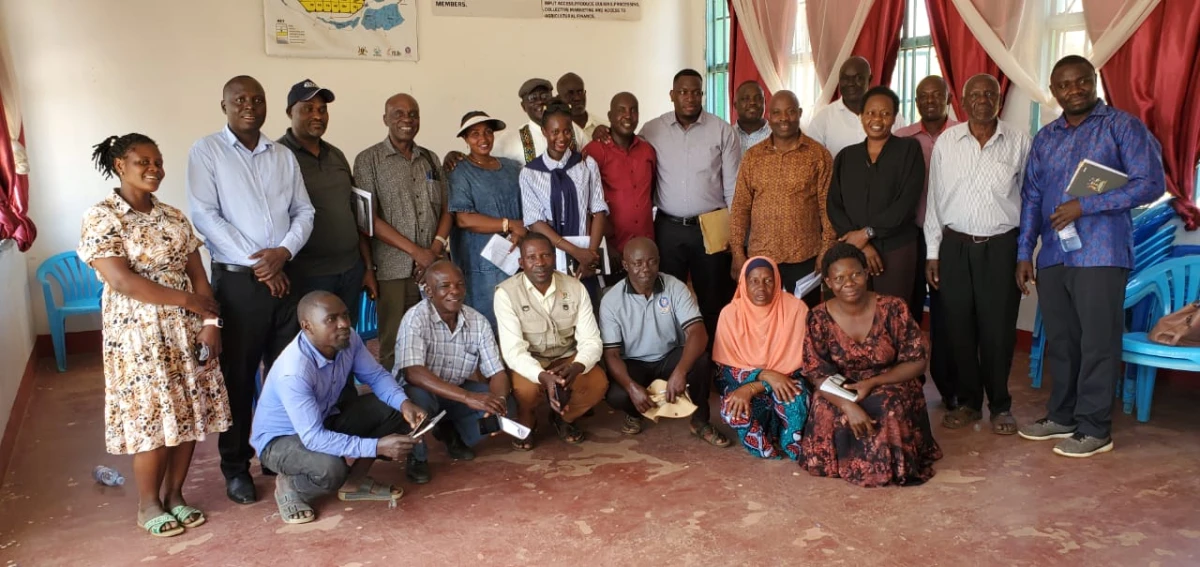
The delegation, led by Hon. Derrick Orone, Member of Parliament for Gogonyo County in Pallisa District and Vice Chairperson of the committee, spent its second day in Butaleja engaging farmers, scheme managers, local leaders and other stakeholders.
By Were Kungu
HUMUTU, BUTALEJA — 27 August 2026
A Parliamentary committee overseeing water and agricultural programmes has raised concern over a number of alleged irregularities in the implementation and management of the Doho I and Doho II irrigation schemes in Butaleja District.
The committee is on a nationwide inspection tour of government-gazetted rice schemes constructed or rehabilitated under the Water for Production programme, with the aim of assessing whether public investments have delivered value for money and achieved their intended objectives.
The delegation, led by Hon. Derrick Orone, Member of Parliament for Gogonyo County in Pallisa District and Vice Chairperson of the committee, spent its second day in Butaleja engaging farmers, scheme managers, local leaders and other stakeholders.
The inspection focused on Doho I, located in Mazimasa and Kachonga sub-counties, and Doho II in Himutu Sub-county.
Doho I was rehabilitated between 2011 and 2014, while construction of Doho II was undertaken between 2017 and 2020.
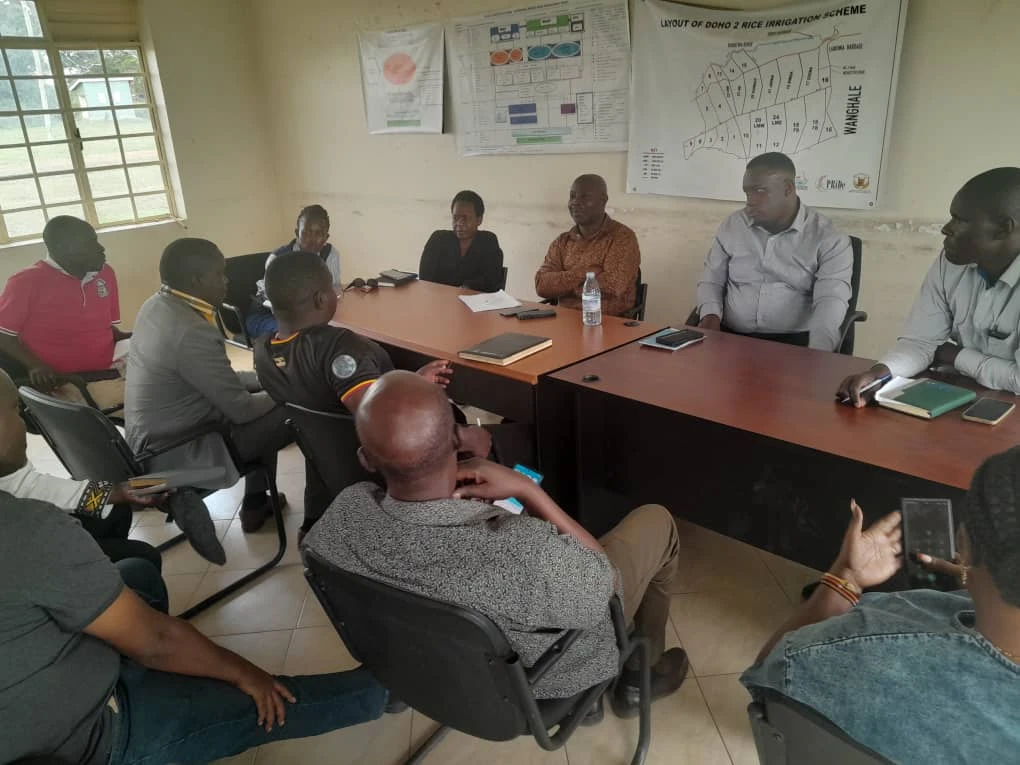
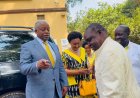
At Doho II, the committee held an engagement meeting at Kangalaba, where the scheme offices are located. The meeting brought together Paul Walekwa Nambafu, Chairman of Himutu–Doho II Farmers Cooperative Society Ltd; Febiano Higenyi, the scheme administrator; Amos Wandera, the Himutu Sub-county LC III chairman; farmers and other stakeholders.
Addressing the meeting, Orone said the committee's visit was intended to establish whether government had received value for the money invested in the two major irrigation projects.
He said the committee also wanted to determine whether the rehabilitation of Doho I and construction of Doho II had achieved the objectives for which the projects were initiated.
Farmers Raise Concerns
During the engagement, stakeholders highlighted several challenges they said were affecting the performance and benefits of the Doho II irrigation scheme.
Among the concerns raised was limited access to irrigation water, with some farmers reporting that their gardens do not receive water despite being located within the scheme.
Stakeholders also questioned the quality of some road works undertaken as part of the project, describing them as poorly executed.
The absence of a designated livestock watering point was another concern raised during the meeting. Farmers said the lack of an established area for animals to access water has created difficulties for livestock keepers within the scheme.
Questions were also raised over compensation, with stakeholders alleging that some beneficiaries were inadequately compensated while others had not received compensation for land or other interests affected by the project.
Idle Rice Milling Machines
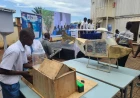
The committee was further informed that rice milling machines intended to support value addition were reportedly lying unused and deteriorating at the district.
Stakeholders expressed concern that the failure to effectively utilise the equipment undermines the wider objective of irrigation development, which is not only to increase agricultural production but also to improve farmers' incomes through value addition.
Farmers also said promised community empowerment initiatives had not been adequately established, leaving some communities without the additional support they expected from the project.
Environmental conservation was another area of concern. Stakeholders questioned whether adequate measures had been incorporated into the implementation of the irrigation scheme to protect the environment and ensure the long-term sustainability of the project.
Committee Promises Action
Speaking to journalists after the engagement meeting, Orone said the committee had identified what he described as numerous irregularities before, during and after the implementation of the irrigation projects.
He said the concerns raised during the field visit would be documented and incorporated into the committee's report.
According to Orone, the findings will inform measures to be taken after the nationwide assessment of government irrigation schemes is completed.
The committee's inspection is part of a broader parliamentary effort to assess government investments in irrigation infrastructure and establish whether such projects are delivering the expected benefits to farmers and the communities they are intended to serve.
The findings from Butaleja are therefore expected to contribute to the committee's overall assessment of the Water for Production programme, particularly in relation to project implementation, accountability, compensation, infrastructure quality, farmer access to irrigation water, value addition and environmental sustainability.
For farmers in Butaleja, the inspection has renewed hopes that some of the long-standing challenges affecting the Doho irrigation schemes could receive government attention.
However, stakeholders will now be watching to see whether the committee's findings translate into concrete action, including addressing water-access challenges, improving infrastructure, resolving compensation concerns, putting idle equipment to productive use and strengthening community and environmental programmes around the schemes.

John Kusolo is a Pastor, Sports Enthusiast and Ugandan journalist with Nile Chronicles News (NCN). With a strong commitment to journalistic excellence, he is recognized for his dedication, goal-oriented approach, and ability to thrive in challenging environments. Kusolo brings focused motivation and professionalism to his reporting and media assignments.






Comments (0)