
MAAIF Urges Farmers, Manufacturers to Unite for Export-Led Growth
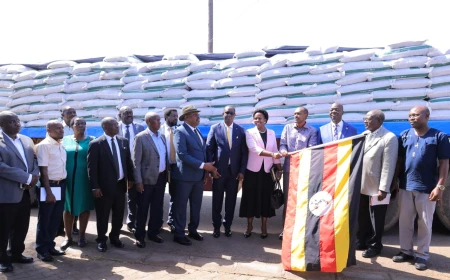
The call was made by Dr. Paul Mwambu, Commissioner for Crop Inspection and Certification, Head of the National Plant Protection Organisation (NPPO) Uganda and Designated National Authority on Agricultural Chemicals, while representing the Minister of Agriculture, Animal Industry and Fisheries at the official opening of the UMA Agricultural Pavilion during the 32nd Uganda International Trade Fair at the UMA Showgrounds, Lugogo, Kampala, on October 7, 2026.

KAMPALA — The Ministry of Agriculture, Animal Industry and Fisheries (MAAIF) has called for stronger collaboration between farmers, manufacturers, processors, exporters, investors and government agencies to accelerate Uganda’s agricultural and industrial transformation.
The call was made by Dr. Paul Mwambu, Commissioner for Crop Inspection and Certification, Head of the National Plant Protection Organisation (NPPO) Uganda and Designated National Authority on Agricultural Chemicals, while representing the Minister of Agriculture, Animal Industry and Fisheries at the official opening of the UMA Agricultural Pavilion during the 32nd Uganda International Trade Fair at the UMA Showgrounds, Lugogo, Kampala, on October 7, 2026.
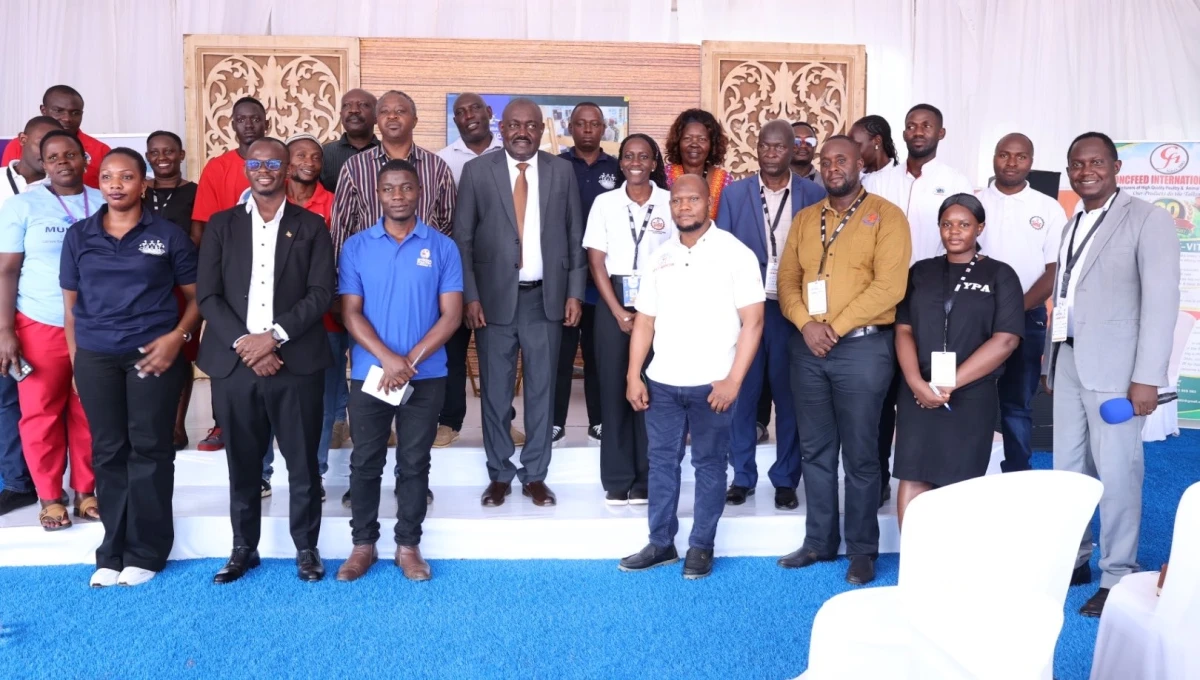
Dr. Mwambu said Uganda’s agricultural sector remains central to the country’s socio-economic development, contributing 26.5 percent of Gross Domestic Product (GDP) and supporting the livelihoods of more than 70 percent of the population.
He, however, stressed that agriculture must increasingly be viewed not only as a source of food and household incomes but also as a major driver of industrialisation, exports and employment.
“Agriculture remains the foundation of Uganda’s socio-economic development. But beyond these statistics, agriculture is the engine that feeds our industries, drives exports, and anchors household incomes,” Dr. Mwambu said.
He noted that Uganda’s industrial growth depends heavily on the ability of the agricultural sector to produce reliable, safe, quality and certified raw materials for manufacturers and processors.
According to Dr. Mwambu, farmers also require access to quality agricultural inputs, while exporters must comply with increasingly stringent regional and international standards if Uganda is to expand its presence in global markets. He said the Tenfold Growth Agenda, Agro-Industrialisation Programme, Parish Development Model (PDM) and the African Continental Free Trade Area (AfCFTA) all require a competitive, properly regulated and commercially oriented agricultural sector.
Agriculture and manufacturing must work together
Dr. Mwambu emphasised that agriculture and manufacturing cannot be treated as separate sectors if Uganda is to achieve meaningful economic transformation.
He said the Ministry of Agriculture is committed to strengthening the connection between primary production and industrial processing by improving the quality and safety of agricultural inputs, strengthening inspection and certification systems, enhancing sanitary and phytosanitary (SPS) compliance and promoting value addition and agro-processing.
The Ministry is also supporting farmer organisations and small and medium-sized enterprises to meet the supply requirements of industries and compete effectively in domestic, regional and international markets.
Dr. Mwambu said the regulatory work undertaken through crop inspection and certification plays a critical role in protecting Uganda’s agricultural production and trade.
He explained that the Ministry continues to safeguard the integrity of seeds, fertilisers, pesticides, plant products and other agricultural inputs** entering the Ugandan market.
The measures, he said, are intended to ensure that farmers have access to genuine and quality inputs while manufacturers obtain consistent and certified raw materials.
He added that effective regulation and certification are equally important in ensuring that Uganda’s agricultural exports comply with international requirements.
“This ensures that manufacturers receive consistent, certified raw materials and that Uganda’s exports meet the stringent requirements of the EU, Middle East, COMESA, and AfCFTA markets,” he said.
Focus on value addition and export competitiveness
Dr. Mwambu urged stakeholders in the agricultural value chain to move beyond production of raw commodities and invest more heavily in value addition, agro-processing and industrial innovation.
He said Uganda has an opportunity to increase the value of its agricultural products by strengthening local processing capacity and developing products that can compete in regional and international markets.
He encouraged manufacturers, farmers, processors and investors to embrace modern technologies and production systems while maintaining high standards of quality and safety.
He also called for greater adoption of digital traceability systems, which he said can strengthen accountability across agricultural value chains and help Ugandan products meet the requirements of demanding export markets.
Mwambu commends UMA
The Commissioner commended the Uganda Manufacturers Association (UMA) for creating platforms that bring together manufacturers, farmers, innovators, processors, exporters, financiers and policymakers.
He said UMA’s efforts to promote local production, industrial competitiveness and innovation are aligned with the Ministry of Agriculture’s priorities.
Among the areas of common interest, he cited expansion of agro-industrial capacity, promotion of import substitution, enhancement of export readiness, support for SMEs and farmer-linked enterprises, as well as creation of jobs and improvement of household incomes.
Dr. Mwambu said the Ministry remains committed to working with UMA and other private-sector players to unlock Uganda’s productive potential.
Stakeholders urged to embrace commercial agriculture
As he officially opened the Agricultural Pavilion, Dr. Mwambu challenged farmers and other stakeholders to shift towards more commercial and competitive forms of production.
He urged farmers to invest in quality inputs and technologies, comply with national and international standards and strengthen their capacity to supply industries with reliable agricultural raw materials.
He further called for increased investment in value addition, industrial innovation and modern production systems.
“Support farmers to become commercial, competitive suppliers,” he urged stakeholders.
He also encouraged stronger partnerships across the agricultural and manufacturing sectors, arguing that collaboration would be critical in positioning Uganda as a leading agricultural and industrial hub in the region.
Uganda targets stronger position in global markets
Dr. Mwambu said Uganda’s long-term prosperity will depend on the country’s ability to establish an integrated agricultural and industrial ecosystem capable of producing, processing and exporting high-quality products.
He said compliance with standards, quality assurance, value addition, innovation and access to markets must therefore remain at the centre of Uganda’s transformation agenda.
“Uganda’s future prosperity lies in a strong, integrated agricultural and industrial ecosystem—one that produces, processes, and exports high-quality products that can compete anywhere in the world,” he said.
He encouraged exhibitors and participants at the 32nd Uganda International Trade Fair to use the Agricultural Pavilion not merely to showcase products but also to establish partnerships, identify investment opportunities and develop solutions that can contribute to Uganda’s economic transformation. Dr. Mwambu subsequently declared the UMA Agricultural Pavilion officially open, on behalf of the Minister of Agriculture, Animal Industry and Fisheries, and congratulated UMA for organising the platform.
The 32nd Uganda International Trade Fair brings together manufacturers, farmers, traders, investors, innovators, government agencies and other private-sector actors to showcase products, explore business opportunities and promote local production and trade.
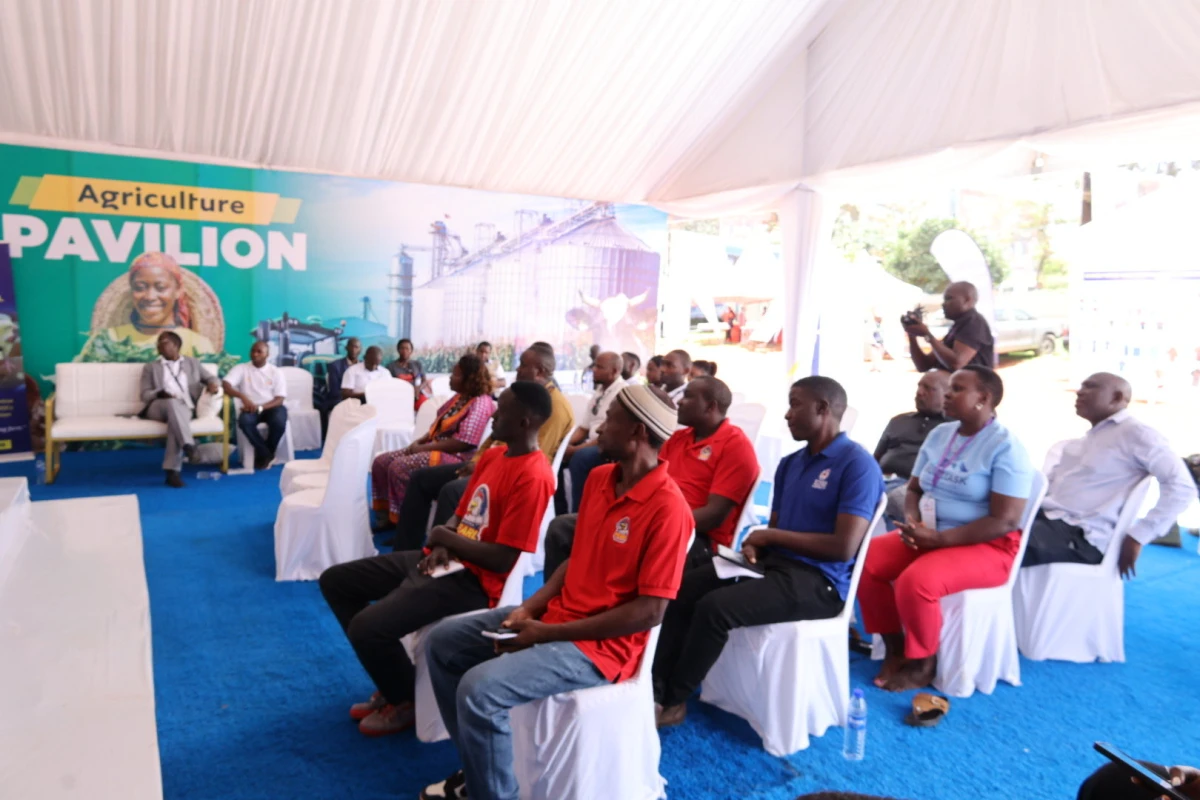
The Agricultural Pavilion is expected to provide a platform for stakeholders to showcase agricultural technologies, products and innovations while strengthening linkages between agriculture and industry.

John Kusolo is a Pastor, Sports Enthusiast and Ugandan journalist with Nile Chronicles News (NCN). With a strong commitment to journalistic excellence, he is recognized for his dedication, goal-oriented approach, and ability to thrive in challenging environments. Kusolo brings focused motivation and professionalism to his reporting and media assignments.














Comments (0)