
Kenya Gradually Draws Lessons from Uganda’s Cultural Leadership Framework
By Our Reporter | Baraton University, Kenya
Kenya is gradually drawing lessons from Uganda’s legal and institutional framework governing cultural leadership, with some clan structures and indigenous communities increasingly exploring how cultural institutions can be formally recognised and supported within the law.
Hon. Steven Masiga, spokesperson for the Bamasaaba people, cultural affairs advocate, legal scholar and historian, says he has observed growing interest among Kenyan communities in Uganda’s experience of legally recognising cultural institutions and traditional leaders.
Masiga, who has been closely following developments among communities in western Kenya, says clan structures, particularly among the Babukusu and wider Luhya communities, are increasingly examining how Uganda has developed a legal framework for the recognition of cultural leaders.
“I have been to Kenya silently studying the thinking of the clan chairmen and I know what they are up to. They are silently studying the Ugandan law on cultural institutions, and very soon Kenya may have its own cultural leaders gazetted and supported by Government,” Masiga said.
He pointed to recent cultural events involving Kenya’s political leadership as an indication of the continuing importance of traditional institutions and customary practices in Kenyan society.
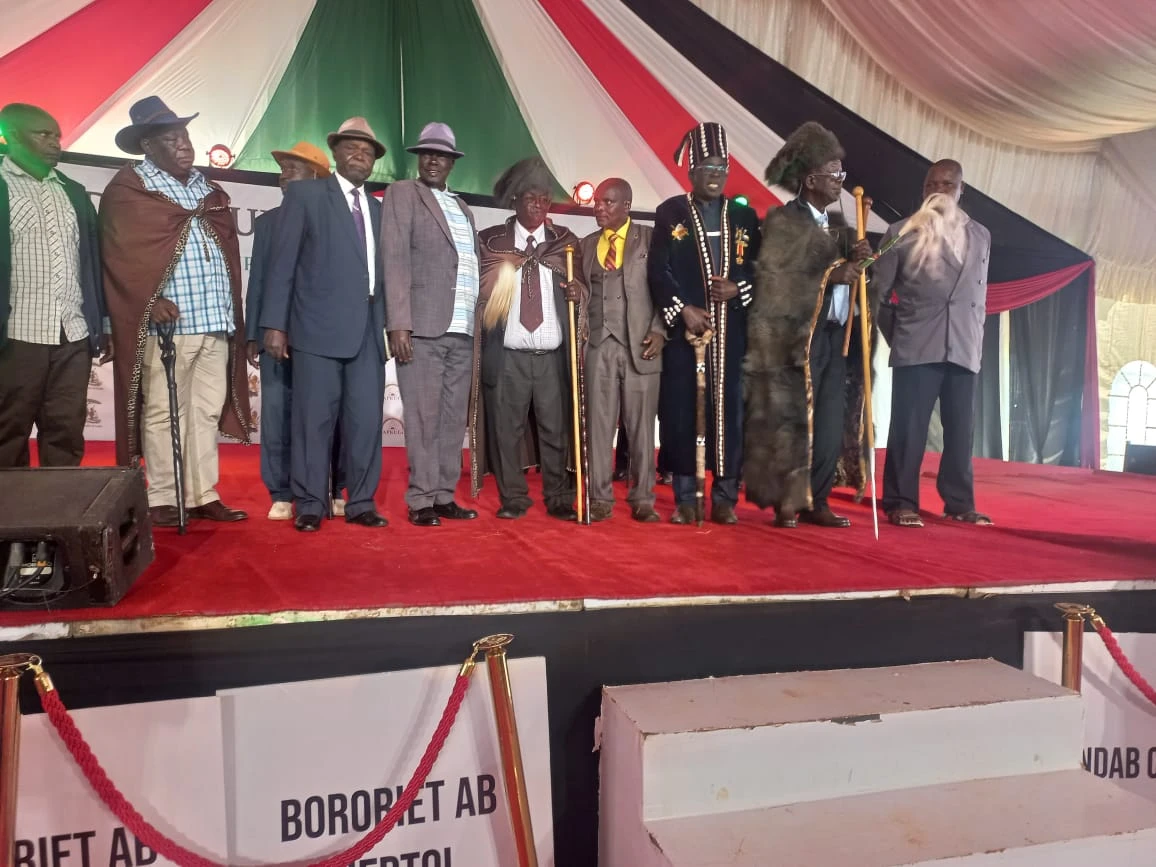
Masiga cited President William Ruto’s recent participation in a traditional marriage ceremony involving his daughter, where Kalenjin and Nandi elders played a prominent role, as evidence of the continued influence of customary structures in public and community life.
Kenya’s Constitutional Framework
According to Masiga, Kenya's Constitution provides room for communities to preserve, celebrate and promote their cultures, although the country's legal framework does not expressly establish a comprehensive system for gazetting and funding cultural leaders comparable to Uganda's framework.
He cited Article 11 of the Constitution of Kenya, which recognises culture as the foundation of the nation and requires the State to promote all forms of national and cultural expression.
He further argued that regional frameworks under the East African Community, including provisions concerning culture and cooperation, provide additional room for member states and communities to strengthen cultural institutions.
Masiga believes that the current political environment in Kenya could provide an opportunity for communities seeking formal recognition of their cultural institutions to place the issue on the national agenda.
“With Kenya approaching national elections, communities can bring such demands to politicians and ask them to support legislation that gives cultural leadership a clear legal framework,” he said.
Babukusu Studying Uganda’s Experience
Masiga says the Babukusu clan chairpersons are among those showing interest in Uganda's experience.
The Babukusu, together with other Luhya-speaking communities in Kenya, have extensive historical, cultural and linguistic links with the Bamasaaba communities of Uganda.
The cross-border relationship has existed for generations, with communities on both sides of the Uganda-Kenya border sharing traditions, customs, clan structures and historical connections.
Masiga argues that these links make Uganda's experience particularly relevant to communities in western Kenya seeking to strengthen their cultural institutions.
He said that while Kenya has a devolved system of government comprising 47 counties, cultural leadership does not necessarily have to follow county boundaries where communities share common ancestry, traditions and customs.
“Each county can have its own cultural leader where communities have distinct cultural identities. However, where communities have similar roots and norms, they can work together under one cultural institution,” he explained.
Trans Nzoia and Bungoma Masiga specifically cited
Trans Nzoia and Bungoma counties, which he said have communities with closely connected cultural roots.
He argued that instead of creating competing cultural institutions, communities with shared customs could consider having a common cultural leadership structure capable of preserving their traditions and promoting unity.
He also pointed to the relationship between the Nandi and wider Kalenjin communities, saying their shared cultural heritage could provide a basis for a common cultural institution where communities themselves agree to such an arrangement.
The proposal, he stressed, should be driven by the communities and anchored in law rather than imposed by political authorities.
King of Sebei Participates in Kenyan Cultural Events
The growing interaction between Ugandan and Kenyan traditional institutions has also been visible through cross-border cultural activities.
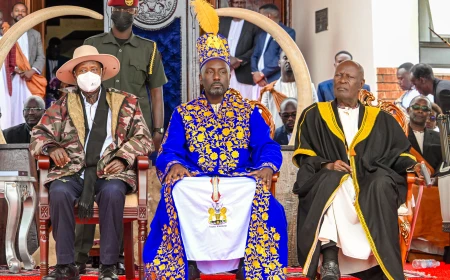
Recently, the King of Sebei, His Highness Peter Swilke, participated in activities involving Kalenjin communities, including ceremonies associated with the installation of clan chairpersons in areas linked to President Ruto's home region.
Masiga views such interactions as evidence of the cultural connections that transcend the Uganda-Kenya border.
He says the Sebei, Kalenjin, Nandi, Babukusu, Bamasaaba and other related communities have maintained cultural relationships that can be strengthened through formal and respectful cooperation.
Calls for a Kenyan Cultural Leadership Law
Masiga believes Kenya would need a deliberate legislative process if communities are to have their cultural leaders formally recognised by the State.
He proposed that county governments, community representatives and the National Assembly could begin consultations on a possible cultural institutions or cultural leadership law.
Such legislation, he said, would need to clearly define the role of cultural leaders, their relationship with elected governments, their sources of authority and the limits of their powers.
“It is not about replacing elected leaders. Cultural leaders have a different role. Their responsibility is to preserve culture, traditions, identity, unity and the heritage of their communities,” Masiga said.
He added that any legislation should safeguard the constitutional order and ensure that cultural institutions operate within the law.
Uganda’s Experience
Uganda has formally recognised cultural institutions under its constitutional and legal framework, while cultural leaders are prohibited from engaging in partisan politics and exercising governmental powers.
Masiga says Uganda's experience demonstrates that cultural institutions can coexist with modern democratic governance when their responsibilities are clearly defined.
He also noted that several Ugandan communities are continuing to seek formal recognition of their cultural leaders.
Among those he identified are communities in Sebei, Chope, Bugwere and Bunyole, which he said are interested in having their cultural institutions formally gazetted.
“I have been contacted by several communities on how to have cultural leaders gazetted and I have always not hesitated to guide them,” he said.
Role of Local Governments
Masiga believes local governments have an important role to play in helping communities seeking recognition of their cultural institutions.
He explained that communities seeking gazettement should work closely with relevant local government authorities and other stakeholders because local resolutions and consultations can provide an important foundation where no cultural leader has previously been formally recognised.
He encouraged communities to document their history, customary structures, leadership traditions and areas of cultural jurisdiction before approaching government.
According to Masiga, such documentation would help distinguish legitimate cultural institutions from organisations created for political or personal interests.
Preserving Culture Across Borders
For Masiga, the debate is ultimately about cultural preservation rather than political power. He says communities should be free to develop institutions that preserve their history, language, customs, traditional knowledge and identity, provided such institutions respect national constitutions and existing laws.
“I see no harm in supporting communities that want to have a legal framework in order to support and preserve their culture,” he said.
The renewed interest in cultural leadership also comes at a time when communities across East Africa are seeking to preserve indigenous identities amid rapid social, economic and political change.
For the Bamasaaba and related communities spread across Uganda and Kenya, Masiga says the cultural links provide an opportunity for greater cooperation rather than division.
He argues that Uganda's experience could therefore serve as a reference point for Kenyan communities seeking to establish legally recognised cultural institutions, while Kenya could develop a model suited to its own constitutional and devolved governance system.
As Kenya heads toward another electoral cycle, Masiga believes communities seeking formal recognition of their cultural institutions have an opportunity to engage political leaders and legislators on the issue.
The ultimate objective, he says, should be to create a legal framework that protects cultural heritage, strengthens community identity and allows traditional institutions to complement—not compete with—modern democratic governance.

John Kusolo is a Pastor, Sports Enthusiast and Ugandan journalist with Nile Chronicles News (NCN). With a strong commitment to journalistic excellence, he is recognized for his dedication, goal-oriented approach, and ability to thrive in challenging environments. Kusolo brings focused motivation and professionalism to his reporting and media assignments.












Comments (0)