
Electricity and Healthcare Must Go Hand in Hand, Says Bulambuli MP Wephukulu
He cited Bulambuli County as an example, noting that some electricity lines have been constructed and pass through entire sub-counties, yet many households remain without access to power.
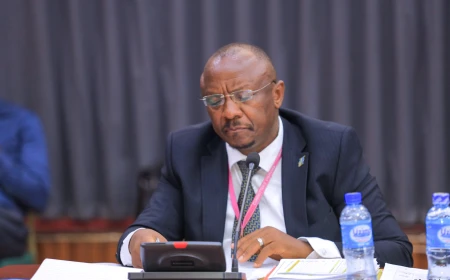
Bulambuli County Member of Parliament Hon. Biara Emmanuel Wephukulu has called for a stronger link between rural electrification and the delivery of essential public services, particularly healthcare, saying electricity should be treated as a transformative necessity rather than merely an infrastructure construction programme.
Hon. Wephukulu made the remarks on the floor of Parliament during Tuesday’s plenary session while raising queries to the Minister of Energy and Mineral Development over the implementation of rural electrification programmes in his constituency and other parts of the country.
The legislator expressed concern that electricity transmission lines are being constructed through communities without the final connection reaching households and public institutions.
He cited Bulambuli County as an example, noting that some electricity lines have been constructed and pass through entire sub-counties, yet many households remain without access to power.
“We have lines that have been constructed, but they pass a full sub-county without connectivity to the households,” Wephukulu said.
He questioned whether the rural electrification programme was intended merely to construct electricity infrastructure or whether it was designed as a genuinely transformative intervention capable of improving the living conditions of ordinary Ugandans.
According to the MP, the impact of electrification should ultimately be measured by the number of households and institutions that are actually connected to electricity, rather than simply by the number of kilometres of power lines constructed.
Electricity critical to healthcare
Wephukulu further linked the issue of electricity to the performance of Uganda’s health sector, arguing that access to power is essential for health facilities to provide safe and effective services.
He pointed out that some Health Centre IIIs constructed by government continue to operate without reliable electricity, forcing health workers to improvise during medical procedures.
The MP particularly raised concern about maternity services, saying some nurses are compelled to use torches while attending to mothers giving birth.
“We have Health Centre IIIs that have been constructed by government, but you find the nurses are using actually torches in the process of operations and helping mothers who are giving delivery,” he said.
He urged government to ensure that electricity access accompanies the construction and establishment of public health facilities.
In his view, constructing a health facility without providing reliable electricity undermines the intended benefits of the investment because health workers require adequate lighting and power to perform their duties effectively.
Public institutions should be prioritised
The Bulambuli County MP called for public institutions, including health centres, to be given priority in rural electrification programmes.
He argued that electricity should not only be viewed in terms of domestic consumption but also as a key enabler of public services and community development.
He also extended the call to places of worship, saying churches and other community institutions require access to electricity to support their activities.
Wephukulu noted that for Christians, access to electricity can support worship and other activities within churches, while also contributing to the broader development of communities.
His intervention therefore placed electricity at the centre of both social and economic transformation, particularly in rural areas where public services continue to face infrastructure challenges.
From power lines to actual connections
The MP's concerns point to a wider question about the effectiveness of rural electrification: whether government programmes should focus primarily on extending electricity infrastructure or on ensuring that the infrastructure translates into actual connections and improved services.
For rural communities, electricity can support households, businesses, schools, health facilities, places of worship and other institutions. However, the construction of transmission or distribution lines alone does not necessarily guarantee that communities along the routes will immediately benefit.
Wephukulu therefore urged the responsible ministry to look beyond the construction of electricity lines and ensure that the final stage of connecting consumers and public institutions is addressed.
His appeal comes amid continued efforts by government to expand electricity access across Uganda, particularly in rural communities where access to reliable power remains a major development concern.
The MP's message was clear: electricity and healthcare must move hand in hand, because a health facility without reliable power may struggle to deliver the quality of services for which it was constructed.
He called on the Ministry of Energy and Mineral Development to ensure that rural electrification delivers tangible benefits to households and public institutions, particularly health facilities, rather than stopping at the construction of power lines.
For Bulambuli and other underserved communities, he argued, the true measure of rural electrification should be whether electricity reaches the people and institutions that need it most.

John Kusolo is a Pastor, Sports Enthusiast and Ugandan journalist with Nile Chronicles News (NCN). With a strong commitment to journalistic excellence, he is recognized for his dedication, goal-oriented approach, and ability to thrive in challenging environments. Kusolo brings focused motivation and professionalism to his reporting and media assignments.









Comments (0)