
Court Dismisses Nakeya’s Petition Against Minister Aisha Ssekindi’s Kalungu Victory
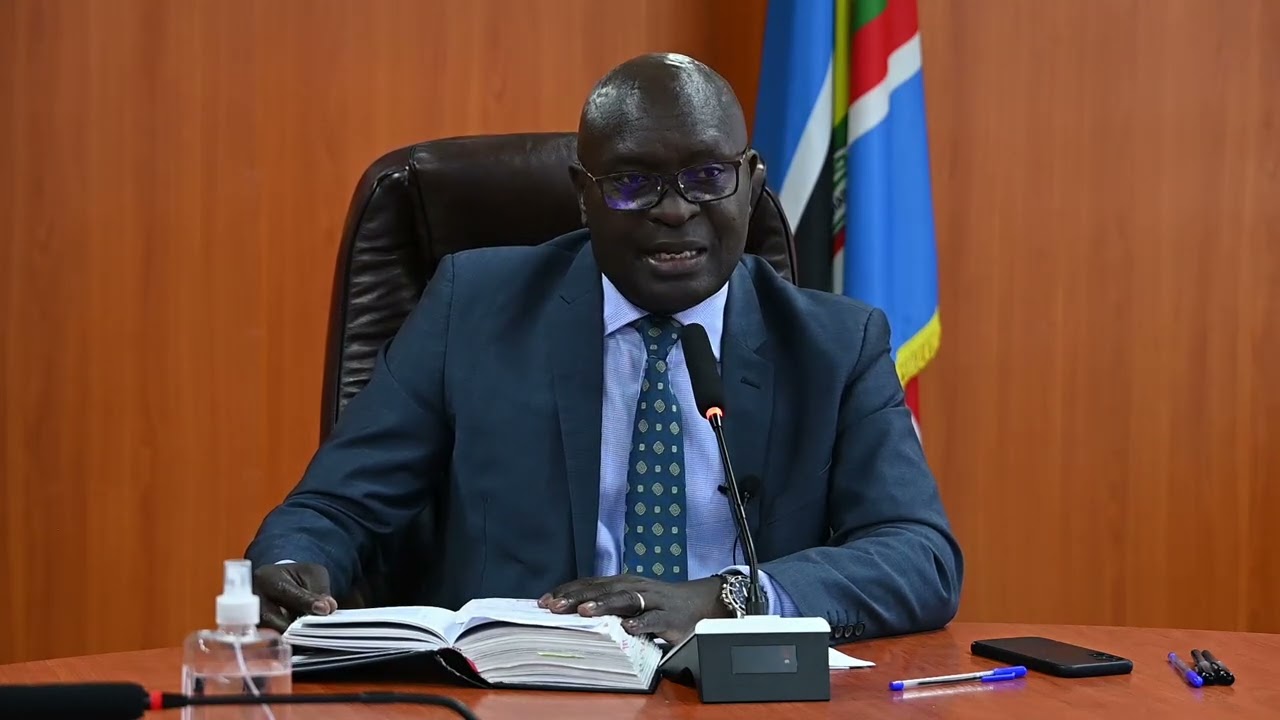
In a judgment delivered on October 15, 2026, Justice Bernard Namanya rejected Nakeya’s application to nullify the January 15 parliamentary election and order a fresh poll, finding that the evidence presented did not establish a sufficient legal basis to overturn Ssekindi’s victory.

The High Court in Masaka has dismissed an election petition filed by National Resistance Movement (NRM) candidate Hellen Nakeya challenging the election of State Minister for Water Aisha Ssekindi as Kalungu District Woman Member of Parliament, ruling that although serious incidents of violence and electoral irregularities occurred, the petitioner failed to prove that they substantially affected the election results.
In a judgment delivered on October 15, 2026, Justice Bernard Namanya rejected Nakeya’s application to nullify the January 15 parliamentary election and order a fresh poll, finding that the evidence presented did not establish a sufficient legal basis to overturn Ssekindi’s victory.
Ssekindi, who contested as an independent candidate, was declared the winner with 25,773 votes against Nakeya’s 5,498, giving her a majority of 20,275 votes over her closest challenger.
Shakira Namiiro Zzinga garnered 20,966 votes, while Aisha Waliggo Nuluyati obtained 1,810 votes, according to results published in the Uganda Gazette on February 6, 2026.
Nakeya petitioned the court, alleging that violence against her supporters, voter bribery, intimidation, interference with polling agents, the circulation of pre-marked dummy ballot papers and other electoral irregularities undermined the credibility of the election.
However, Justice Namanya ruled that while several of the incidents had been established, the petitioner had not sufficiently demonstrated that they were attributable to Ssekindi or that they substantially affected the final results.
“I am not satisfied that the petitioner has established a lawful basis for overturning the election,” the judge ruled.
Court acknowledges campaign violence
In its judgment, the court acknowledged that Nakeya’s campaign was affected by incidents of violence and intimidation during the electoral period.
The judge found that Nakeya had proved that her Toyota Wish, registration number UBQ 421G, was vandalised during the campaign.
However, she failed to identify the person or persons responsible for the damage or establish that it had been carried out by Ssekindi or her agents with her knowledge, consent or approval.
The court also considered the killing of two Nakeya supporters, Gerald Katumba and Frank Muyingo, in an incident involving police officer Derrick Ssenyonga, who had been deployed as a guard at Ssekindi’s residence.
Justice Namanya found that evidence established that the two supporters had been killed but did not prove that Ssekindi knew of, consented to or approved the acts.
Ssekindi denied being present at the scene or authorising the shooting. However, during cross-examination, she acknowledged that Ssenyonga had admitted firing at the supporters and was facing criminal charges.
The court treated the killings as grave incidents but found that the evidence did not establish the legal connection required to hold Ssekindi responsible for them in the election petition.
The judge also found evidence that Nakeya’s polling agent, Godfrey Mwebesa, had been assaulted, while threats, intimidation, incitement and misinformation occurred during the electoral period.
Despite these findings, the court held that the existence of serious incidents did not automatically justify nullifying an election without proof of their substantial effect on the declared outcome.
Pre-marked dummy ballots examined
The circulation of pre-marked ballot papers was another major issue in Nakeya’s petition.
The petitioner alleged that dummy ballot papers marked in favour of Ssekindi had been circulated during the electoral period, potentially influencing voters and undermining the fairness of the contest.
Justice Namanya found that the exhibits presented to court were dummy ballots rather than forged official ballot papers.
Although the judge considered the pre-marking of the dummy ballots improper and capable of biasing voters, the evidence did not establish who had prepared or authorised their distribution.
The court also found insufficient evidence to demonstrate that the materials had influenced voters or materially affected the election results.
Justice Namanya emphasised that the seriousness of an alleged irregularity must be considered alongside evidence demonstrating its actual or substantial effect on the electoral outcome.
“The Court cannot infer a substantial effect from the seriousness of the incidents alone, nor overturn an election on conjecture, sympathy or the possibility that the petitioner’s campaign operations were impaired,” he ruled.
Nakeya fails to demonstrate impact on final tally
A key consideration in the court’s decision was the failure by Nakeya to establish how the alleged irregularities had affected the final vote tally.
The judge noted that the petitioner had not identified the specific polling stations affected by the alleged misconduct, quantified the number of voters who were prevented from voting or presented credible electoral records demonstrating that the declared results had been materially altered.
The 20,275-vote difference between Ssekindi and Nakeya was also a significant consideration.
According to the court, the petitioner had not shown that the proven irregularities had transferred, suppressed or distorted votes on a scale capable of overcoming the substantial difference between the candidates.
The court’s position was that evidence of violence, intimidation and interference with campaign activities, however serious, was not sufficient on its own to invalidate the results without demonstrating the required impact on the election.
The judge further rejected allegations that Shs100,000 had been distributed to influence voters by a man identified as Joseph Matovu, finding that the bribery claims had not been proved.
Consequently, the court declined to nullify Ssekindi’s election or order the Electoral Commission to conduct a fresh poll in Kalungu District.
Electoral Commission criticised over election management
Although Justice Namanya dismissed the petition, he expressed concern about the Electoral Commission’s handling of incidents surrounding the election, particularly the killings of Nakeya’s supporters.
The judge said the commission had a statutory responsibility to facilitate elections in an environment free from violence and intimidation.
The judgment also raised questions about whether polling should have been postponed under Section 64 of the Parliamentary Elections Act in view of the incidents that occurred during the electoral process.
The court’s observations highlighted the distinction between dismissing a petition for failure to satisfy the legal requirements for nullifying an election and determining whether the electoral process was adequately managed.
“Notwithstanding the dismissal of the petition, the evidence established that grave and reprehensible incidents occurred in Kalungu District during the electoral process,” Justice Namanya stated.
The judge stressed that nullification was a statutory remedy available only where the prescribed legal grounds had been established through evidence.
The court therefore maintained Ssekindi’s election while expressing concern over the violence and other incidents documented during the campaign.
Ssekindi welcomes ruling
Reacting to the judgment, Ssekindi welcomed the court’s decision, saying the petition had cost her valuable time and money.
“It’s not that there are any electoral laws I violated as they alleged, but their main aim was to waste my valuable time and money, which they have partly achieved. But we have won the case against them,” Ssekindi said.
She thanked her supporters and said she would now concentrate on serving the people of Kalungu District.
Ssekindi’s victory had been challenged by Nakeya, who sought to have the results overturned on grounds that the alleged irregularities had undermined the fairness and credibility of the election.
The dismissal of the petition means that the challenge has not resulted in the nullification of Ssekindi’s parliamentary victory.
Nakeya consults lawyers over next move
Nakeya, meanwhile, said she was consulting her lawyers to review the judgment and determine the next course of action.
Her statement leaves open the possibility of further legal consideration, although she had not announced a definitive decision on whether to pursue an appeal.
The court also declined to order either party to pay the other’s legal costs, directing that each side bear its own expenses because of the exceptional circumstances surrounding the case.
The decision brings the immediate High Court challenge to Ssekindi’s election to a close, while leaving unresolved broader concerns about the violence, intimidation and other incidents that occurred during the electoral period.
The ruling underscores the evidentiary burden faced by candidates seeking to overturn election results: establishing that irregularities occurred is not, by itself, enough; a petitioner must also satisfy the applicable legal requirements for demonstrating their effect on the election.
For Ssekindi, the judgment preserves her victory as Kalungu District Woman MP, while Nakeya awaits consultations with her legal team before deciding what to do next.

John Kusolo is a Pastor, Sports Enthusiast and Ugandan journalist with Nile Chronicles News (NCN). With a strong commitment to journalistic excellence, he is recognized for his dedication, goal-oriented approach, and ability to thrive in challenging environments. Kusolo brings focused motivation and professionalism to his reporting and media assignments.












Comments (0)