
Good Master’s and PhD Theses Can Open Doors to Lucrative Careers, Says Masiga, Citing Mwambu and Ruto
Masiga, who also serves as a thesis reviewer, says postgraduate research should go beyond fulfilling university graduation requirements and instead demonstrate a scholar’s ability to generate knowledge, address societal challenges and attract professional opportunities.
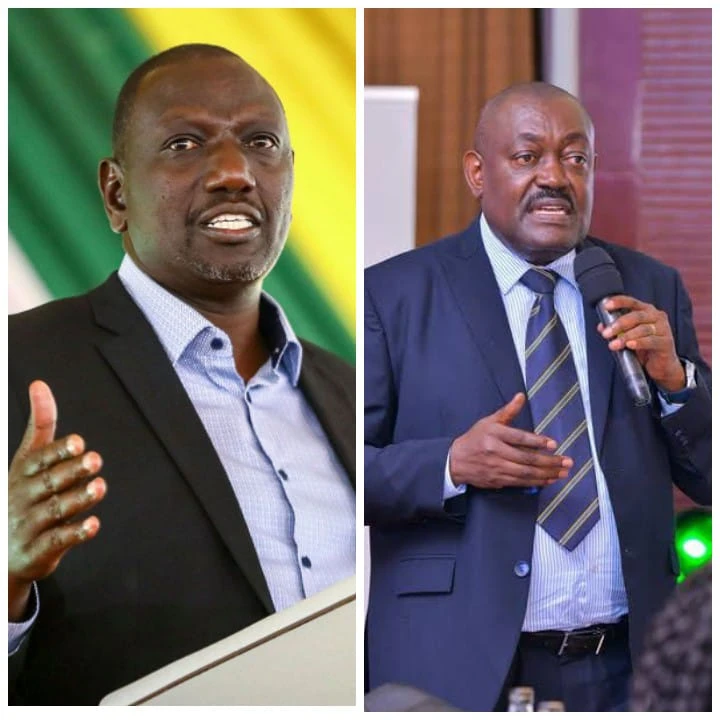
Hon. Steven Masiga, spokesperson of the Bugisu Cultural Institution and an interdisciplinary scholar specialising in law, education and administration, has challenged universities and postgraduate students to embrace academic research publication, arguing that a well-researched and published Master’s or PhD thesis can become an employment opportunity in its own right.
Masiga, who also serves as a thesis reviewer, says postgraduate research should go beyond fulfilling university graduation requirements and instead demonstrate a scholar’s ability to generate knowledge, address societal challenges and attract professional opportunities.
He argues that students undertaking advanced academic programmes, particularly at Master’s, PhD and postdoctoral levels, must embrace the principle of publish or perish, noting that academic excellence is increasingly measured by the ability to communicate research findings to the wider scholarly community.
In an assessment of outstanding academic research, Masiga singled out the scholarly works of Dr Paul Mwambu, a Commissioner in the Ministry of Agriculture and Prime Minister of the Bugisu Cultural Institution, and Dr William Samoei Ruto, the President of Kenya, describing their research as possessing considerable academic potential that deserves attention from researchers and universities.
According to Masiga, the two scholars have interesting academic parallels, having pursued scientific studies around the same period but at different universities. Their academic journeys also brought them into contact through various scholarly conferences across universities in Eastern Africa.
Mwambu's research and its international appeal
Dr Paul Mwambu, who holds more than six academic qualifications, undertook his undergraduate studies in Zoology and Botany at Makerere University before advancing to postgraduate research.
Masiga particularly highlighted Mwambu's Master's thesis, titled "An Assessment of Farmer Involvement in NAADS Implementation in Sub-Saharan Africa: The Case of Uganda," describing it as an exceptional academic investigation that attracted significant recognition and scholarly interest.
The research examined the involvement of farmers in the implementation of the National Agricultural Advisory Services (NAADS), a government programme supported by development partners and designed to address poverty and improve agricultural productivity.
It sought to establish the extent to which intended beneficiaries participated in the implementation of government and development-partner-funded interventions, particularly those designed to improve livelihoods and address broader socioeconomic challenges.
Masiga explained that Mwambu's research was predominantly non-doctrinal, focusing on practical realities and the relationship between programme implementation and the participation of intended beneficiaries.
He said the study demonstrated the importance of involving farmers in development interventions rather than treating them merely as recipients of government programmes.
According to Masiga, the thesis distinguished itself through its research methodology, formulation of hypotheses and ability to collect, examine, filter and synthesise complex academic information into knowledge that could inform future research and policy decisions.
He further described Mwambu's academic investigations as making a substantial contribution to the fields of Zoology and Botany, particularly in understanding the relationship between agricultural development interventions, beneficiaries and poverty reduction.
Masiga also claimed that the World Bank rated Mwambu's Master's research among the best academic works in its area, adding that it has attracted considerable citations from both postgraduate and undergraduate researchers.
He argued that such recognition demonstrates how postgraduate research, when properly conceptualised and executed, can transcend the classroom and become a valuable professional asset.
How a thesis can translate into employment
Masiga cited Mwambu's subsequent professional trajectory as an illustration of how outstanding academic research can create opportunities beyond conventional employment.
According to him, Mwambu's academic performance, including a thesis he described as having earned Magna Cum Laude recognition, attracted opportunities to undertake World Bank assignments in several African countries.
Masiga said Mwambu was subsequently drawn from government service into development-related assignments, where his expertise could be applied to broader regional challenges.
He further claimed that following the expiration of one of his contractual engagements, Mwambu received approximately Shs1 billion from the World Bank as an appreciation payment, separate from his regular contractual remuneration.
The claim, if independently substantiated, would illustrate the potentially substantial professional value of specialised expertise and research-driven work in international development.
For Masiga, Mwambu's experience demonstrates that a strong academic thesis can function as more than a graduation document. It can serve as a professional portfolio through which employers, international organisations and research institutions identify talent.
Ruto's academic journey and scientific investigations
Masiga also cited Kenya's President, Dr William Samoei Ruto, whose academic background includes postgraduate studies in the biological sciences.
Ruto undertook his scientific studies at the University of Nairobi, with his academic investigations focusing on plant ecology and environmental issues.
His doctoral research examined the influence of human activities on land use and vegetation, with particular attention to Saiwa Swamp in Trans Nzoia County, Kenya.
The research investigated the effects of anthropogenic activities on the environment, including how human interaction with land influences ecological systems and land-use patterns.
Masiga observed that Ruto's academic investigations demonstrate the importance of selecting research subjects that respond to real-world challenges.
He noted that, although Mwambu and Ruto pursued their academic studies at different universities, their scientific backgrounds and participation in regional academic engagements offer an interesting basis for examining the relationship between research excellence and professional advancement.
Ruto initially worked as a teacher in several schools during the early 1990s before entering politics. His subsequent political career eventually took him to the highest office in Kenya.
Masiga's comparison is therefore not necessarily about the two scholars following identical professional paths, but rather about the value of their academic foundations and the potential of research to contribute to professional development.
Why research hypotheses and publication matter
Explaining the academic value of the two scholars' investigations, Masiga said both demonstrate the importance of using research questions and hypotheses to give direction to scholarly inquiries.
He explained that hypotheses enable researchers to formulate informed assumptions about the subject under investigation, which can subsequently be tested through systematic research.
Such an approach helps narrow the scope of investigations, establish relationships between variables and provide a structured basis for drawing conclusions.
Masiga observed that research questions, if not properly defined, can sometimes become excessively broad, making it difficult for students to maintain a clear direction throughout their investigations.
He therefore encouraged postgraduate students to develop well-defined research questions, formulate appropriate hypotheses and employ sound methodologies that produce meaningful and defensible findings.
He said a good thesis should not merely demonstrate that a student has completed an academic programme but should establish the researcher's capacity to independently investigate problems, generate new knowledge and communicate findings to other scholars.
Masiga challenges Ugandan universities to embrace compulsory publication
Turning his attention to Uganda's higher education sector, Masiga called upon universities to strengthen their postgraduate research policies by making publication an integral part of Master's and PhD training.
He argued that universities should create systems that enable students to transform their dissertations and theses into publishable academic papers before completing their programmes.
In his view, allowing students to graduate without communicating their research findings to the outside world limits the visibility of their academic potential and reduces opportunities for their work to influence policy, industry and future scholarship.
Masiga believes that publication should become a fundamental requirement for postgraduate graduation, particularly for students pursuing research-oriented programmes.
"As a scholar and reviewer of theses, I believe a student who has not published should not be allowed to graduate. You have not communicated to the outside world; you have not communicated to employers about your potential as a serious scholar," Masiga argued.
He further cautioned students against enrolling in universities that do not provide adequate support for research publication, arguing that institutions of higher learning must take responsibility for helping their students move from academic research to internationally recognised scholarship.
He said universities should establish stronger research mentorship programmes, provide access to reputable academic journals, organise scholarly conferences and encourage collaboration between students, supervisors and established researchers.
Beyond graduation certificates
Masiga's argument points to a broader debate about the purpose of postgraduate education and the relationship between academic qualifications and employability.
While academic certificates demonstrate that an individual has completed a particular level of education, published research provides an additional opportunity to demonstrate specialised knowledge, intellectual ability and practical problem-solving skills.
A well-developed thesis can attract the attention of universities, international development agencies, government institutions, research organisations and private-sector employers seeking individuals with specialised expertise.
However, the value of research extends beyond securing employment. It also lies in its potential to influence public policy, improve service delivery, strengthen institutions and provide solutions to challenges affecting communities.
The experiences highlighted by Masiga, particularly the academic journeys of Dr Paul Mwambu and Dr William Samoei Ruto, provide an opportunity for Ugandan universities and postgraduate students to reflect on how research can be converted into professional and societal value.
His central message is that postgraduate education should not end with the award of a degree. Instead, the research undertaken should continue to generate knowledge, attract scholarly attention and open doors to opportunities long after graduation.
For Uganda's universities, the challenge is to produce graduates who do not simply possess Master's and PhD certificates but who can demonstrate their academic capabilities through credible, accessible and impactful research.
In an increasingly competitive academic and professional environment, Masiga believes that a good thesis, when properly researched, published and communicated, can become one of the strongest employment credentials a scholar possesses.
Steven Masiga holds BA.educ(Muk) Masters administration,LLB and LLM and also Phd candidate.
Tel: 0782231577.

John Kusolo is a Pastor, Sports Enthusiast and Ugandan journalist with Nile Chronicles News (NCN). With a strong commitment to journalistic excellence, he is recognized for his dedication, goal-oriented approach, and ability to thrive in challenging environments. Kusolo brings focused motivation and professionalism to his reporting and media assignments.













Comments (0)