
Uganda’s Economy Grows by 6.4% as Government Projects Stronger Expansion in Coming Years
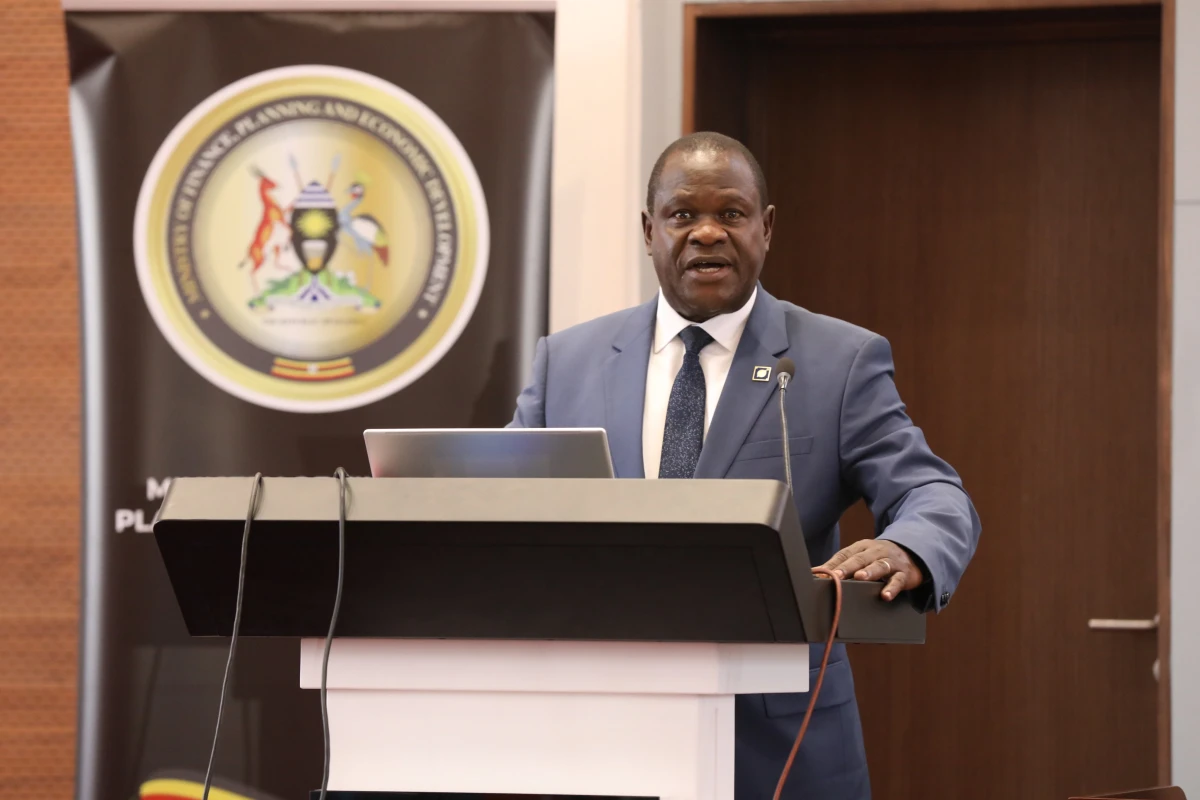
Patrick Ocailap, the Acting Permanent Secretary and Secretary to the Treasury, said the economy’s nominal value increased to Shs250.45 trillion (US$69.345 billion) in FY 2025/26, compared to Shs227.87 trillion (US$61.986 billion) in FY 2024/25.
Uganda’s economy grew by 6.4 per cent in the financial year 2025/26, up from 6.3 per cent recorded in the previous financial year, reflecting sustained economic activity amid a positive outlook for further expansion, according to the Ministry of Finance, Planning and Economic Development.
Patrick Ocailap, the Acting Permanent Secretary and Secretary to the Treasury, said the economy’s nominal value increased to Shs250.45 trillion (US$69.345 billion) in FY 2025/26, compared to Shs227.87 trillion (US$61.986 billion) in FY 2024/25.
Ocailap attributed the continued growth momentum to favourable economic conditions and sound macroeconomic management, noting that indicators of business activity point to further expansion in the current financial year.
“The economic outlook remains positive and we continue to closely observe external risks,” Ocailap said, projecting real Gross Domestic Product (GDP) growth of 7.6 per cent in FY 2026/27 and 9.1 per cent in FY 2027/28.
The projections indicate expectations of accelerated economic growth over the next two financial years, although the outlook remains subject to external economic developments and other potential risks.
Business Activity Signals Continued Expansion
The positive performance has continued into the first three months of FY 2026/27, with high-frequency economic indicators showing sustained business confidence and activity.
According to Ocailap, the Purchasing Managers’ Index (PMI) averaged 54.5, while the Business Tendency Index (BTI) averaged 56.6 during the first quarter of the financial year.
Both indicators remained above the threshold of 50, a level generally associated with expansion in business activity and positive sentiment.
The PMI tracks changes in business conditions, including output, new orders and employment, while the BTI measures business confidence and expectations regarding economic conditions.
Their performance suggests that businesses have maintained a positive outlook as the new financial year progresses.
However, sustaining this momentum will depend on continued investment, production, consumer demand and the economy’s ability to withstand external shocks.
Inflation Remains Low and Stable
Uganda also maintained relatively low and stable inflation during FY 2025/26, with annual headline inflation averaging 3.3 per cent, down from 3.5 per cent in FY 2024/25.
Ocailap said the performance was partly supported by effective coordination of monetary and fiscal policies.
Stable inflation helps preserve the purchasing power of households, provides businesses with greater certainty when planning investments and supports a predictable economic environment.
Nevertheless, the inflation figures represent the overall movement in consumer prices and do not necessarily mean that prices of individual commodities have fallen. Households may continue to experience pressure from the cost of food, transport, housing and other essential goods and services.
Maintaining price stability will therefore remain important as the economy targets faster growth in the coming years.
Uganda Shilling Appreciates Against US Dollar
The Ugandan shilling appreciated by 1.9 per cent against the United States dollar during FY 2025/26, supported by stronger foreign exchange inflows and sound macroeconomic management.
The appreciation points to improved foreign currency supply and relative stability in the domestic foreign exchange market during the period.
A stronger shilling can help reduce the local-currency cost of imported goods and inputs, including fuel, machinery and industrial raw materials, although the actual impact on consumer prices depends on other market factors.
However, exchange-rate movements also affect exporters and businesses earning foreign currency, particularly where their revenues are converted into shillings to meet domestic expenses.
The direction of the exchange rate in the current financial year will partly depend on export earnings, remittances, capital flows and developments in international markets.
Foreign Exchange Reserves Rise to US$6.7 Billion
Uganda’s external reserves stood at US$6.7 billion as of October 6, 2026, equivalent to 3.73 months of import cover, up from US$5.6 billion in January 2026.
The increase strengthens the country’s foreign exchange buffer and provides capacity to meet external payment obligations and cushion the economy against potential shocks.
Import cover measures how long a country’s foreign exchange reserves could finance its imports if other foreign currency inflows were unavailable.
The reported reserves position therefore provides an important indicator of Uganda’s capacity to manage external financing pressures and support confidence in the economy.
Remittances Increase by 31.6 Per Cent
Uganda continued to benefit from money sent home by citizens living and working abroad, with remittances reaching US$2.9 billion, representing a 31.6 per cent increase.
Remittances are an important source of foreign exchange and provide financial support to households, helping them meet expenses such as education, healthcare, housing and investment in small businesses.
The increase also contributes to the supply of foreign currency in the economy, supporting the balance of payments and potentially easing pressure on the exchange rate.
The figures underscore the importance of Ugandans living abroad to the country’s economic performance, particularly through household consumption, savings and investment.
Exports Grow by 23.9 Per Cent
Uganda recorded merchandise exports worth US$2,893.78 million during July and August of FY 2026/27, representing a 23.9 per cent increase.
Gold accounted for 56.5 per cent of the export earnings, while coffee contributed 13.9 per cent, according to the update from the Secretary to the Treasury.
The figures highlight the significant contribution of gold and coffee to Uganda’s export performance and foreign exchange earnings.
Coffee remains an important agricultural export, linking millions of farmers and other value-chain participants to international markets. Gold, meanwhile, accounts for the largest share of the reported export earnings, underscoring the importance of mineral exports to the country’s external trade.
The concentration of export earnings in a limited number of commodities also exposes the economy to fluctuations in international prices, demand and production conditions.
Expanding value addition, strengthening agricultural productivity and diversifying export products and markets could help improve the resilience of export earnings over time.
Imports Rise Faster, Widening Trade Deficit
Despite the increase in exports, Uganda’s import bill rose more sharply, reaching US$3,935.59 million during July and August of FY 2026/27, an increase of 44.8 per cent.
Consequently, the merchandise trade deficit widened to US$1,041.81 million during the two-month period.
A trade deficit occurs when the value of a country’s imports exceeds the value of its exports.
Uganda’s reported figures show that imports exceeded exports by more than US$1 billion over the period under review.
The increase in imports may reflect stronger domestic demand and purchases of production inputs, machinery, fuel and other goods, although the supplied figures do not break down the import bill by category.
While imports of capital goods and industrial inputs can support long-term production and economic growth, a persistent gap between imports and exports can increase the demand for foreign currency and place pressure on the external balance.
The widening trade deficit therefore remains an important indicator to monitor as Uganda pursues faster economic growth.
It is also important to distinguish the merchandise trade deficit from the country’s overall external position, which includes other flows such as services, remittances, investment income and financial transactions.
Positive Outlook Amid External Risks
Uganda’s economic performance in FY 2025/26 reflects continued growth, low and stable inflation, an appreciating shilling and an increase in foreign exchange reserves.
The strong performance of business activity indicators in the opening months of FY 2026/27 also points to continued economic momentum.
However, the rise in imports relative to exports highlights the need to strengthen domestic production, expand export capacity and ensure that increased economic activity translates into sustainable foreign exchange earnings.
The projected acceleration of real GDP growth to 7.6 per cent in FY 2026/27 and 9.1 per cent in FY 2027/28 will depend on the economy’s ability to sustain investment and production while managing external risks.
For policymakers, the challenge will be to maintain macroeconomic stability, support productive sectors and ensure that economic expansion creates jobs, improves household incomes and broadens opportunities for businesses.
Ocailap said the government remained optimistic about the economic outlook while continuing to monitor external risks that could affect the country’s growth trajectory.
The latest figures present a broadly positive picture of Uganda’s economy, but sustaining the momentum will require continued attention to export diversification, price stability, foreign exchange resilience and the productive use of imports to strengthen domestic economic capacity.

John Kusolo is a Pastor, Sports Enthusiast and Ugandan journalist with Nile Chronicles News (NCN). With a strong commitment to journalistic excellence, he is recognized for his dedication, goal-oriented approach, and ability to thrive in challenging environments. Kusolo brings focused motivation and professionalism to his reporting and media assignments.
















Comments (0)