
ENGINEERS SEEK SEAT AT THE TABLE IN GOVERNMENT ANTI-CORRUPTION CAMPAIGN

Uganda's engineering profession is pushing back. Faced with sweeping accusations of corruption that have landed on the entire local government engineering cadre, the Uganda Institute of Professional Engineers has served notice to the Ministry of Local Government, "stop casting a wide net and build a framework that can actually tell the difference between the corrupt and the innocent."
That was the central message delivered on Thursday at the second edition of the UIPE Voice engagement at the UIPE headquarters in Kyambogo, where engineers and government officials met for what turned out to be one of the most direct conversations yet between the profession and the state over corruption in Uganda's infrastructure sector.
UIPE President Eng Peterson Mwesigwa did not mince words. His institution supports President Museveni's anti-corruption agenda without reservation. What it will not support is a process that bypasses due process, brands an entire profession guilty by association and leaves competent, honest engineers unable to defend themselves against accusations that arrive without evidence, investigation or a fair hearing.
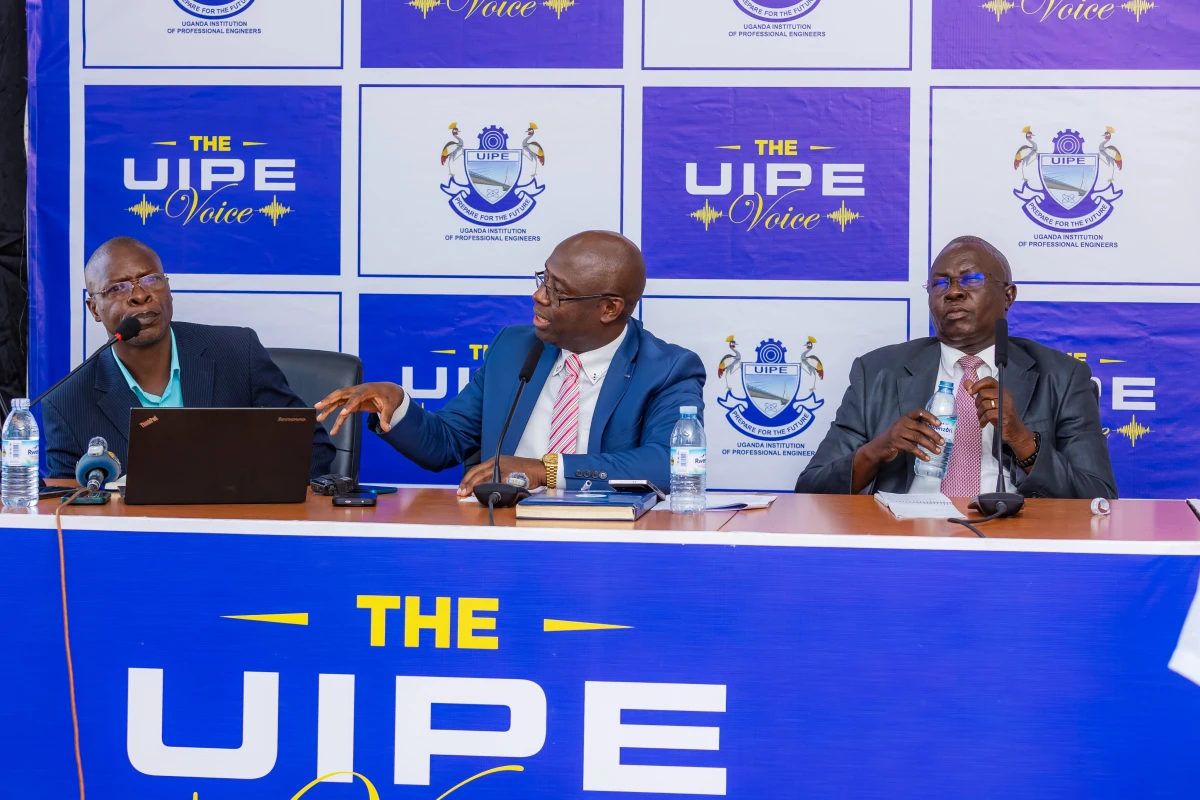
"Engineers support the president's anti-corruption agenda but emphasise the need for due process," Mwesigwa said. "The constitution mandates due process, which must be followed in anti-corruption efforts."
The engineers are not simply complaining. They have come with a proposal. UIPE has put forward a formal multi-stakeholder framework for investigating technical infrastructure projects, one that would bring together the Auditor General, the Inspectorate of Government and qualified engineering experts in a structured process designed to identify corruption with precision rather than assumption.
Under the framework, investigations would be triggered by verified whistleblower reports, conducted transparently and concluded with publicly available findings that create a visible accountability trail where none currently exists.
That last point is critical. Mwesigwa revealed on Thursday that investigation reports into building collapses and failed infrastructure projects are already being produced by joint teams that include the National Building Review Board. The problem is that those reports never reach the public, creating a dangerous perception that investigations happen but accountability never follows.
"Reports on these investigations exist but are not publicly available, leading to a perception of inaction," he said. UIPE is now pushing for those reports to be made public, arguing that transparency is the only tool capable of separating genuine impunity from the appearance of it.
Mbale City Engineer Mr Daniel Mufumba reinforced the due process argument from the perspective of a practitioner on the ground. "An investigation should be based on a whistleblower's message and a fair hearing for the accused," he said, adding that local government engineering departments are well-staffed with multidisciplinary teams that are capable of delivering results when systemic gaps are properly addressed rather than papered over with broad accusations.
The Ministry of Local Government sent Commissioner Etedu Geoffrey to represent the Permanent Secretary at the engagement, a signal that the ministry is at least willing to listen. Etedu acknowledged the tension but defended the ministry's mandate, citing Section 105 of the Local Government Act which empowers the ministry to coordinate and supervise local government operations including engineering functions.
He said government agencies including the Inspectorate of Government, the Criminal Investigations Directorate and the Auditor General already provide checks and balances, and stressed that service delivery requires collaboration across stakeholders rather than accountability falling on any single institution. "Service delivery requires collaboration among various stakeholders, not just a single entity," he said.
On the thorny issue of unregistered engineers operating in local governments, Etedu said the ministry has secured funding to support engineers in completing their registration under the Engineers Registration Act of 1969, with a target of full compliance across all local governments by the end of the current financial year.
He confirmed that a high-level meeting has been scheduled for 5th August with local government leadership to confront service delivery challenges head on, and extended a formal invitation to UIPE to attend, the clearest sign yet that the government is open to the kind of joint accountability framework the engineers are proposing.
The Engineering Professionals Bill, which would have given the profession stronger regulatory authority to police its own ranks and support government investigations, was withdrawn from Parliament after it conflicted with the Technical Vocational Education and Training Act. Consultations on resolving those conflicts are continuing without a current resolution, leaving the profession in a regulatory grey zone at the very moment accountability demands are at their highest.
For UIPE, the ask is straightforward. Give engineers a seat at the anti-corruption table, use their technical expertise to build cases that will hold up legally and stop treating an entire profession as guilty until proven innocent.

Benjamin Mwibo is a talented, passionate and creative journalist with a commitment to high quality out put that is factual and researched. Above all Dedicated with a strong desire to identify the truth of the matter.













Comments (0)