
Government and Parents Must Clarify Their Shared Responsibility in Financing Education As Per Article 34(2)
The Government and parents must, therefore, urgently pronounce themselves on the question of voluntary contributions in schools and provide clear guidance to headteachers, Boards of Governors, Parent-Teacher Associations (PTAs) and parents.
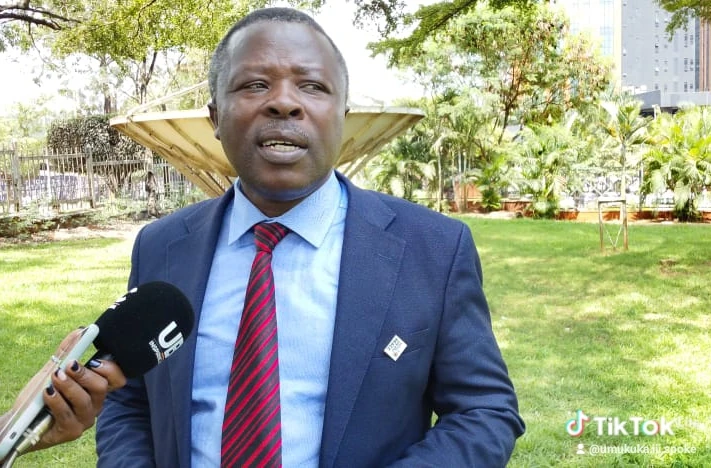
By Steven Masiga
The debate over school fees and voluntary contributions in government-aided schools has continued to generate confusion among parents, teachers, school administrators and government officials. At the centre of this debate is a fundamental constitutional question: what is the respective responsibility of the State and parents in providing basic education to children in Uganda?
The Government and parents must, therefore, urgently pronounce themselves on the question of voluntary contributions in schools and provide clear guidance to headteachers, Boards of Governors, Parent-Teacher Associations (PTAs) and parents.
This matter is particularly important because the Constitution itself recognises education as a shared responsibility. Article 34(2) provides that a child is entitled to basic education, which shall be the responsibility of the State and the parents.
This constitutional provision should not be interpreted in a manner that completely removes parents from their responsibilities towards the education and welfare of their children.
It is equally a well laid principle of jurisprudence that a preamble of the constitution doesn't form part of the basic law of the country,this position was affirmed in the Leading case of Halimali Adamj V East African posts and telecommunications Ltd (1975).
Halimali who was Tanzanian of Asian origin and a postal superintendent was compulsorily retired under the Africanization policy to promote Local employment. Court in its ruling held that the preamble of the 1965 Tanzanian constitution didn't form part of the operative provisions of the Law of Tanzania.
Whereas the above court holding was premised on the Tanzanian constitutional thought,what obtains in the above ruling is a common law doctrine and thus well respected under the doctrine of comity and has never been been ousted by any other ruling , confirming further that a mere preambular declaration can't be part of the operative law ,except when fully enacted
Among the Maasai people of Kenya, there are cultural circumstances where children may address uncircumcised parents by their names, such as “Ole” or “Ruto”, without the customary prefix associated with parental respect, on account of an unfulfilled cultural obligation. Similarly, in some communities in Bugisu, there is a strong cultural expectation that parents should take responsibility for their children. Parents who neglect their children's upbringing and education may face social consequences later in life when they become elderly.
This cultural understanding of parental responsibility was visibly demonstrated during one of the school management meetings I recently attended. Children challenged their parents to take responsibility for their education, including supporting schools through voluntary contributions where necessary.
The children argued that parents should not abandon their responsibilities simply because government provides support to schools. It was an emotional moment when some of the children questioned their parents about who would care for them in the future if the parents were unwilling to support their basic needs today.
The constitutional question
In Uganda, the Constitution places responsibilities on both the State and parents regarding the education of children. However, there remains a need for clearer statutory and administrative guidance defining what each party is expected to contribute.
The State should not become more responsible for a child's education than the child's parents. Such an arrangement risks creating dependency and weakening parental responsibility.
It is therefore necessary for government to distinguish between school fees, which may be regulated under government policy, and voluntary contributions made by parents to support the welfare and learning of their children.
There are government-aided schools where parents reportedly pay substantial amounts for various educational requirements, while in other schools parents' meetings have agreed to make voluntary contributions of as little as Shs50,000 per term to support learning.
The contradiction has created uncertainty for school administrators.
In some instances, headteachers have been arrested after receiving money from parents, despite the fact that some of those contributions were reportedly based on resolutions made by PTAs or Boards of Governors.
Instead of immediately treating every contribution as an offence, government should first provide an authoritative interpretation of the law and establish clear parameters within which voluntary contributions may be made.
Section 9 of the Education Act
A senior official in the Ministry of Education and Sports, who spoke to me on condition of anonymity, maintained that Section 9 of the Education Act provides a basis for contributions from parents and that several PTA associations have relied on this provision when engaging parents.
If that interpretation is correct, then the Ministry should formally communicate its position to schools and parents.
It is not enough for different government agencies to issue conflicting messages while headteachers are left to carry the burden of implementation.
School administrators require clear written guidelines stating what constitutes unlawful school fees, what constitutes a voluntary contribution, who may approve such contributions, how parents should consent to them, and how the money must be accounted for.
Free education and parental responsibility
The Constitution's National Objectives and Directive Principles of State Policy also speak to the promotion of free and compulsory basic education and equal opportunities in education.
Article 30 further recognises the right to education.
However, these provisions should be read together with Article 34(2), which expressly places responsibility for basic education on both the State and parents.
The existence of government support should therefore not automatically mean that parents have no financial or moral responsibility towards the education of their children.
The same principle is reflected in international instruments to which Uganda is a party, including the African Charter on the Rights and Welfare of the Child and the United Nations Convention on the Rights of the Child, which recognise responsibilities of parents and the State in ensuring children's welfare and education.
The central question, therefore, should not simply be whether parents should contribute anything at all, but rather how such contributions should be regulated, made voluntary and accounted for without undermining the right of every child to basic education.
Presidential directives and constitutional supremacy
Those enforcing the no-fees policy in government schools have often relied on presidential directives.
However, constitutional governance requires every directive, policy and administrative action to remain within the framework of the Constitution.
Article 2 establishes the supremacy of the Constitution and provides that any law or custom inconsistent with the Constitution is, to the extent of the inconsistency, void.
Similarly, Article 3 protects the constitutional order and places obligations on citizens to resist unconstitutional attempts to overthrow the established constitutional system.
In my view, therefore, a presidential directive should not be interpreted in a manner that permanently eliminates a responsibility expressly recognised by the Constitution unless the relevant constitutional and legal framework has been properly considered.
The President derives his authority from the Constitution, and that authority must consequently be exercised consistently with the Constitution.
This is why the issue of parental contributions requires careful legal and administrative clarification rather than enforcement through arrests alone.
The relevance of the Attorney General's guidance
The Attorney General, as the principal legal adviser to Government, has previously offered guidance on questions relating to fees and contributions in government-aided schools, including matters involving religious-founded schools.
Where such guidance has been issued, the Ministry of Education and Sports should domesticate it through formal communication to schools and education stakeholders.
Headteachers cannot reasonably be expected to implement complicated legal and policy questions based on informal statements or competing interpretations from different government actors.
The Ministry should issue a comprehensive circular explaining the legal position.
Arresting headteachers is not the solution
The arrests of headteachers over alleged illegal school fees should be approached with caution.
In many schools, headteachers implement decisions made by Boards of Governors, PTAs and other legally recognised school structures. Where parents themselves have agreed to make voluntary contributions, the circumstances surrounding those decisions should be established before criminal liability is imposed on an individual headteacher.
This does not mean that school administrators should be allowed to misuse parents' money.
On the contrary, every contribution received by a school must be handled transparently and accounted for properly.
Headteachers should clearly communicate to stakeholders how much money the school receives from government, how much comes from parents, what the money is used for and what activities are being financed.
Government grants and parental contributions should both be subject to proper accountability mechanisms.
Schools are facing financial pressure
The uncertainty surrounding school financing is already creating difficulties for some schools.
I have received information from several headteachers in the Bugisu region indicating that some administrators are considering early retirement, while others are struggling to meet basic operational needs, including feeding teachers and maintaining school activities.
Some schools have reportedly considered disposing of obsolete school property to cope with operational challenges.
If these reports are accurate, they should concern the Ministry of Education and Sports.
The solution, however, should not be for schools to impose arbitrary fees. Neither should it be for government to leave schools without adequate resources while simultaneously prohibiting every form of parental support.
There must be a middle ground based on the Constitution, the Education Act and transparent administrative guidelines.
Government should provide clear guidance
I therefore call upon the Ministry of Education and Sports to urgently pronounce itself on voluntary parental contributions.
The Ministry should clarify:
What constitutes school fees under the current government policy.
What constitutes a voluntary contribution.
Whether parents may voluntarily contribute towards identified school needs.
Who has authority to approve such contributions.
Whether parents must consent through a general meeting or PTA structure.
How contributions should be collected and banked.
How schools should account for the funds.
What sanctions apply to administrators who misuse such funds.
What role Boards of Governors and PTAs should play.
How government funding and parental contributions should complement each other.
Such clarity would protect both parents and school administrators.
Anti-corruption investigations must follow due process
I further appeal to the Anti-Corruption Unit and other investigative agencies to obtain formal policy guidance from the Ministry of Education before rushing to criminalise every form of payment made to a school.
Where investigations are necessary, they should be conducted professionally and without harassment.
Article 28(3)(a) of the Constitution guarantees an accused person a fair hearing and the presumption of innocence until proven guilty.
Article 42 also guarantees every person appearing before an administrative body the right to just and fair treatment.
These constitutional protections must apply to everyone, including headteachers accused of collecting unlawful fees.
Investigators should establish whether money was demanded or voluntarily offered, whether the school had a lawful resolution authorising the contribution, whether the money was properly receipted, where it was deposited, how it was spent and whether there was any evidence of personal benefit.
That is a much more effective approach than simply arresting a headteacher because money was received at a school.
A partnership, not a confrontation
Education should be treated as a partnership between government, parents, teachers, school administrators and communities.
The State has a duty to provide resources and create an enabling environment for education. Parents equally have a constitutional and moral responsibility to support the education and welfare of their children.
The two responsibilities should complement rather than compete with each other.
Government should therefore avoid policies that unintentionally encourage parents to abandon their responsibilities, while parents should equally not use the existence of government programmes as an excuse to neglect their children.
The welfare of the child must remain at the centre of the debate.
Ultimately, the question of voluntary contributions should be settled through constitutional interpretation, legislation and clear administrative guidance rather than arrests, political statements or conflicting directives.
If there is genuine uncertainty about the relationship between Article 34(2), the Education Act, government policy and presidential directives, the appropriate institutions should seek an authoritative legal interpretation.
It is better for Uganda to have a clear judicial and administrative position on the matter than to continue arresting headteachers while parents, teachers and schools remain uncertain about what the law actually permits.
The Government and parents must recognise that they are partners in educating Uganda's children. Neither party should usurp the responsibility of the other.
The writer is a legal scholar and academician from Bugisu.
Steven Masiga:0782231577

John Kusolo is a Pastor, Sports Enthusiast and Ugandan journalist with Nile Chronicles News (NCN). With a strong commitment to journalistic excellence, he is recognized for his dedication, goal-oriented approach, and ability to thrive in challenging environments. Kusolo brings focused motivation and professionalism to his reporting and media assignments.







Comments (0)